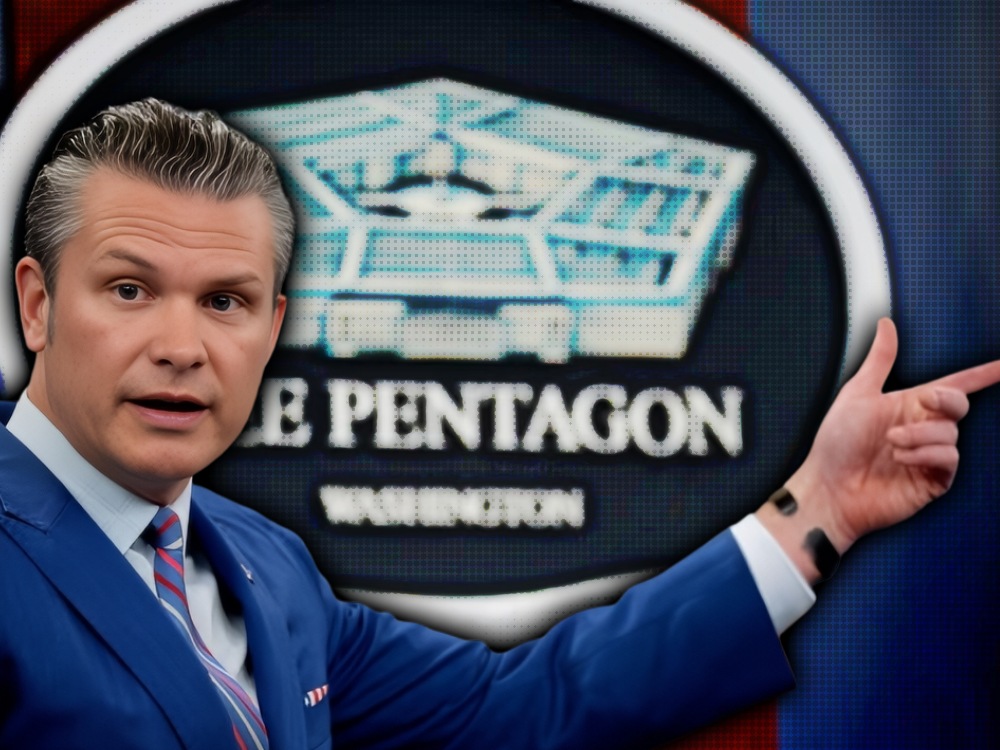
A three-judge panel in the U.S. Court of Appeals for the Fourth Circuit is considering whether to uphold a landmark ruling that struck down the Pentagon’s longstanding ban on allowing people living with HIV to enlist in the military.
The case, Wilkins v. Hegseth, brought by Lambda Legal, challenges military policies that bar individuals with HIV — even those with undetectable viral loads who pose no transmission risk and have no health limitations — from joining the armed forces.
Court battle over outdated military rules
In August 2024, a federal district court ruled the HIV enlistment ban unconstitutional, citing violations of the Fifth Amendment’s equal protection clause and the Administrative Procedure Act. The court labelled the Pentagon’s policies as “irrational, arbitrary, and capricious,” arguing they undermined recruitment goals and reinforced outdated stigma.
The Department of War (formerly Defence) appealed the decision, aiming to reinstate the ban. On Tuesday, oral arguments were heard publicly for the first time in the case.
On the same day, the Fourth Circuit issued a temporary stay, putting the lower court’s injunction on hold while it considers the appeal. This briefly reactivates the ban.
Legal team argues for equality
Lambda Legal attorneys, including Scott A. Schoettes and Linda Coberly, defended the initial ruling. They highlighted that for over a year — under the district court’s injunction — the military has successfully processed enlistments of qualified individuals living with HIV, demonstrating that the ban is unnecessary.
“Modern science has transformed HIV into a chronic, treatable condition,” said Gregory Nevins, senior counsel for Lambda Legal.
“People with undetectable viral loads can deploy anywhere, perform all duties without limitation, and pose no transmission risk to others.”
Schoettes emphasised that the ruling merely ensures people with HIV are assessed like any other applicant, based on existing medical standards. He said affirming the decision would “definitively close any loopholes” left by previous legal victories.
Coberly, a partner at Winston & Strawn, called the enlistment ban a “holdover from a long era of needless discrimination,” arguing it no longer has any medical or operational justification.
The people behind the case
Filed in 2022, the lawsuit represents three individual plaintiffs, including Isaiah Wilkins, a former Army Reservist who was disenrolled from the U.S. Military Academy Preparatory School after testing positive for HIV. It also includes Minority Veterans of America, an organisation representing civilians living with HIV who wish to serve.
Previous cases — Roe v. Austin and Harrison v. Austin — forced the military to remove restrictions on deploying or commissioning service members already serving with HIV. Advocates say that lifting the enlistment ban is the final step in ending HIV-based discrimination in the armed forces.
A decision from the Fourth Circuit is expected in the coming months.