The Queensland Government has confirmed it will continue its ban on the prescription of puberty blockers for transgender and gender-diverse minors in the public health system — a move set to remain in place until at least 2031, when results from a UK trial are expected.
Health Minister Tim Nicholls made the announcement on Friday, stating the ongoing pause would remain until findings from the PATHWAYS Trial in the United Kingdom are released. The trial, which has not yet begun, will examine the use of puberty blockers in the context of gender dysphoria.
“This pause will remain in place until the results of the PATHWAYS Trial in the United Kingdom are known in 2031,” Nicholls said in a statement.
The decision comes in the wake of a 530-page Independent Review led by psychiatrist Professor Ruth Vine, which found that the evidence base for stage 1 and stage 2 hormone therapies in youth with gender dysphoria is “limited”, with “a paucity of evidence” regarding long-term outcomes.
National and International Influence
The Queensland Government said its decision reflects similar moves in other countries, including the UK, where new patients can no longer access puberty blockers while the PATHWAYS Trial is underway. Minister Nicholls cited comparable restrictions introduced in France, Finland, Norway, Denmark, and Sweden.
The state has also aligned its approach with New Zealand, where a similar model was introduced following the controversial Cass Review. However, the Cass Review has faced widespread criticism from health experts, and an Australian evaluation of the report recommended it not be used as a guide for treating trans youth.
Federal Health Minister Mark Butler has requested the NHMRC develop national guidelines on gender-affirming care, with interim advice on puberty blockers expected by mid-2026.
A Highly Contested Decision
The Queensland Government first introduced the pause in January, under the Crisafulli Government, who appointed Professor Vine to assess the clinical evidence. Though the Supreme Court later overturned the pause in October, Minister Nicholls reinstated it within six hours using his ministerial powers.
The decision remains controversial, with a new legal challenge filed last week seeking clarification of the ministerial directive.
Nicholls said the Government’s stance is rooted in “public interest”, and that treatment should be based on the “strongest available evidence”. While medical interventions remain on hold, existing patients will continue treatment, and non-medical support such as mental health services will still be available.
“The Crisafulli Government remains committed to providing health care that is in the best interests of Queensland children and adolescents,” Nicholls said.
Community Response: ‘Our Kids Deserve Better’
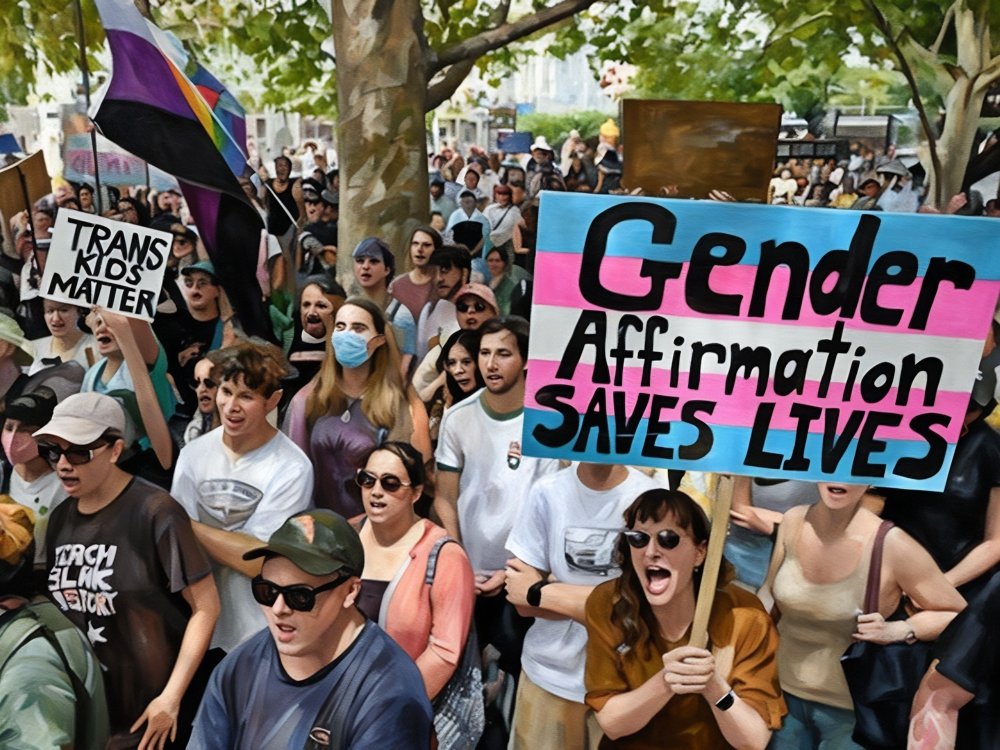
The advocacy group Parents of Trans Kids Speak Out has condemned the extension of the ban.
“We are heartbroken that the ban on gender-affirming care has been extended to 2031,” the group said in a statement.
“As this ‘pause’ continues over the next five to six years, hundreds or potentially thousands of Queensland families will be forced into financial distress or the alternative — watch their kids’ continued suffering.”
The group accused the Government of discriminating against trans youth by denying them access to the same medical treatment available to non-trans children.
They also expressed frustration over delays in the release of the Vine Review, which was only made public on Friday:
“We are very disappointed and frustrated that the Vine Review was not released immediately. We will review the report as a matter of priority.”
On the issue of mental health access, the group noted that Queensland Children’s Gender Service is under-resourced and unable to meet the current demand.
“The best the clinic can offer is a list of external service providers. Our kids deserve better.”