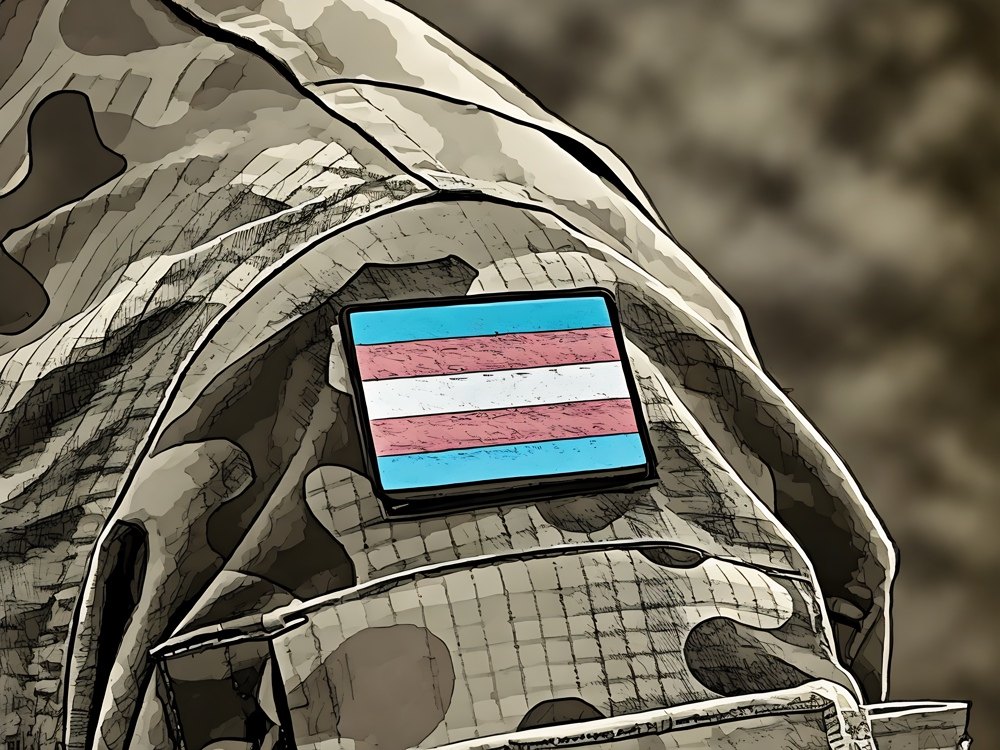

LeAnne Withrow, a decorated former National Guard soldier and current civilian employee, has filed a class-action lawsuit against the Trump administration over its anti-transgender bathroom policy, saying it’s forced her to avoid food and drink during work hours just to get through the day.
The 35-year-old, who served in the Illinois National Guard from 2010 to 2023, says she’s been left with no safe or respectful access to restrooms since Trump signed a sweeping executive order targeting trans people in federal employment and military-related spaces.
“In order to do my job well and fully… I’m making that sacrifice,” she told The Advocate. “It’s a question of human dignity.”
“It was the privilege of a lifetime to serve”
Withrow joined the National Guard out of a deep commitment to public service and a family legacy in the military.
“It was the privilege of a lifetime to be able to serve in the National Guard for 13 years,” she said. “But really, it was about service to others.”
During her career, she was recognised with multiple honours, including:
- Meritorious Service Medal
- Army Reserve Component Achievement Medal
- Illinois National Guard Abraham Lincoln Medal of Freedom
Today, she works in the State Family Programs Office, offering critical support to current service members, veterans, and their families.
Coming out, serving openly – and then facing new restrictions
Withrow came out as transgender in 2016, shortly after the Obama administration lifted the ban on transgender military service. Despite the Trump administration reinstating that ban during his first term, Withrow said she never had issues using the female facilities at work — until now.
In 2025, Trump issued a new executive order:
“Defending Women from Gender Ideology Extremism and Restoring Biological Truth to the Federal Government”
The policy mandates federal agencies to define “woman” strictly by biological sex and requires restrooms and other intimate spaces to follow that rule.
Although Withrow is now a civilian employee, the policy has impacted her daily work life in profound ways.
“I live on a granola bar and peanut butter”
To avoid using gendered bathrooms at her workplace, Withrow says she’s gone to extreme lengths — limiting food and drink intake during work hours.
“I now skip eating and drinking… just a granola bar or spoonful of peanut butter,” she explained.
She emphasised that this sacrifice is about doing her job well under restrictive conditions.
“I know I have to operate within the bounds of the policies… So I’m making that sacrifice.”
From internal complaints to a federal lawsuit
After filing complaints with the Army National Guard Bureau Equal Opportunity Office and the EEOC — both of which failed to result in meaningful change — Withrow decided to escalate the matter.
She has now filed a class-action lawsuit in the US District Court for the District of Columbia, challenging the legality of the executive order.
“It’s important to fight for what’s right, even if it becomes more difficult or inconvenient,” she said. “It’s a question of human dignity… and equal treatment under the law.”
“It wears on you”
Withrow says the impact of the policy goes beyond physical discomfort — it’s emotionally exhausting and distracts from her mission.
“Instead of just focusing on that mission, I have to logistically plan out which bathroom I’ll be allowed to use today,” she said.
“It wears on you.”
She likened the feeling to working under an employer who openly disapproves of your identity:
“It’s like being a manager at a McDonald’s and finding out the CEO personally dislikes people like you.”
Despite it all, Withrow remains hopeful.
“I sort of, in the back of my mind, always believe that the good guy is going to win. And I think we’re the good guy in this.”