
Queensland Health Minister Tim Nicholls has made a quiet but significant change to the state’s contentious ban on gender-affirming medical care for trans youth under 18 — a move that may head off a pending court case.
The change comes after the government extended the ban until 2031, aligning it with the anticipated results of the UK’s PATHWAYS trial, which has placed a similar indefinite ban in effect since December 2024.
A Subtle but Impactful Update
While the broader ban remains in place, a key alteration to the official directive on the Queensland Health website now redefines what constitutes a “new patient” and a “current patient” — a critical point at the centre of an ongoing legal challenge.
As of 15 January, the directive now defines a:
- New patient as “a person under the age of 18 who had not received Stage 1 Treatment or Stage 2 Treatment prior to 28 January 2025.”
- Current patient as “a person under the age of 18 who had commenced receiving Stage 1 Treatment or Stage 2 Treatment prior to 28 January 2025.”
This change appears to resolve a legal dispute brought by the mother of a trans child, who, supported by the LGBTI Legal Service, was contesting whether her child — already receiving gender-affirming care privately in early 2025 — qualified as a “new” or “existing” patient under the original directive.
Backstory: Court Challenge and Immediate Government Response
In October 2025, the Queensland Supreme Court set aside the original ban following a successful legal challenge from the same mother. However, Nicholls reissued the ban mere hours later.
The current legal action focused on the government’s original wording, which was ambiguous regarding privately treated patients. The new amendment to the directive effectively recognises the child as a current patient, allowing continued access to publicly funded gender-affirming care via the Queensland Children’s Gender Clinic.
The LGBTI Legal Service commented:
“If the Supreme Court agrees that ‘new patient’ does not include anyone under 18 who received gender-affirming care before 28 October 2025, it could open access for many more trans youth in similar situations.”
Judicial Review Still Underway
Despite the likely closure of this specific case due to the updated directive, the LGBTI Legal Service has confirmed that it has lodged a new judicial review, this time on behalf of another young person impacted by the broader ban.
Minister Nicholls had previously stated that existing patients would continue to receive care from Children’s Health Queensland, and that non-medical interventions, such as mental health and wellbeing support, would remain available for all trans youth.
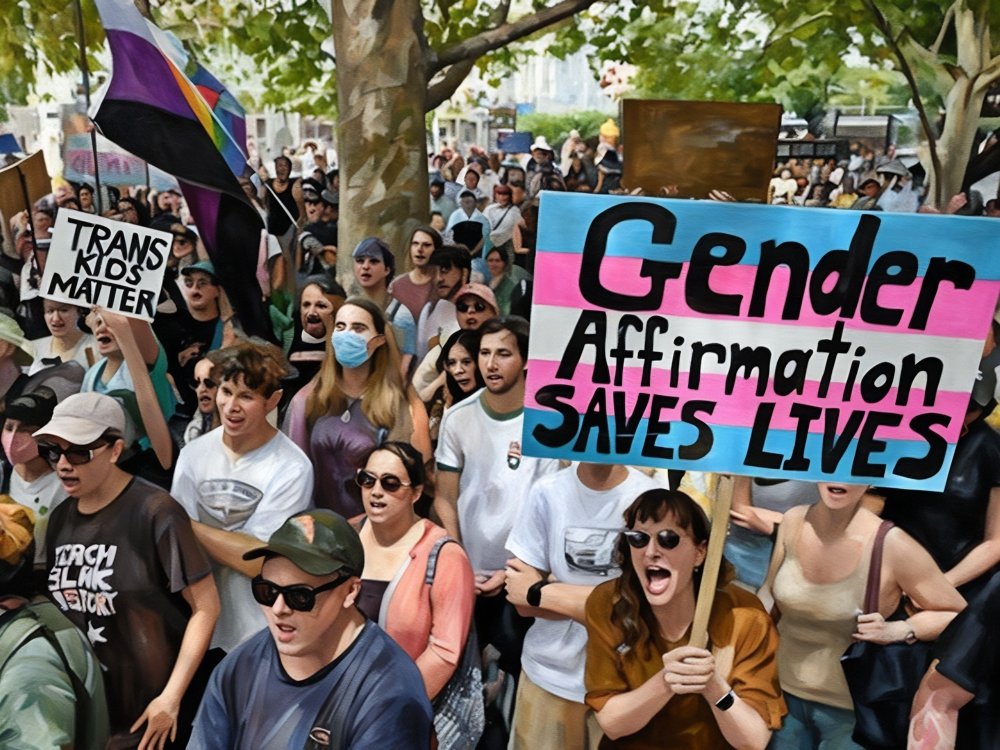
Nonetheless, advocacy groups maintain that the blanket ban—particularly on new patients—is harmful and discriminatory, and they vow to continue challenging the policy in court and through public advocacy.