
Three of the world’s leading trans healthcare bodies have raised serious ethical objections to the UK government’s proposed PATHWAYS trial for puberty blockers, warning that the study may violate internationally recognised standards for clinical research.
In a joint statement released on 9 January, the World Professional Association for Transgender Health (WPATH), the European counterpart (EPATH), and the US Professional Association for Transgender Health (USPATH) outlined five major concerns with the trial, which is set to analyse the effects of puberty suppression on 220 trans adolescents.
Commissioned following the UK Government’s indefinite ban on puberty blockers for trans young people, the £10 million trial has become the only NHS-approved route for accessing such treatment — a fact that critics argue undermines voluntary, informed consent.
The trial will randomly assign half of its under-16 participants to receive puberty blockers, while the other half will not. To participate, adolescents must undergo more than 13 hours of assessments, a requirement that has been described by experts and families as “intrusive and distressing.”
Ethical Concerns and Delayed Care
In their joint letter, the three professional bodies warned that the design of the trial could prioritise research goals over patient wellbeing, by delaying access to necessary care for participants who already meet clinical criteria for treatment.
“This structure may violate established clinical guidelines,” the statement reads, “and could force families into participation simply because there are no alternative public pathways to access puberty suppression.”
They also stressed that ethical research should “centre the lived experiences” of participants and prioritise their mental health and wellbeing over the demands of study design.
The organisations urged that findings from the PATHWAYS trial must not be used as the sole foundation for national policy decisions, especially in light of ongoing concerns about how trans healthcare is being managed in the UK.
“Ethical research must be voluntary, clinically sound, and designed with the well-being of participants at its core,” the statement concluded.
Harm to Trans Youth Already Evident
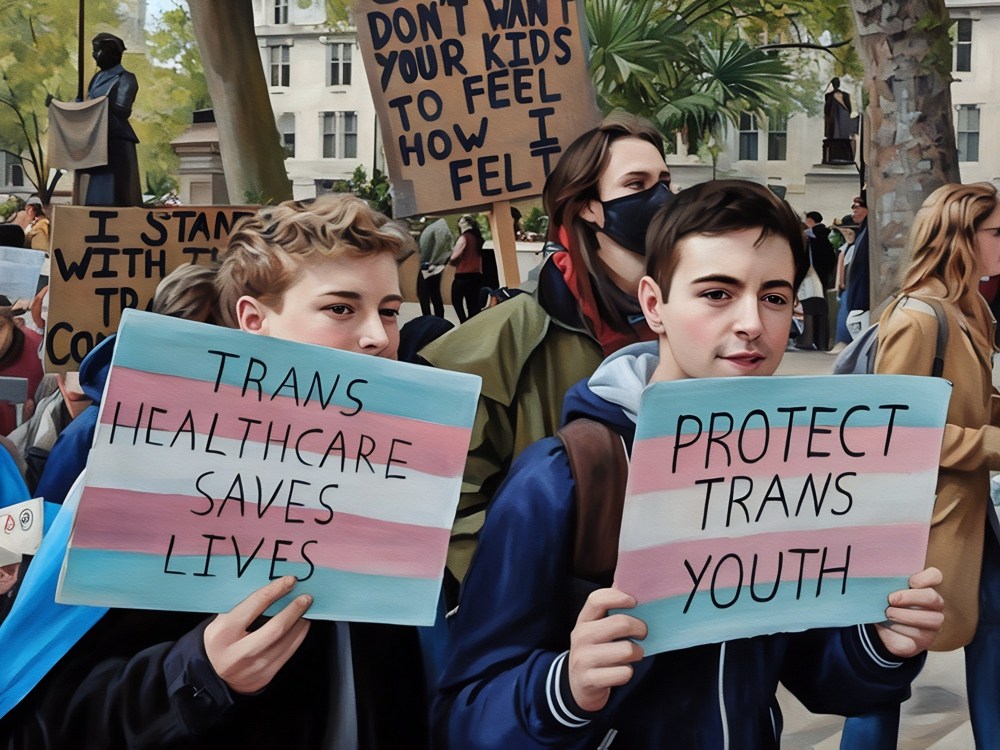
Evidence from existing research has shown that puberty blockers are safe, effective, and can be life-saving for trans young people. These medications are still available to cisgender youth experiencing precocious puberty, further raising concerns about discriminatory healthcare policies.
A 2023 study found that the NHS ban on puberty blockers is already having serious adverse effects, including increased rates of depression and anxiety among trans youth previously considered “well-adjusted”.
The mother of 19-year-old Alice Litman, who took her own life while waiting for NHS gender-affirming care, called the government’s approach “not health care.”
“The old ‘watch and wait’ is how Alice was treated,” said Caroline Litman, criticising the trial’s restrictive access model.
In response, Health Secretary Wes Streeting defended the government’s position during a Commons debate, saying it is based on “clinical advice” and that the PATHWAYS trial is being designed to meet the “highest standards of ethics.”
Yet with leading global experts calling the current approach deeply flawed, pressure is mounting for the UK to re-evaluate its methods — not just scientifically, but morally.