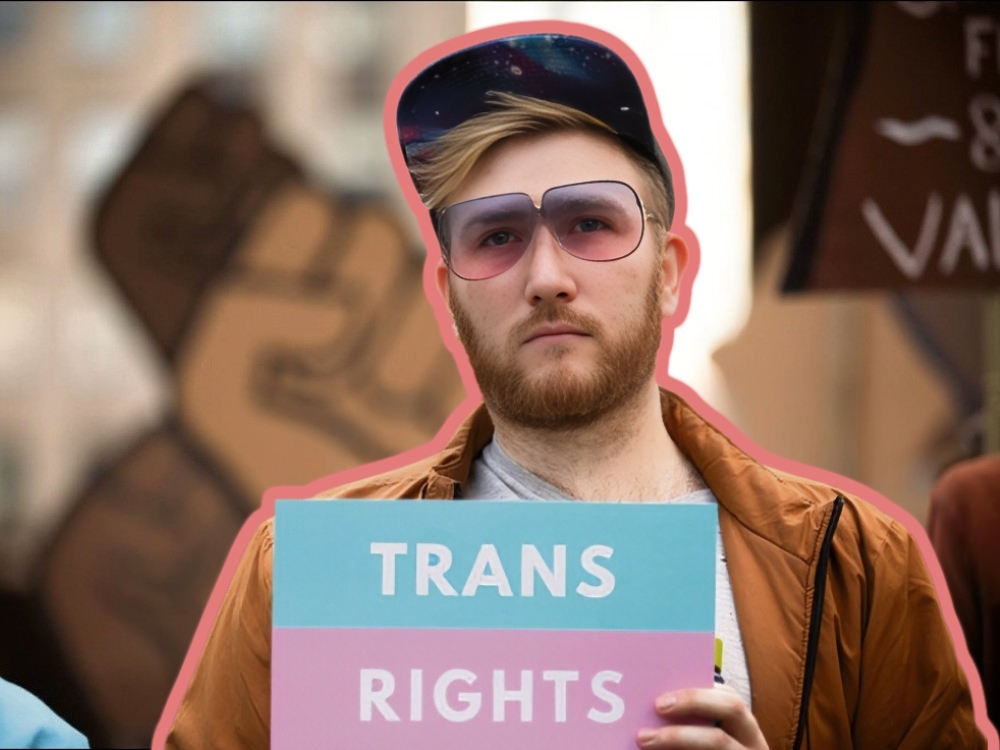

The High Court of England and Wales has ruled that transgender women are lawfully permitted to use women’s facilities in public services — but not in single-sex spaces within workplaces.
The judgment, handed down on Friday (13 February), examined the Equality and Human Rights Commission’s (EHRC) interim code of practice issued after last year’s Supreme Court ruling in FWS v Scottish Ministers.
Mr Justice Swift concluded that the watchdog’s interpretation of the law was inaccurate in relation to service providers. The interim update did not “exclude or prohibit” providers from allowing trans women to use women’s toilets and changing rooms, he ruled.
Public Services vs Workplaces
Under the decision, service providers — such as pubs, restaurants and other public venues — are not required to exclude trans women from facilities matching their lived gender.
However, employers must restrict single-sex workplace spaces according to “biological sex.” The court stated that requiring trans employees to use separate or third spaces would “rarely” amount to unlawful discrimination.
The ruling clarifies that while service providers may exclude trans people under certain circumstances, they must demonstrate that doing so satisfies strict conditions under the Equality Act 2010.
Challenge to EHRC Guidance
The case was brought by the Good Law Project, which challenged the EHRC’s interim guidance. The guidance had suggested that service providers ban trans people from facilities aligned with their gender identity in some circumstances. It was later scrapped in October.
Updates to the Commission’s code of practice have since been submitted to Equalities Minister Bridget Philipson following a consultation that drew more than 50,000 responses. Legal experts criticised the EHRC after it confirmed it had used AI tools to analyse submissions.
If approved, the updated code would become legally binding, though it has not yet been made public.
Concerns Over ‘Outing’ Trans Employees
Good Law Project said elements of the judgment risk forcing trans people to out themselves at work.
Trans rights lead Jess O’Thomson described the ruling as mixed.
“Contrary to what has been widely claimed by politicians and the media, it can be entirely lawful for service providers to let trans women use the women’s toilets,” they said. “The equalities minister must now reject the draft code – which is wrong about the law.”
Director Jolyon Maugham criticised the decision’s approach to workplace impact.
“They remind me of how the pain of women was once dismissed as hysteria,” he said. “I urge the judiciary to listen harder to what trans people say about what their lives have become.”
Research published by Stonewall last year found that nearly 40 per cent of LGBTQ+ employees in the UK still feel the need to hide their identity at work, with a third reporting hearing discriminatory comments.
‘Incoherent’ Legal Landscape
Campaign group Trans+ Solidarity Alliance argued the decision further complicates an already “incoherent” legal framework, particularly because it does not clearly define what qualifies as a workspace.
A spokesperson said:
“What bathroom a trans person can use in a pub may now depend on whether they are there as an employee or for a drink.”
They added that while the court confirmed the Equality Act does not operate as a blanket bathroom ban, workplace rules remain outdated.
“We must be allowed to transition and move on with our lives with privacy, not be outed every day at work.”
EHRC Response
EHRC chair Mary-Ann Stephenson welcomed the judgment.
“As Britain’s equality regulator, we uphold and enforce the Equality Act. This is the second time the way we have done our duty in the wake of the Supreme Court’s ruling has been tested in the courts. Both times our actions have been found to be lawful,” she said.
She added that the Commission would consider any further legal proceedings if permission to appeal is granted.
The ruling leaves the UK with a split system: broader flexibility for public-facing services, but stricter requirements in workplaces — a distinction that campaigners warn could continue to create confusion for trans people, employers and service providers alike.