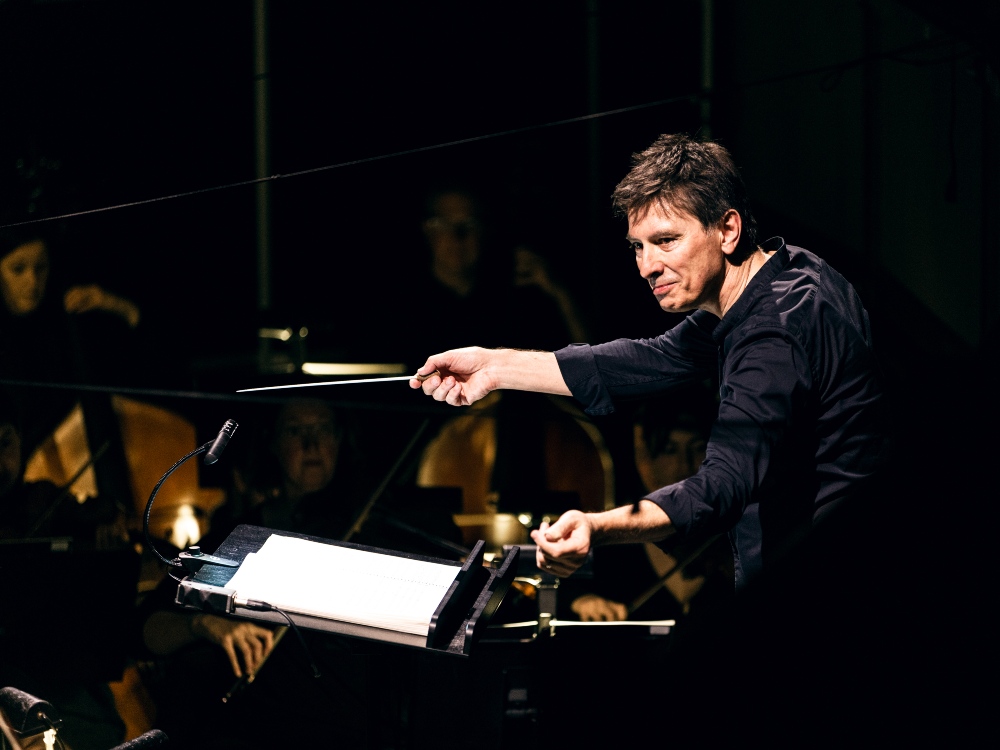
YOUR EX sits down with Brad Cohen, General Director of New Zealand Opera and conductor of Bluebeard’s Castle, Cohen who speaks candidly about why this haunting work feels so urgent right now. Long associated with dark Gothic myth, Bartók’s only opera is reimagined here as an intimate, contemporary love story — one that centres ageing, memory loss, and the quiet devastation of watching someone you love change.
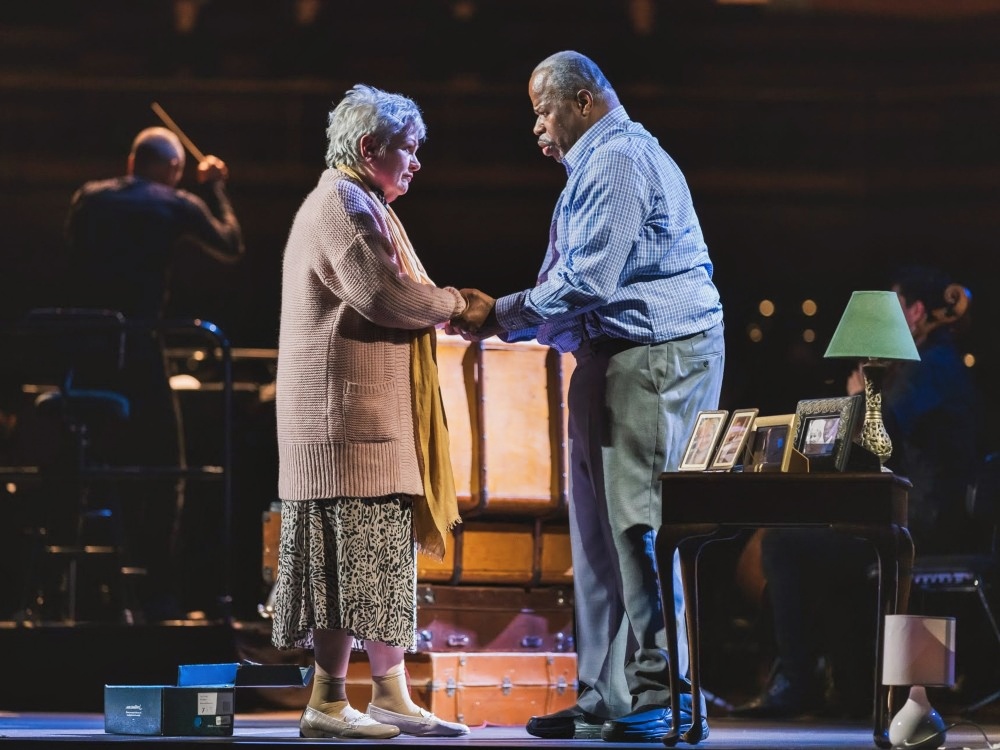
Directed by Daisy Evans for Theatre of Sound (UK), this acclaimed production scales the opera’s epic psychological drama down to the domestic, without losing any of its emotional force. As Cohen reflects, opera has always dealt in myth because it reaches “the deepest and least rational parts of our brains” — and in Bluebeard’s Castle, those mythic themes become painfully familiar. Loss, chosen family, trust, and commitment sit at the heart of this work, resonating powerfully with queer audiences and anyone who has loved deeply through change.
Bluebeard’s Castle is often framed as a dark Gothic tale, but this production reimagines it as an intimate love story between an older couple navigating memory and loss. What drew you to this interpretation?
Opera often uses myth and fairytale because, like those, singing stories goes to the deepest and least rational parts of our brains. Also, like myth and fairytale, opera often works at a superhuman scale. In this contemporary production of Bluebeard’s Castle, the scale is domestic and intimate, but the emotions are huge and sometimes overwhelming. Creator/Director Daisy Evans’ brilliant production takes the energies of this drama and directs them into a new channel, which modern audiences find deeply moving and relevant. We all have whānau and friends who have dealt or are dealing with age, loss, and diminution. This production goes to the heart of all of that.
Opera can sometimes feel intimidating to new audiences. In what ways does Bluebeard’s Castle break down those barriers?
Our hope is that NZ Opera as a whole is welcoming and inclusive for all communities – the production is the invitation, and the story is the bridge. Bluebeard’s Castle tells a story with immense power and range that resonates on a deeply human, personal level. As the custodians of opera in Aotearoa, we take our responsibility to connect with our community very seriously, and the evidence tells us our audiences are feeling more welcomed and embraced than ever.
You’re both the General Director of New Zealand Opera and the conductor for this production. Why did you particularly want to conduct Bluebeard’s Castle?
Well, it was actually the first opera I ever performed in as an instrumentalist – I played the celeste, which is a beautiful bell-like sounding keyboard percussion instrument (think Dance of the Sugar Plum Fairy). There is nothing like Bluebeard’s Castle in all of opera – it’s only got two singers, but a massive orchestra of 94 instruments on stage with them, plus actors. If we think of the singers as the conscious and the orchestra as their subconscious, communicating everything which is not sung, Bluebeard is the first great operatic psychodrama. It’s intense, iridescent, unforgettable.
Bartók’s score is incredibly rich and psychologically intense. What should audiences listen for — especially those experiencing the opera for the first time?
There are fewer hooks to hang orientation on than some might expect – and this mirrors the story itself, where a character struggles with uncertainty and confusion to reach and define what ‘home’ is. I can certainly say that the moment ‘home’ is reached, in the very last seconds of music, is succeeded by a resounding silence which is equally powerful – and which still echoes in my memory since the last time we presented the piece in Wellington and Christchurch two years ago.
With internationally acclaimed performers bringing this story to life, how important is global collaboration in elevating opera in Aotearoa while still grounding it in local relevance as ‘New Zealand’s Opera’?
It’s core. We are proud – so proud – of our own artists. But many of them increasingly live and work internationally, so there is a reciprocity (I call it the merry-go-round), whereby we share our artists with the world and we also bring international colleagues to share their artistry with our communities here. It’s no longer Kiwi or international – it’s both.
Themes of memory, identity and chosen family resonate strongly within queer communities. Do you see Bluebeard’s Castle speaking to queer experience?
Opera has always been a space where roles are fluid; think of Der Rosenkavalier by Strauss, where a woman makes passionate love to a woman as the curtain rises. More importantly, it’s always been an industry comfortable with and expressive of diversity. So, for me, it’s not the piece itself so much as the culture and context it sits within – I think it’s a big part of our custodianship as a company. Ultimately, a love story of deep trust and commitment is universal.
As you step into your role as General Director, what does Bluebeard’s Castle reveal about your artistic direction for New Zealand Opera?
We connect with communities through storytelling, using the power of the human singing voice. Bluebeard’s Castle is a masterpiece, and Auckland audiences need the opportunity to experience it live with these superb artists and the wonderful Auckland Philharmonia. As much as we honour the well-loved classics at NZ Opera, we are also committed to sharing powerful storytelling which people might not be as familiar with. That way, we nourish existing needs, widen our scope for range and diversity, and regenerate an audience and opera whānau for the future.
As Director General, how do you balance honouring opera’s traditions while also pushing the form forward?
Balance is the key! Calculated risk-taking, with the support of a committed and ambitious Board and team, is the basis for working in the arts. Risk is essential for renewal and development, but it has to be calculated. At NZ Opera we don’t shut our eyes and hope for the best; we’re on a strategic path with clear definition about our mission, our vision for opera in Aotearoa and most of all our values.

Finally, if a YOUR EX reader has never been to an opera before, why should Bluebeard’s Castle be their first?
You’ll hear sounds like you’ve never heard before, coupled with sung drama of intensity and commitment by two incredible international singers at the top of their game. You’ll know what’s going on, because it’s sung in English and we display live surtitles in the performance. And the whole experience will last just over an hour! It’s an absolute bargain for an unforgettable musical and theatrical experience.
As Cohen makes clear, Bluebeard’s Castle is also the kind of opera he wants more people to feel welcome experiencing: sung in English, just over an hour long, and emotionally direct. Conducting the Auckland Philharmonia, he leads two of the classical world’s most celebrated performers — Lester Lynch and Susan Bullock — in what he describes as an “intense, iridescent, unforgettable” psychodrama.
The production plays for two performances only, at Auckland Town Hall on 13 & 14 March, as part of the Te Ahurei Toi o Tāmaki Auckland Arts Festival. If you’ve never been to an opera before, Cohen says this is the perfect place to start — and we agree.
Tickets and full details are available now at nzopera.com
Main image shot by: Lewis Ferris