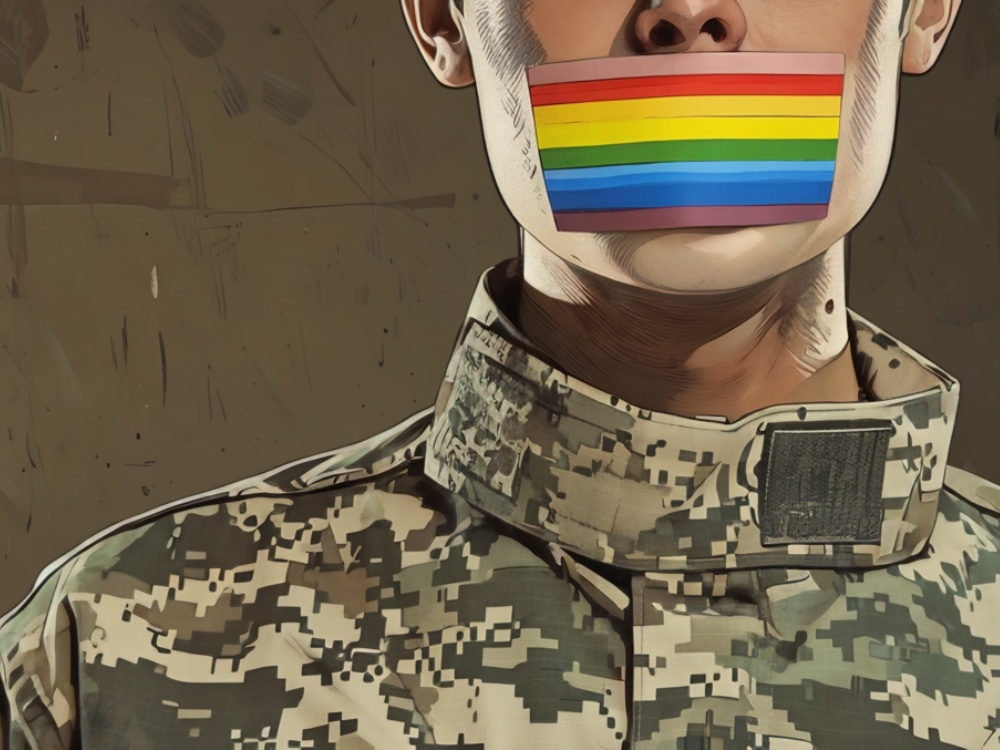
A US federal appeals court has ruled that people living with HIV can be barred from joining the American military, reversing a lower court decision that had blocked the policy.
The Fourth Circuit of the US Court of Appeals reinstated the Department of Defence (DoD) policy in a unanimous decision handed down on Wednesday (18 February). The rule permits the rejection of HIV-positive applicants regardless of their individual risk of transmission.
The policy had previously been halted by a US district court in August 2024. However, a three-judge panel on the Fourth Circuit concluded that the military has a “rational basis” for setting its own medical standards.
In its judgment, the court wrote: “In this case, the military has articulated its need to have fit service members who can fulfill its military mission without complications from medical conditions that could compromise deployment functions, contribute to conflicts with foreign nations during deployment, and add costs over those generally necessary to maintain fit service members.”
Medical Advances and Modern HIV Treatment
HIV is no longer considered the fatal diagnosis it was during the height of the AIDS crisis in the 1980s. Advances in treatment have significantly reduced mortality rates and dramatically lowered the risk of transmission.
The primary treatment for HIV today is antiretroviral therapy (ART), which enables individuals living with the virus to lead long, healthy lives. According to the National Institutes of Health, effective ART can reduce a person’s viral load to undetectable levels, at which point the risk of transmission is effectively eliminated.
Treatment progress has been so substantial that in countries including Australia and the UK, people living with HIV may donate blood under specific conditions.
Legal Challenge and Reaction
The legal challenge to the DoD policy was filed in 2022 by Lambda Legal on behalf of three individuals who were denied the opportunity to enlist or re-enlist due to their HIV status.
Gregory Nevins, senior counsel at Lambda Legal, said he was “deeply disappointed” by the appeals court’s ruling, arguing that it prioritises “discrimination over medical reality”.
“Modern science has unequivocally shown that HIV is a chronic, treatable condition. People with undetectable viral loads can deploy anywhere, perform all duties without limitation, and pose no transmission risk to others,” Nevins said.
“This ruling ignores decades of medical advancement and the proven ability of people living with HIV to serve with distinction.”
Scott Schoettes, who argued the case on appeal, described the policy as “irrational”, warning it could entrench further discrimination.
“Today, servicemembers living with HIV are performing all kinds of roles in the military and are fully deployable into combat. Denying others the opportunity to join their ranks is just as irrational as the military’s former refusal to deploy servicemembers living with HIV,” he said.
Ongoing Stigma
Despite medical progress, stigma remains widespread. UK charity Terrence Higgins Trust reports that 74 per cent of people living with HIV have experienced stigma because of their status, while nearly one third say they have faced discrimination from friends.
The ruling is likely to fuel continued debate over whether longstanding military policies align with contemporary medical science — and whether exclusion based on HIV status reflects operational necessity or outdated assumptions.