








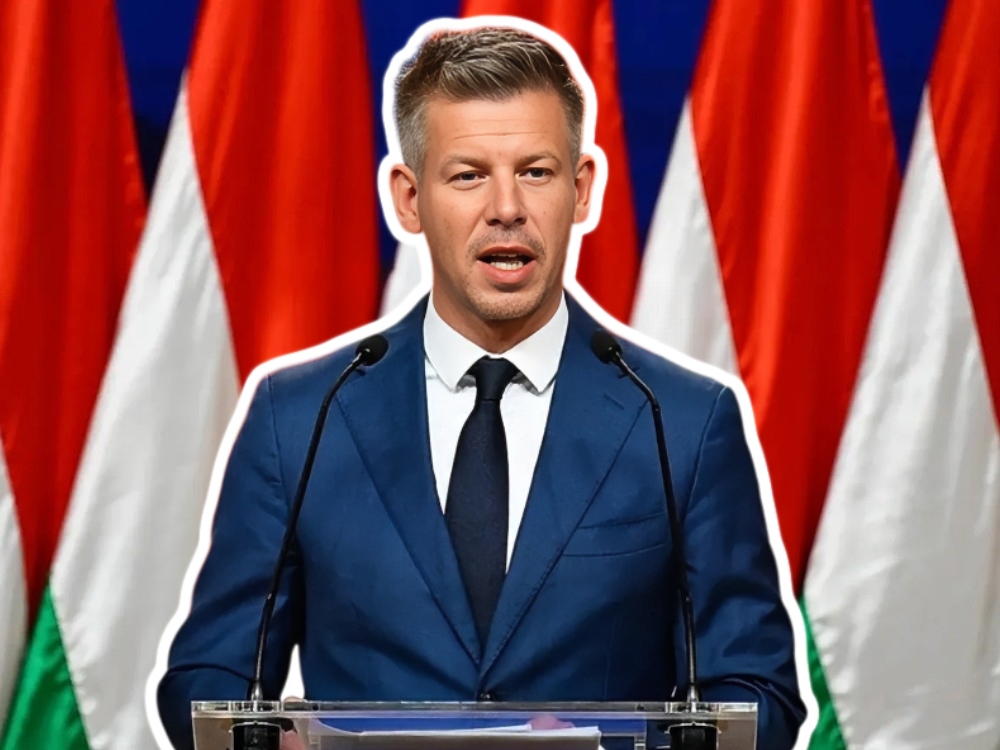
Péter Magyar has declared that Hungarians “overthrew the regime” after defeating Viktor Orbán in Hungary’s 2026 election, bringing an end to the prime minister’s 16-year hold on power. Orbán’s Fidesz party was swept aside by Magyar’s centre-right Tisza party in a landslide result that many voters saw as a rejection of authoritarian rule, corruption and Hungary’s growing isolation from Europe.
Orbán, a close ally of Donald Trump and Vladimir Putin, had spent years reshaping Hungary around nationalist, hard-right politics. His government tightened control over the media and judiciary, clashed repeatedly with the European Union, and pushed a string of anti-LGBTQ+ measures under the banner of defending children and “Christian values”.
Magyar campaigned on taking Hungary in a different direction. He promised to rebuild ties with the European Union and NATO, tackle corruption, restore democratic standards and reduce Hungary’s dependence on Moscow. He has also signalled a more constructive relationship with Ukraine, although he has been cautious rather than outspoken on some aspects of that issue.
His victory comes after years of escalating attacks on LGBTQ+ rights in Hungary. In 2021, Orbán’s government introduced the so-called “child protection” law, which restricted the depiction and discussion of homosexuality and gender diversity in content accessible to minors. The law was widely condemned across Europe as discriminatory and as a breach of fundamental rights.
That crackdown deepened in March 2025, when Hungary’s parliament passed legislation allowing authorities to ban Pride events by linking them to the 2021 law. The new measure said assemblies could be prohibited if they were judged to violate child protection rules by promoting or displaying homosexuality or gender diversity to under-18s. Reuters reported that the legislation also opened the way for police to use facial recognition to identify participants.
Despite the ban, Budapest Pride still went ahead on 28 June 2025 and drew tens of thousands of people in what became one of the largest anti-government demonstrations of Orbán’s final years in office. Reuters later reported that prosecutors brought charges against Budapest mayor Gergely Karácsony over his role in arranging the rally.
Orbán’s broader record on LGBTQ+ rights had already made Hungary one of the most hostile environments in the European Union for queer and trans people. Same-sex marriage remains banned, while legal recognition and family rights for LGBTQ+ people have been steadily narrowed under Fidesz rule. The European Parliament and other EU institutions repeatedly condemned Hungary’s anti-LGBTQ+ laws and the country faced legal and financial pressure from Brussels over wider rule-of-law concerns.
For many LGBTQ+ Hungarians, Orbán’s defeat is symbolically huge. But it does not automatically mean those laws will disappear.
Magyar did criticise the Pride ban at the time, arguing that the government was using the issue to distract from the real struggles facing Hungarians. He also said that a Tisza government would protect freedom of assembly. But he has not made LGBTQ+ rights a central part of his political platform, and current reporting suggests his election campaign focused much more heavily on corruption, healthcare, transport and Hungary’s place in Europe.
That has led to concern among activists, some of whom have warned that Orbán’s removal from office does not necessarily guarantee a rollback of anti-LGBTQ+ legislation. Based on current reporting, it remains unclear whether repealing Hungary’s anti-Pride law or the 2021 “child protection” law will be an early priority for the incoming government.
So while Orbán’s defeat marks the end of a deeply hostile political era, Hungary’s LGBTQ+ community may still have to keep pushing to ensure that political change translates into legal change as well.