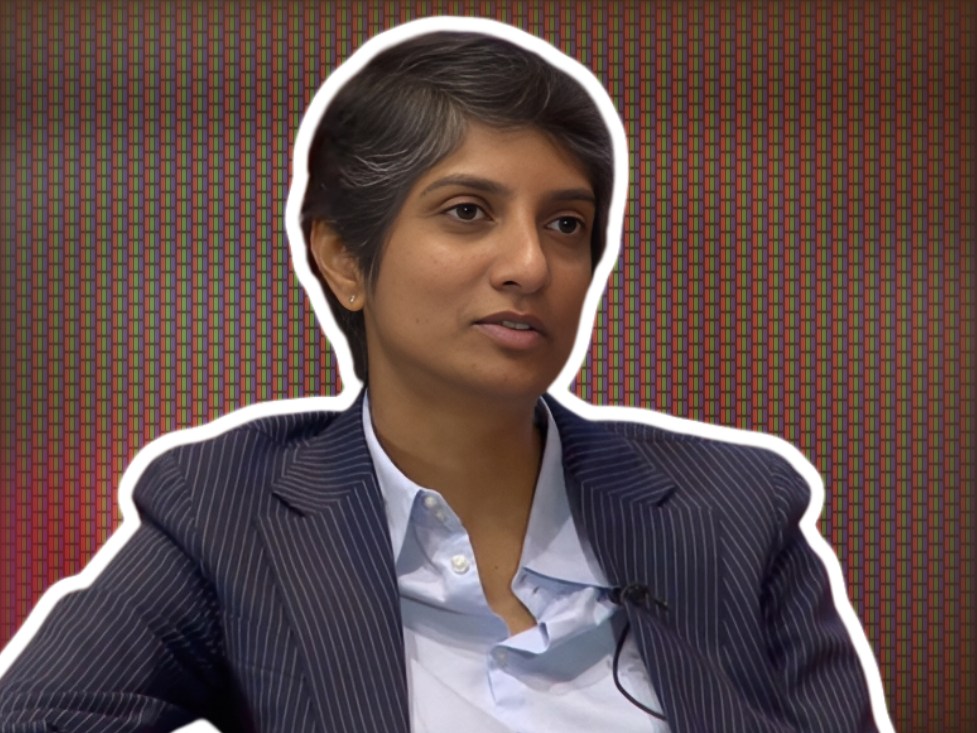

Constitutional lawyer and human rights advocate Menaka Guruswamy has made history as the first openly LGBTQIA+ person to sit in India’s national parliament.
Guruswamy took her oath of office on Monday after being elected to the Rajya Sabha, India’s upper house of parliament, where she will represent West Bengal for the Trinamool Congress party.
The Trinamool Congress, which split from the Indian National Congress in 1998, is now the fourth-largest political party in the country.
Her election has been widely hailed as a significant milestone for LGBTQIA+ representation in India and as a powerful sign of progress in a country that has seen major changes in queer rights over the past decade.
While taking her oath, Guruswamy declared that, “having been elected as a member of the Council of States, [I] do swear in the name of God that I will bear true faith and allegiance to the Constitution of India as by law established, that I will uphold the sovereignty and integrity of India, and that I will faithfully discharge the duty upon which I am about to enter.”
Guruswamy is one of India’s most prominent legal voices on constitutional and civil rights issues. She was among the lawyers who led the landmark challenge to Section 377, the colonial-era sodomy law that criminalised homosexuality. In 2018, India’s Supreme Court struck down the law, decriminalising same-sex relations in a historic ruling.
Following that victory, Guruswamy and her partner, fellow lawyer Arundhati Katju, were named in Time magazine’s list of the 100 most influential people in 2019.
Alongside her legal advocacy in India, Guruswamy has also built an internationally recognised academic and human rights career. Between 2017 and 2019, she was a research scholar and lecturer at Columbia Law School, and she has advised international bodies, including the United Nations, on human rights matters.
She is a graduate of Oxford University, a Rhodes Scholar, and also held a Gammon Fellowship at Harvard Law School. Guruswamy joined the bar in 1997 and began her legal career working with India’s then Attorney General, Ashok Desai.
Her arrival in parliament marks not only a personal milestone, but also a symbolic moment for LGBTQIA+ visibility in India’s political life, particularly given her central role in one of the country’s most significant legal victories for queer rights.