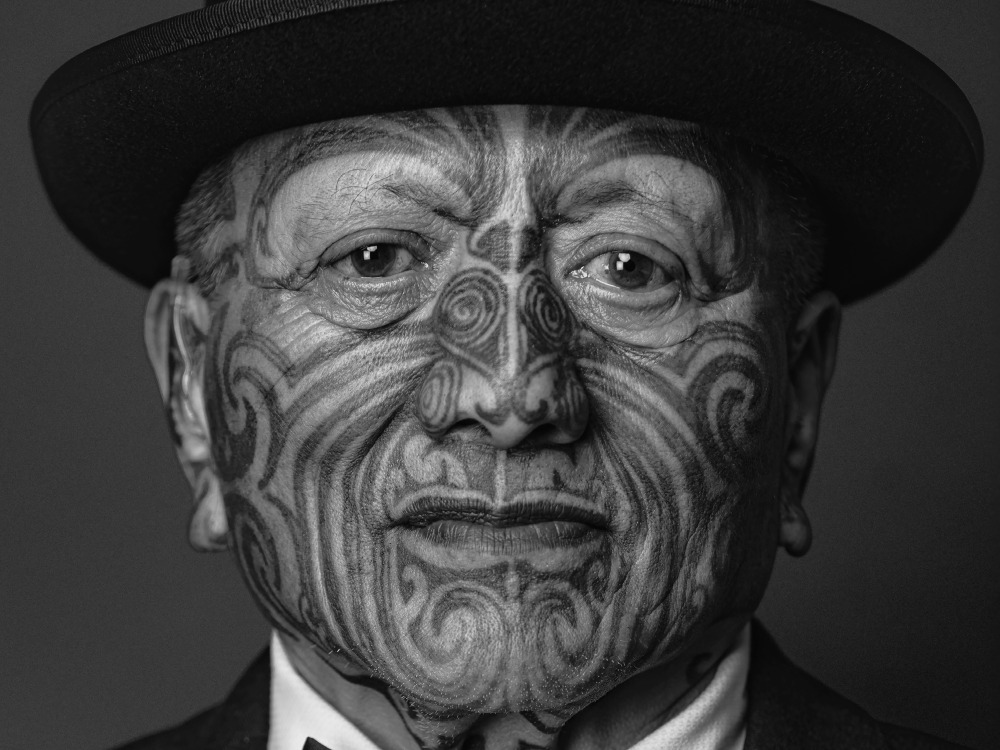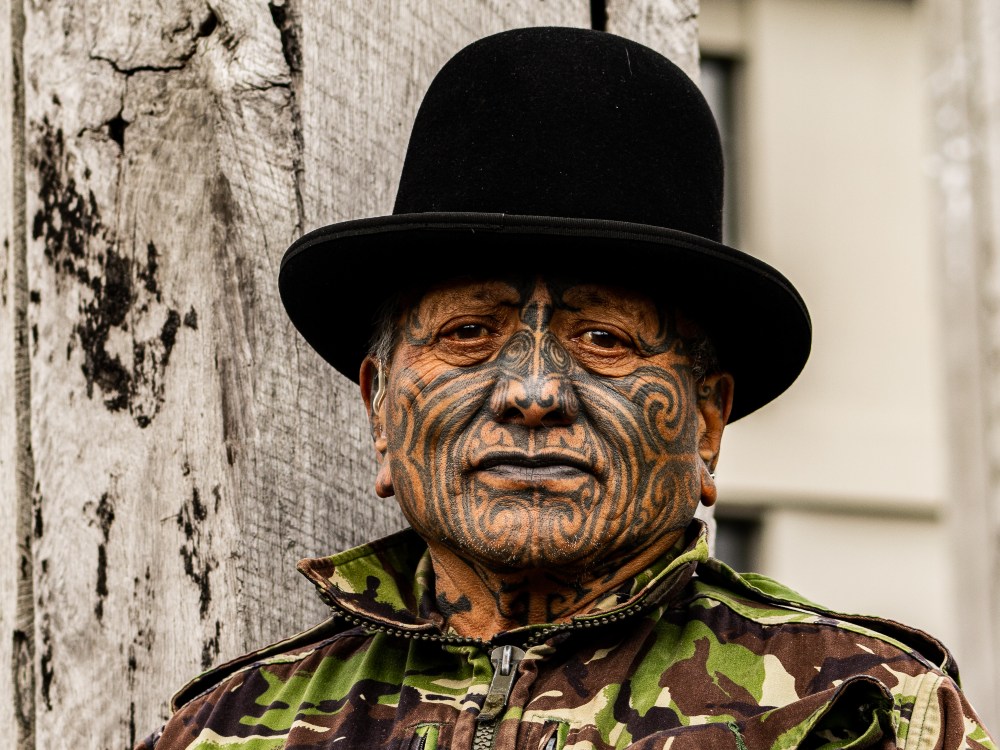

Activist, artist and author Tāme Iti speaks to YOUR EX’s Oliver Hall about the shared struggles for Māori and Rainbow rights, and why young people give him hope for the future
This interview has been edited for clarity and brevity.
A lot of queer people grow up navigating shame before they find their pride. Does that resonate with your own journey?
In some ways, yes, though when I was younger, I didn’t have much understanding of queer identity. In our community there were people who, looking back now, were clearly queer, but at the time I didn’t have the language for that. Later, after leaving home and going out into the world, it started to make sense.
What I came to see was that queer people had always been there. They were part of the community. They weren’t outside it. Once I understood that, and once I met more queer people through activism and protest, it all became much clearer to me.
So you see parallels between the struggles of Māori and the struggle of rainbow communities?
Yes, the same religious mentality that undermined our culture, our art and our language also made judgments about takatāpui, gay people and lesbians. Those systems of judgment come from the same place.
Have takatāpui communities been part of your world over the years, and, if so, what have those relationships taught you?
You meet all kinds of people in activist spaces — gay men, gay women, all sorts of people — and at first, because of my upbringing, it was unfamiliar to me. I hadn’t had those experiences before, so I had to work through that as a young man.
What I learned was that everybody has their own feelings and their own way of being in the world. Once you really listen and let go of fear, you realise so much of what you’ve been told isn’t true. A lot of the fear people carry about queer people is learned fear. Fear that has often been seeded by colonialism and by Christianity. I was brought up Presbyterian and also in Ringatū, so I knew both those traditions. But at the end of the day, those belief systems still come from Christian foundations, and those foundations shaped the judgments people made.
As a public figure you’ve always been very open about who you are. For some queer people, particularly in the trans community, that can feel dangerous. What would you say to people who are worried about being authentically themselves in public?
First and foremost, you have to build that security inside yourself. You have to feel okay in yourself, comfortable in who you are. Once you know who you are, that gives you strength.
It’s really important for people to be visible, not hidden away in the corner. I don’t agree with the idea that people should have to disappear to be safe. There is space for all of us. We are allowed to be who we are.
What do you think marginalised communities can learn from one another?
We need conversations. We need debate. We need spaces where people can speak openly, whether or not everyone agrees. Back in the late ’60s and early ’70s, everything happened on the street. People argued, debated, challenged each other, listened to each other. There was a real openness to that exchange.
That taught me that everybody needs a voice. It doesn’t matter whether you agree with them or not — people need space to speak and to be heard. That’s how you learn. That’s how you stop making judgments too quickly. Everybody should have a place in that conversation.
Is there anything you miss about those earlier years of activism?
I miss the eye contact. I miss people actually being together, rather than relying on social media. I miss the vibration of people gathering — small groups, big groups, that feeling of bodies together in a shared purpose. In the ’70s, that feeling was everywhere for us, and I loved it. It was energising. When you came across hundreds or thousands of people on the street, there was a real force in that.
When you wrote your memoir, Mana, what did you want readers, especially young people, to take away from the book?
Originally, I thought of it as a kind of manual — not just a memoir, but something people could learn from. A book about protest, about strategy, about language, about how movements communicate and win people over. Back in the ’70s, everything had to be typed, printed, distributed by hand. You had to think very carefully about what language you used and how you reached people.
I learned from a lot of different movements — the Black Panthers, people like Bobby Seale, and Che Guevara — because we were thinking seriously about power, about organising, and about how to win the hearts and minds of people. That has always been the real challenge.
Was there any part of the book that was especially difficult to write about?
I couldn’t tell everything, and the book is really only a beginning. But one of the hardest parts was writing about the sexual abuse I experienced at the hands of my own family. That was very difficult to put on the page. But at the same time, it felt important. Sharing parts of that story was part of my healing. For a long time, people talked about these things but didn’t confront them. I felt it mattered to speak about it openly.
A lot of your public life has been about standing firm in who you are and where you come from. How hard was it to do that in times when Māori people were being defined through fear and stereotypes?
I wasn’t alone in that. My whole generation was going through it. What helped me was meeting older activists and political organisers, people who had already been involved in anti-war movements, anti-apartheid organising, and socialist organising. They became teachers to me.
At one stage, I thought the enemy was a white person with blonde hair and blue eyes. But that’s not true. The enemy is not colour. The real struggle is understanding colonisation and then going through the process of decolonising yourself. That’s the deeper work.
We’re in an election year. What are your hopes for the general election?
Sometimes I think voting itself can be a scam! People making promises every three years without building anything lasting. What I believe in is building strong communities. We can have different opinions, but we still need to build something that lasts, something bigger than party politics. For me, that means building with our Treaty partners too, with those who genuinely want to be part of that work.
It’s tricky. I’m a strong supporter of Te Pāti Māori. But I also know our people have lived through generations of colonisation, and that affects how we organise and how we divide ourselves. Those internal conflicts don’t come from nowhere.
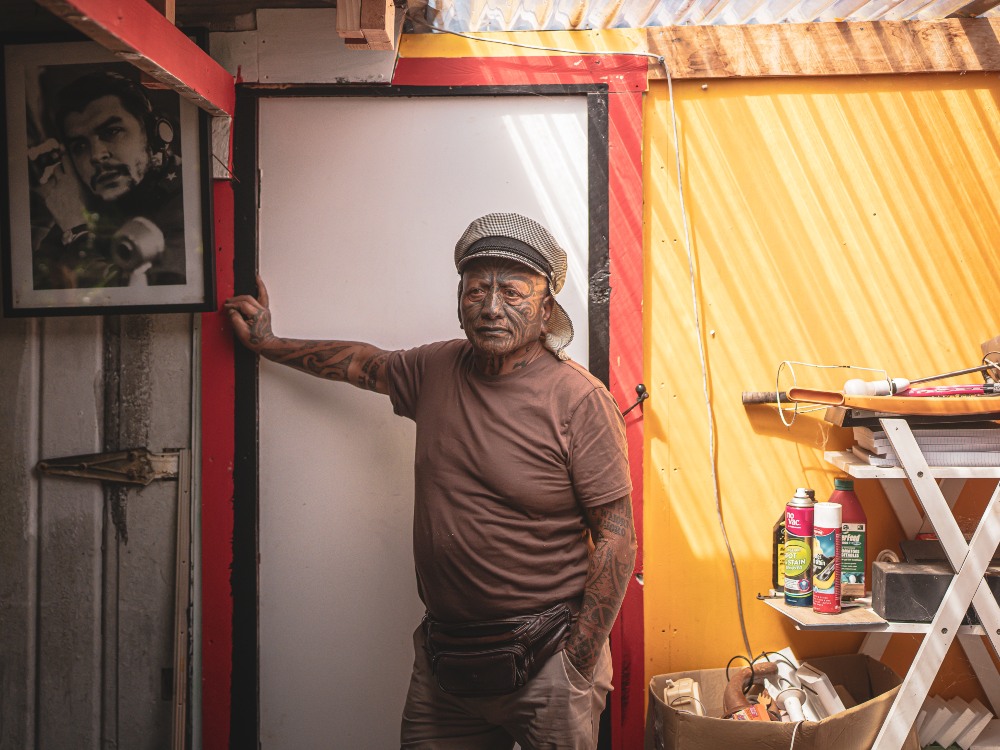
Do you think Te Pāti Māori’s internal tensions will affect their success this election?
I’ve seen those kinds of tensions many times before in political movements. It may take another two or three generations to fully overcome.
What gives me hope is the young people. I work with my moko and with younger generations, and they’re amazing. That’s why I love Indigenous events and spaces where young people can share their creativity, their stories and their strength. That movement from negativity into positivity — that’s where hope is!
Photo | Te Rangimoaho Iti
Tāme Iti will be appearing at the Auckland Writers Festival 12–17 May. For more information and tickets, visit www.writersfestival.co.nz
Mana by Tāme Iti, is out now.