








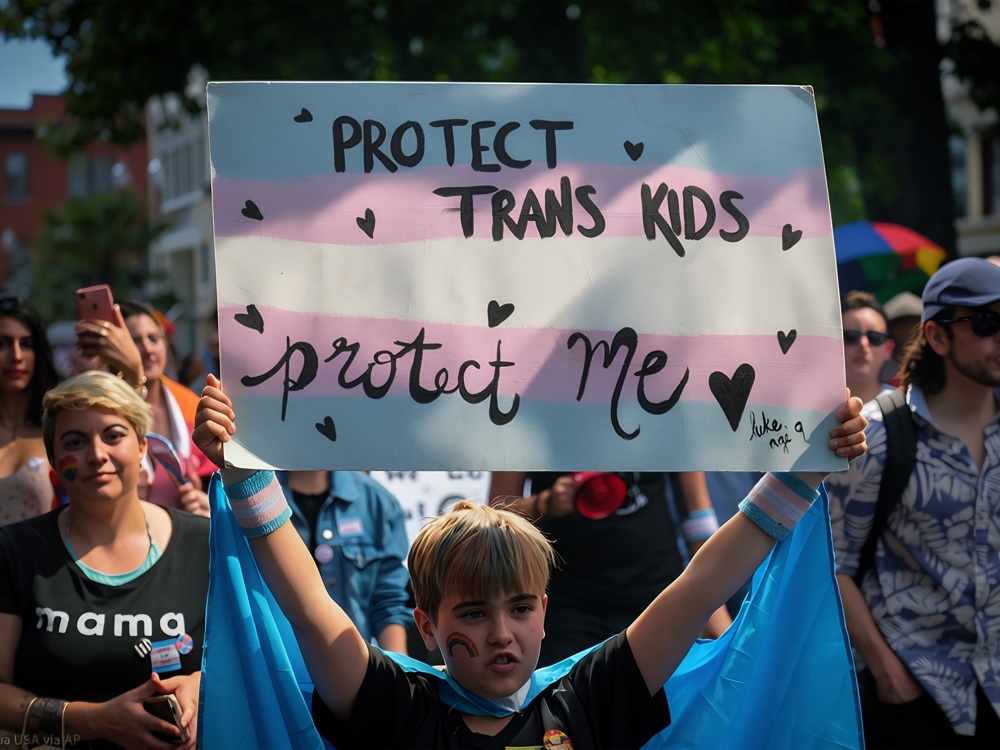
The Colorado Supreme Court has handed transgender youth and their families a major legal victory, ruling that Children’s Hospital Colorado must resume gender-affirming medical care for patients under 18.
In a 5-2 decision issued on Monday, the court found there was enough evidence to show the hospital likely violated Colorado’s anti-discrimination laws when it stopped prescribing hormone therapy and puberty blockers for transgender minors earlier this year.
The ruling sends the case back to a lower court with instructions to issue an injunction requiring the hospital to restart treatment.
Writing for the majority, Justice William Hood said the hospital continued offering the same medications to cisgender youth when medically necessary, making the suspension of care for trans patients discriminatory under state law.
“CHC’s decision to suspend medical gender-affirming care to youth denies petitioners the full and equal enjoyment of services based on gender identity,” Hood wrote.
The decision is one of the most significant courtroom wins for transgender healthcare access since the Trump administration renewed efforts targeting gender-affirming care nationwide.
Federal pressure sparked the dispute
The legal battle began after Children’s Hospital Colorado suspended gender-affirming care in February 2025 following an executive order from Donald Trump aimed at restricting treatment for transgender minors.
The hospital briefly resumed services after a federal judge blocked the order. However, months later, mounting federal scrutiny reignited concerns within the hospital system.
In July, the United States Department of Justice subpoenaed Children’s Hospital Colorado for patient records, internal communications and billing documents connected to gender-affirming treatment.
Federal officials said they were investigating the off-label use of medications, though they acknowledged there was no evidence of wrongdoing.
The pressure escalated again in December when Robert F. Kennedy Jr. issued a declaration claiming gender-affirming care for minors was neither safe nor effective.
The declaration warned that hospitals providing treatment could face consequences, including investigations tied to federal funding.
Children’s Hospital argued that resuming care could threaten its Medicaid participation and potentially destabilise the wider hospital network. Around half of the hospital’s patients rely on Medicaid coverage.
In a dissenting opinion, Justice Brian Boatright said the majority had failed to properly acknowledge the risks the hospital believed it faced.
“The majority opinion completely minimises the reality of the situation,” Boatright wrote. “Furthermore, it brushes off these drastic consequences as speculative.”
Justice Carlos Samour joined the dissent.
Court rejects “speculative” threats
The majority, however, drew a clear distinction between political threats and enforceable law.
Justice Hood noted that Kennedy’s declaration was not itself federal law and pointed to a recent federal ruling in Oregon that blocked enforcement efforts connected to the declaration.
“The Kennedy Declaration isn’t federal law,” Hood wrote.
The court also emphasised that fears of losing federal funding remained hypothetical at this stage.
Hood suggested the hospital had other legal avenues available if the federal government attempted retaliation in the future.
At the centre of the ruling was Colorado’s anti-discrimination statute.
The court determined that denying care specifically to transgender youth while continuing to provide the same treatments to cisgender patients likely violated protections based on gender identity.
Hood warned against weighing discrimination claims solely against institutional fears or majority interests.
“Were it otherwise, minority groups would always lose,” he wrote. “But that is not the law.”
Families described “lifesaving” care
The lawsuit was filed by transgender youth and their families after Children’s Hospital announced shortly after New Year’s Day that it would again stop prescribing hormone therapy and puberty blockers to trans minors.
The hospital continued offering mental health support services, but halted new medical prescriptions connected to transition-related care.
Families involved in the case described devastating emotional fallout after treatment was interrupted.
Some parents testified that their children’s mental health deteriorated rapidly, with at least one young person reportedly discussing suicide.
Others feared their children would be forced through puberty in a way that conflicted with their gender identity, causing irreversible physical changes.
“It’s hard as a parent to be told by the same provider that this is the care your child needs,” one parent, identified in court as Denisha Doe, said during a February hearing. “It truly is lifesaving.”
The lower court had originally acknowledged that the families were likely to succeed in proving discrimination, but declined to order Children’s Hospital to resume treatment due to concerns about possible federal punishment.
The Colorado Supreme Court has now rejected that reasoning.
A major moment for LGBTQ+ protections
LGBTQ+ advocates have framed the ruling as a defining moment for transgender rights in Colorado and beyond.
Attorney Paula Greisen, who represents several of the families, said the decision reinforces that state protections still apply, even amid escalating national attacks on trans healthcare.
“LGBTQ+ people in Colorado are going to be protected by the laws,” Greisen told CPR News, “which are going to be enforced in Colorado at a time when they’re under attack.”
As of Monday evening, Children’s Hospital Colorado said it was reviewing the ruling and evaluating next steps.
The hospital has not yet announced when treatment services will officially resume.