








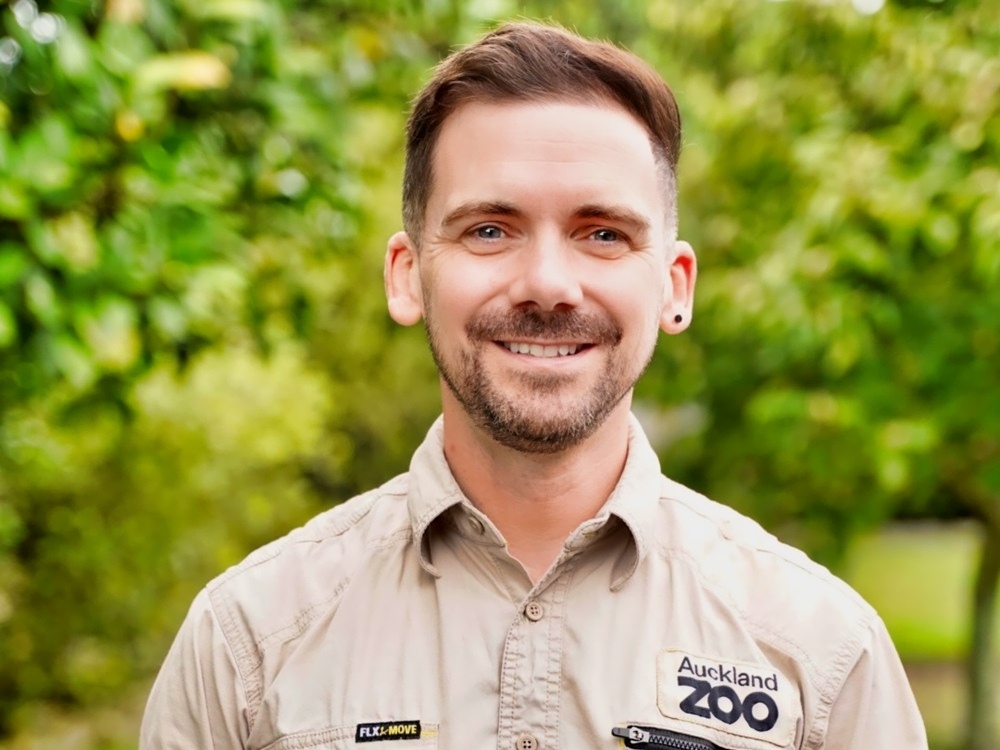

Auckland Zoo senior veterinarian Dr Adam Naylor takes Oliver Hall behind the scenes to show the work that goes into urgent wildlife care, rehabilitation, and the conservation of endangered species
When Dr Adam Naylor has to postpone our interview because an albatross and an endangered bittern have just arrived as emergency patients, it feels less like bad timing and more like a perfect introduction to his diverse job.
His day can turn in a moment. Routine health checks and scheduled procedures give way to urgent calls from the Department of Conservation, or to the arrival of native wildlife in serious trouble. The unpredictability is built into the role, and so is the sense that Auckland Zoo’s veterinary team is doing far more than many people might realise.
That is part of what makes the new season of Wild Heroes feel so timely. The Three series follows the day-to-day work of Auckland Zoo. “The cameras are with us quite a lot,” Naylor says. “You see a really good spectrum of cases, and whether that’s us doing fieldwork or zoo work, they’ve been there following us through a lot of those really big stories.”
What interests Naylor most is the chance to show the scale of the work that happens beyond public view. Visitors to Auckland Zoo can watch procedures from the vet hospital gallery, but that is only a snapshot. “You don’t see all the rehabilitation that happens behind the scenes, and then all the work that goes into getting an animal released again,” he says. “What’s great about the series is it really shows the amount of work that everybody puts in, not just by the vets, but by the nursing staff and keepers, to get an animal back to the wild, and the role we play with conservation partners throughout Aotearoa and beyond.”
In Naylor’s view, this is what makes good modern zoos so vital. If animals are kept in human care, he believes that must be matched by meaningful conservation work, knowledge sharing, and real contributions to species recovery. It is one of the reasons Auckland Zoo appealed to him after years of specialist work in the UK and the United States. He had heard its reputation before arriving, and what he found here matched it. “We’re really lucky to have such a good zoo, doing such impactful, important conservation work all the time.”
That work reaches well beyond the zoo grounds. Keepers and veterinary staff are involved in conservation projects in the field, often supporting DOC with endangered species. “New Zealand has some amazing wildlife, but also a huge amount of that wildlife is on the brink,” he says. “Anything that we can do to help stop those declines is just so important.”
This year, one of the biggest commitments for the zoo’s veterinary team has been kākāpō. Naylor recently spent time on Whenua Hou (Codfish Island), off the coast of Rakiura, helping with chicks during the breeding season.
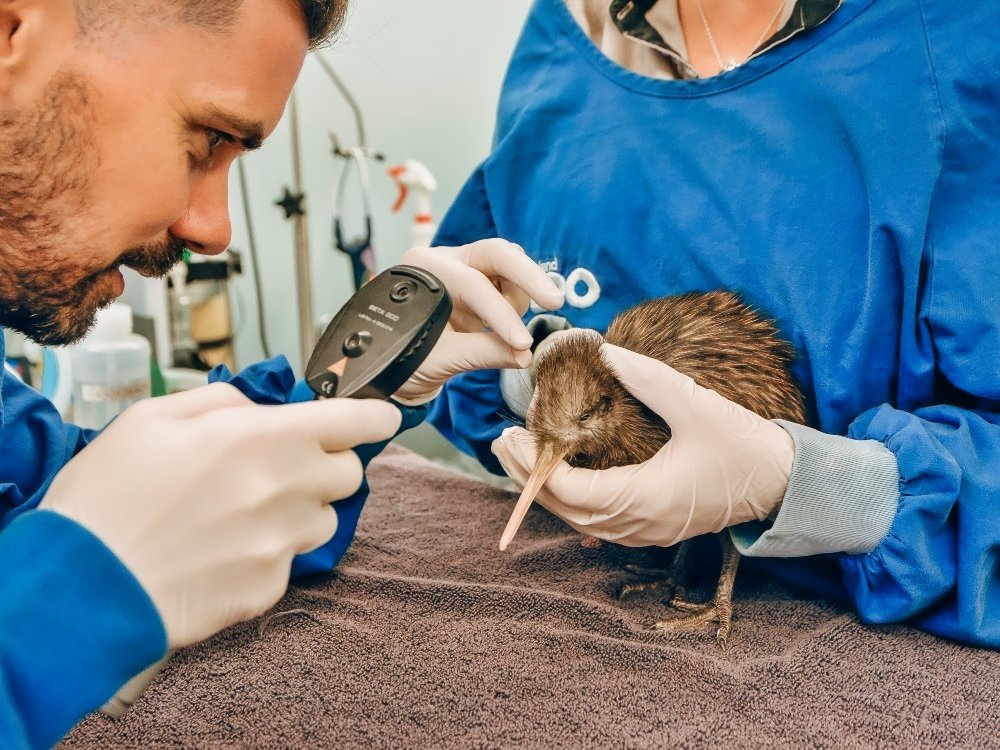
The breadth of his job is hard to overstate. Zoo and wildlife medicine is its own specialty, but as Naylor points out, it may also be the broadest one there is. “Every non-domestic animal is what we do,” he says. “So that can be everything from fish and invertebrates up to rhinos and albatrosses and everything in between,” Naylor says.
The wildlife cases, brought in by the likes of DOC, tend to be the toughest. Many animals arrive after major trauma or prolonged illness. They are often in bad shape by the time they reach the hospital, and the standards for successful treatment can be unforgiving. “If we’ve got a wing fracture on a bird, if we’re going to fix that fracture, it has to be perfect, because that bird has got to be releasable,” Naylor says. That is especially true for seabirds. “For an albatross, it’s got to soar thousands of miles.”
Even once the immediate injury is addressed, the hospital itself can present challenges. Some species are simply not built for human care, even temporarily. “Things like the seabirds have evolved in environments which don’t have a lot of fungus, and so they’re very prone to getting fungal pneumonia when you bring them inland and you put them in a hospital,” he explains. Albatrosses, which spend most of their lives flying or sitting on open water, can also develop painful sores on their feet in human care. “There’s lots of things that make some species harder than others.”
Naylor is compassionate but unsentimental about what follows. Not every patient can recover. Sometimes euthanasia is the only humane choice. “It’s always sad when that’s the outcome,” he says. “But I think for us vets, there’s also the reality that if it didn’t get found by a member of the public and brought to us by DOC, then that animal would just be out in the wild and it would just starve to death.” Seen through that lens, he adds, euthanasia can still be “a positive outcome” because suffering has been prevented.
It is the kind of clarity that comes from experience, and Naylor’s has been hard-earned. He graduated from the Royal Veterinary College in London in 2007 and built his career through increasingly specialised roles in exotic animal practice, wildlife medicine, and zoological health. He worked in the US and UK before passing specialist board exams in both Europe and America. He remembers that period with a laugh now, calling it “horrendous years of cramming for these awful exams in two places!”
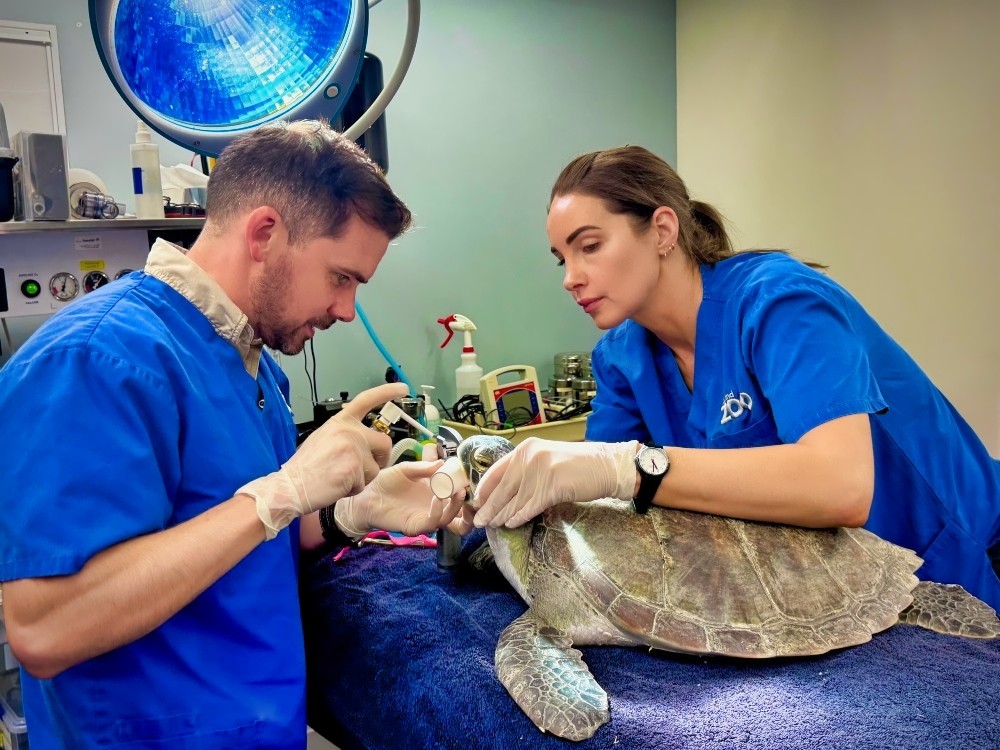
What he has found in Auckland, though, goes beyond professional fulfilment. He speaks warmly about the city and its sense of community. He has been learning te reo Māori, something he tells us was inspired by colleagues at the zoo, and describes as part of a larger commitment to Aotearoa.
He is similarly positive about the queer community he has found, both in Auckland and in zoo culture more broadly. He describes zoos as often attracting left-leaning people and creating safe and welcoming places for queer staff. At Auckland Zoo, Pride is part of the calendar, and that spirit of inclusion has helped make the wider city feel like home.
As we conclude our interview, Naylor acknowledges that veterinary medicine is famously competitive, and he knows how easy it is for young people to be told that their dream job is unrealistic. His advice to them is simple. “Don’t give up on it,” he says. “If you’re really passionate about something, you absolutely can do it!” He tells us with a smile that he was once told by a teacher he was not smart enough to become a vet. Season Four of Wild Heroes proves otherwise!