










The Italian New Zealand pianist talks to YOUR EX’s Oliver Hall about finding authenticity beyond perfection
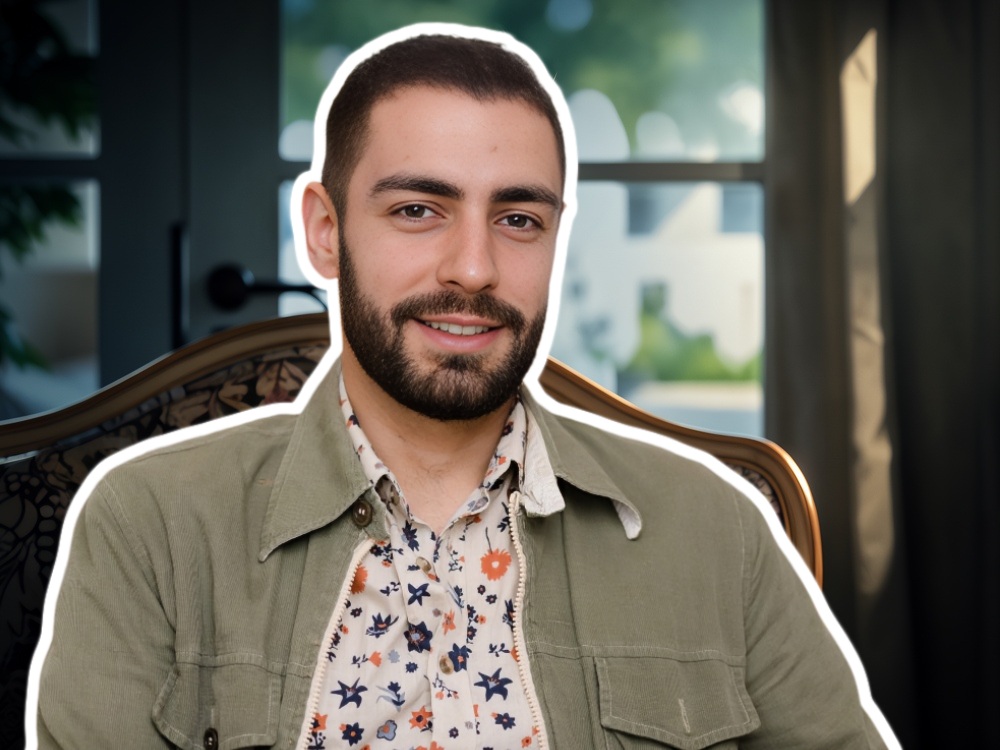
For Flavio Villani, classical music only feels old if you let it stagnate. Villani moved to Auckland in 2008 and later completed a Master of Piano Performance at the University of Auckland, and has built a career that resists treating the repertoire as something fixed behind glass. His work as a performer, teacher and composer came to prominence in the documentary Crossing Rachmaninoff, which followed his preparation for his first orchestral performance of Rachmaninoff’s Second Piano Concerto in Italy.
“For me, classical music only becomes historical if we treat it like a museum object,” he says. “The composers we play were living artists responding to their own time, their emotions, and their audiences.”
That idea sits at the centre of his live concerts. “When I perform, I try to approach the music as something alive in the present moment,” he says. “Every performance is slightly different, and the connection with the audience changes the meaning of what we play. The tradition gives us a foundation, but the real vitality comes from how we engage with it today.”
It is a philosophy that also underpins his research. Villani has just completed a DMA in Music focused on improvisation strategies in classical music pedagogy and performance, an area that looks backwards in order to reopen something that was once ordinary.
“Improvisation used to be a natural part of being a classical musician,” he says. “Bach, Mozart, Beethoven, Chopin, they were all extraordinary improvisers. In many cases the music we know today grew directly out of improvisation.”
What changed, he argues, was not one dramatic rupture but a long shift in how music was taught and valued.
“Over the 19th and 20th centuries, classical performance gradually became more focused on fidelity to the written score,” he says. “That brought many positive things, but it also meant that the creative role of the performer became more restricted.”
He traces that narrowing to several linked developments. Music education became more standardised. The composer became “a kind of untouchable figure”. The score came to be treated as authoritative. Then recording culture intensified the pressure to sound flawless.
“This environment and the rise of the recording industry and the myth of the ‘perfect interpretation’ also contributed to a fear of mistakes, where risk-taking and personal expression could feel unsafe,” he says.
“Reviving improvisation reminds us that interpretation is not only about reproducing something correctly, but about actively engaging with the musical language.”
That engagement also changes the atmosphere of live concerts. “Improvisation introduces a sense of risk and spontaneity. The audience knows that what they are hearing is being created in that moment, and that changes the energy in the room.”
Villani spoke about the personal pressures surrounding performance in Crossing Rachmaninoff. The film documented his return to Italy for that key concerto performance and also touched on his family life, including a difficult period around their acceptance of his sexuality.
Looking back now, he says the platform was ultimately worthwhile. “The film gave my family and me the chance to talk about things that had been unspoken for a long time,” he says. “In the end, being open about it helped create more understanding, and brought us closer.”
He also sees a changed landscape within classical music itself. While the field has often been associated with conservatism and coded silences, Villani tells us the culture has progressed.
“In today’s classical world there is a growing number of openly queer musicians and composers, and that has made a real difference,” he says. “It’s given me a sense of community within the community.”
His advice to younger queer musicians is direct: get involved! “There is space for you, even if it doesn’t always feel that way at first,” he says. “Classical music is constantly being reshaped by the people who take part in it.”
He points to the fact that in New Zealand especially, many musicians are no longer hiding who they are. “Your identity is not something separate from your musicianship, it’s part of what gives you a unique voice,” he says. “The more you allow yourself to be honest and present in what you do, the more meaningful your music-making can become.”
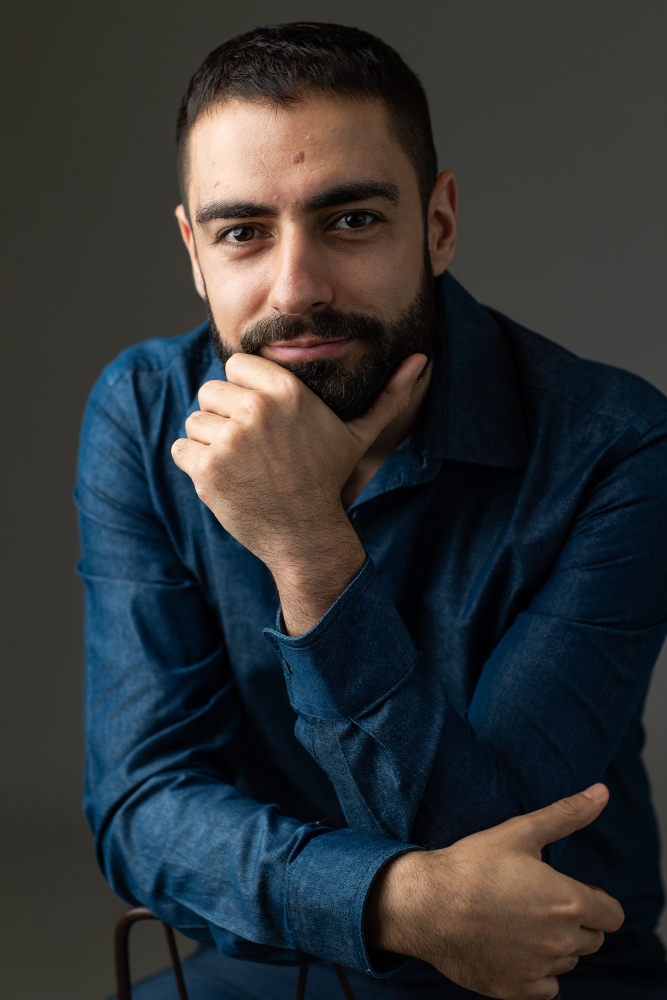
The most affecting part of Villani’s recent work, though, may be the way it has been shaped by grief following the sudden loss of his partner, David. “I don’t think there is really a way to prepare for something like that. It breaks something in you, and at the same time it asks you to keep going.”
In the aftermath, he found himself writing imagined letters to David. “As a way to keep a thread between worlds,” he explains. “There were also dreams, very vivid ones, where it felt like I could meet him somewhere else, in a space that didn’t follow the same rules as waking life.”
He resists any tidy narrative of recovery. “I don’t think I’ve ‘coped’ with the grief in a linear way,” he says. “It’s something that changes shape. Some days it’s very present, almost physical, and other days it sits more quietly in the background.”
What it has changed, unmistakably, is the way he hears and makes music. “It has definitely shaped my musicianship,” he says. “It has stripped something away, a kind of surface, and brought me closer to a more honest place. There is less interest now in trying to impress or seek approval, and more of a need to connect, to listen, to allow space.”
That sense of stripped-back honesty returns when he talks about returning to his piano following David’s death. “Sometimes I had had enough of giving words to my feelings, so I would sit at the piano and let something emerge,” he says. “Not in a controlled way, but more as a kind of listening, almost like trying to follow something that was already there, just beneath the surface.”
In recent times he has explored memory and loss in performance and composition, including projects that bring classical repertoire into conversation with visual art.
Villani has worked with film, theatre, and dance performance, and says those exchanges open music into a wider imaginative field. He cites his recent collaborations with painter Star Gossage as some of his most memorable experiences.
“I’m interested in creating experiences where different art forms can speak to each other,” he says. “These collaborations allow me to explore sound in new ways, often shaped by the inspiration and ideas of other artists. There is something very fertile about that exchange.”
Whether he is talking about improvisation, queer visibility, grief, or collaboration, Villani keeps returning to the same belief: that meaning happens in spontaneous moments. For a musician long associated with Rachmaninoff’s intensity, it is perhaps the clearest measure of where he is now. Not chasing perfection, but always searching for something authentic.