









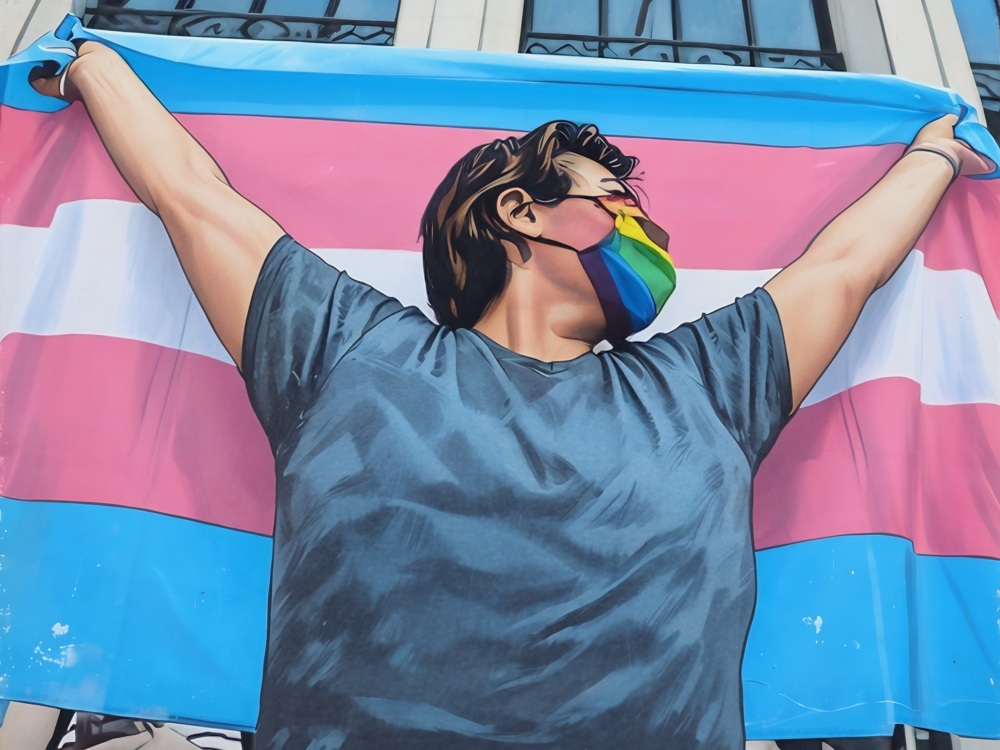

A new 2026 ranking of the most trans-friendly countries in Europe and Central Asia has been released, with Iceland taking the top spot.
The annual Trans Rights Index and Map, produced by Transgender Europe, tracks the protections and opportunities available to trans and non-binary people across Europe and Central Asia.
The index is produced in partnership with ILGA-Europe’s Rainbow Map and is co-funded by the European Union.
Countries are scored across several indicator categories, including legal gender recognition, asylum, hate crime and hate speech, non-discrimination, health, and family rights.
Iceland remains on top
Iceland scored 30 out of 32, receiving full marks in all but two categories.
One point was deducted in Asylum, under policy and other positive measures, and another in Hate Crime/Speech, under policy tackling hatred.
The country has now held the same score for three consecutive years and has improved by 18 points since the index began in 2019.
Malta ranked second, meeting 28 out of 32 indicators and achieving full marks in Legal Gender Recognition, Hate Crime/Speech, Health, and Family.
Spain placed third, with a score of 27.18 out of 32 and full marks in the Asylum and Health categories.
Belgium and Norway followed, each scoring 25.5 out of 32, while Germany scored 24.57.
Notably, Austria, Germany, Iceland and Malta are the only countries to fully meet the criteria for non-binary recognition.
Progress driven by activists and courts
Transgender Europe said the latest index shows more visible legal movement than in recent years, but warned that most changes are not the result of renewed political commitment.
“The 2026 Trans Rights Index and Map shows more visible legal shifts than in recent years,” TGEU said in a statement. “However, most of these changes do not reflect new political commitment.”
“The developments mostly stem from the tireless work of activists and court rulings rather than governments taking proactive steps to advance rights. Despite visible public attacks on trans people across much of the region, the lack of political response is alarming.”
Russia ranks last
At the bottom of the ranking is Russia, which met zero out of 32 indicators.
Tajikistan, Turkmenistan, Uzbekistan, Georgia and Azerbaijan each scored one point, while Romania, Armenia, Kazakhstan and Kyrgyzstan scored two.
The United Kingdom met 13.5 of the 32 indicators and scored no points in the Asylum, Health and Family categories.
Key findings
The Trans Rights Map also identified several broader trends across the region.
Of the 54 countries reviewed in Europe and Central Asia, 38 have legal or administrative measures in place that make legal gender recognition available to trans people. That is down one country from last year.
Five countries now ban legal gender recognition, compared with four last year.
The index also found that eight of the 54 countries offer explicit international protection on the grounds of gender identity for asylum seekers.
Nine countries have a legal gender recognition procedure for refugees that is accessible.
For trans and non-binary people across the region, the 2026 index shows both meaningful progress and serious setbacks, with rights increasingly shaped by court decisions and activist pressure rather than proactive government action.