









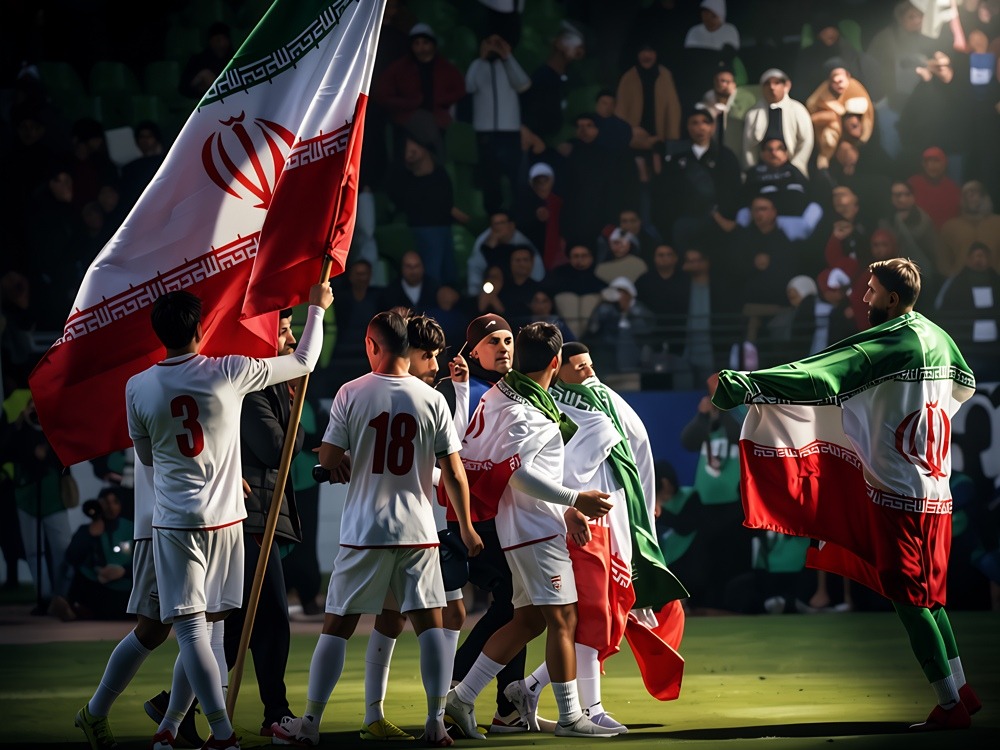

Iran’s football federation has reportedly submitted a list of conditions to FIFA ahead of the country’s participation in the 2026 FIFA World Cup, including a demand that LGBTQ+ Pride flags be banned at matches involving Iran.
The Football Federation of the Islamic Republic of Iran said it would compete in the tournament in the United States, Canada, and Mexico “without any retreat from our beliefs, culture and convictions”, and insisted that host countries “must take our concerns into account”, according to Out Sports.
The list of 10 demands comes after FFIRI president Mehdi Taj was denied entry to Canada ahead of the FIFA Congress in Vancouver in April.
Pride flags among Iran’s concerns
One of the federation’s demands is that only officially recognised flags be displayed during matches involving Iran, including flags carried by fans inside stadiums.
If accepted, that condition would effectively ban LGBTQ+ Pride flags from Iran’s games.
The request is already controversial, but it is further complicated by Iran’s scheduled match against Egypt on 26 June in Seattle. That game has been designated the “Pride Match” by Seattle’s organising committee.
The Pride Match theme was announced in December and prompted immediate criticism, given that homosexuality is punishable by death in Iran.
Egypt does not have a specific law banning same-sex activity, but LGBTQ+ people can be prosecuted under morality laws, with penalties that may include prison sentences, hard labour, fines, and deportation.
Both Iran and Egypt objected to taking part in the Pride Match when the theme was announced.
Taj described the designation as an “irrational move that supports a certain group”, according to The Straits Times.
Visa and security demands
Iran’s football federation has also asked FIFA to guarantee that all players, coaches, and officials travelling with the Iranian team will receive visas.
That includes individuals who have previously served with Iran’s Islamic Revolutionary Guard Corps.
The IRGC is currently listed as a terrorist organisation in both Canada and the United States. Taj has said his links to the IRGC were the reason he was denied entry to Canada.
Other conditions reportedly include enhanced security at stadiums, airports, and hotels throughout the tournament, as well as assurances that the Iranian flag and national anthem will be respected.
While FIFA may be able to respond to some of Iran’s concerns, issues such as visas and security vetting will ultimately fall under the authority of host governments.
The demands are likely to intensify debate around LGBTQ+ visibility, politics, and human rights at the 2026 World Cup, particularly as the tournament prepares to host a match explicitly themed around Pride.