










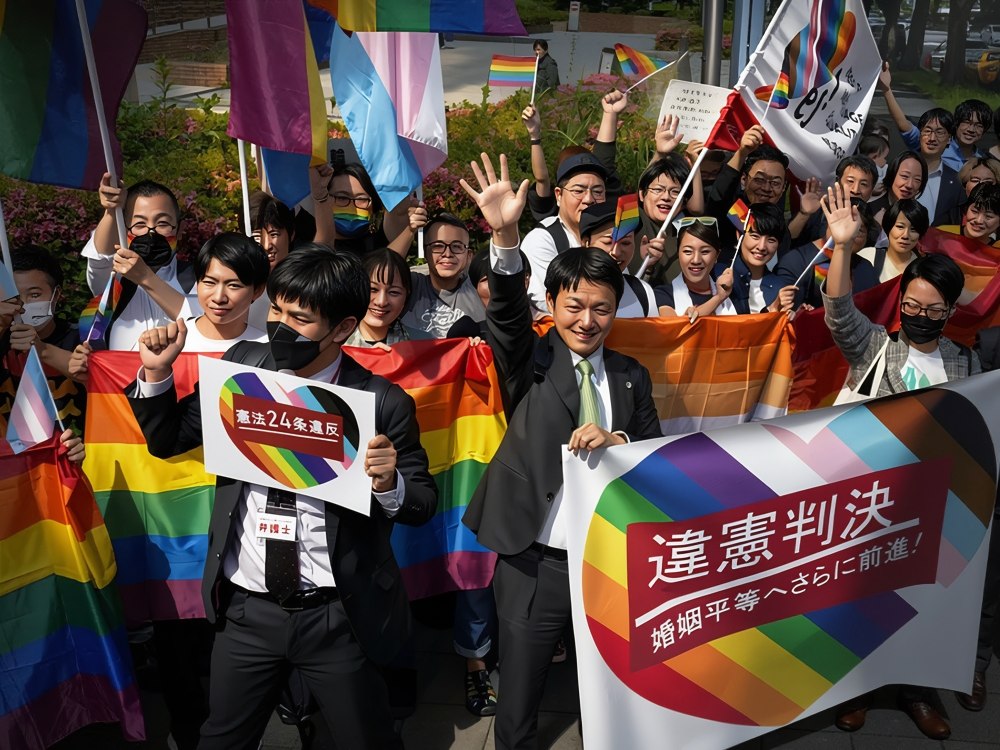
Japan has taken a landmark step towards non-binary legal recognition following a major ruling from the Osaka High Court.
On 8 May, the court ruled that Japan’s family registration system, known as the koseki, violates constitutional equality protections by offering only “male” and “female” as gender options.
The koseki is Japan’s mandatory national record-keeping system, used to track births, deaths, marriages, and family relationships.
Case brought by non-binary Kyoto resident
The case was brought by a 50-year-old non-binary resident of Kyoto Prefecture, who petitioned to change their designation of “eldest daughter” to a gender-neutral term in the koseki.
While the court stopped short of immediately granting the individual request, it ruled that the absence of a non-binary gender marker option should be reconsidered at a national level.
It also stated that if such an option is introduced, the petitioner’s case should be revisited.
In its ruling, the court said gender identity is “directly linked to an individual’s personal existence, making it a significant legal good.”
Advocates call ruling a major breakthrough
Attorney Shun Nakaoka, who has worked on non-binary recognition cases in Japan, described the decision as “a huge step toward legal recognition”.
Nakaoka noted that until now “the existence of nonbinary gender has been legally unrecognised” in Japanese law.
Although the ruling does not immediately change the koseki system, it sets an important constitutional precedent.
Advocates say the decision could help pave the way for broader reform and eventual legal recognition of non-binary people across Japan.