









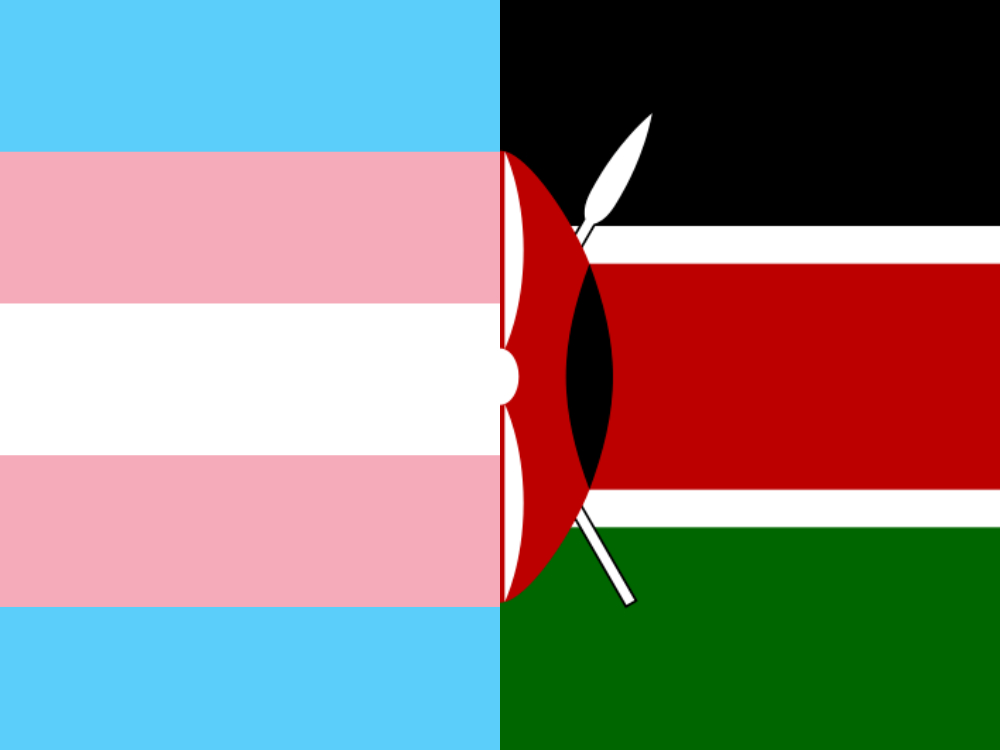
In a significant development for transgender rights in Kenya, the High Court has ruled that the government must reasonably consider applications to amend sex or gender markers on official identity documents.
In a judgment handed down on Wednesday, Justice Bahati Mwamuye found that existing registration laws do not prohibit transgender people from applying to change gender markers on their identity documents.
The judgment arose from a 2020 petition filed by Kenyan transgender rights activist Audrey Mbugua and two others.
“The Births and Deaths Registration Act Chapter 149 and the Registration of Persons Act Chapter 107, when interpreted in a manner consistent with the Constitution, do not expressly prohibit the consideration and determination of applications for alteration of sex or gender markers,” Mwamuye found, according to The Star.
Court rejects blanket refusal
The court ruled that authorities cannot simply refuse to consider gender marker change applications altogether.
Instead, officials must assess applications on a case-by-case basis in a reasonable, fair and non-discriminatory manner.
The Kenya Human Rights Commission welcomed the ruling, describing it as “an important step forward for the rights, dignity, equality, privacy, and recognition of transgender persons in Kenya.”
The organisation said the court had reaffirmed that public institutions must exercise their powers lawfully, reasonably, fairly and in line with the Constitution and Bill of Rights.
“For many transgender persons, identity documents that do not reflect their lived realities create daily barriers to accessing healthcare, education, employment, housing, travel, financial services, and many more challenges. This judgment acknowledges those lived realities and affirms that constitutional protections apply equally to all persons without discrimination,” said KHRC.
Earlier victory for a transgender woman
The ruling follows another important High Court decision in Eldoret in 2025 involving transgender woman Shieys Chepkosgei.
Chepkosgei had been detained by authorities in 2019 and charged with “impersonation”.
In that case, the court affirmed her rights and also directed the Government of Kenya to begin preparing legislation addressing the rights of transgender people.
Parliament was instructed to take the necessary steps to enact legal protections and recognition for transgender individuals.
Same-sex relations are still criminalised
Despite these legal victories, Kenya continues to criminalise same-sex intimacy under colonial-era laws.
Under those provisions, consensual same-sex acts can carry penalties of up to 14 years in prison.
A 2019 study found that discrimination against LGBT+ people costs Kenya between $181 million and $1.3 billion each year, or 0.2% to 1.7% of the country’s annual Gross Domestic Product.
For transgender Kenyans, the latest ruling does not automatically guarantee amended identity documents, but it does require the state to properly consider applications rather than dismiss them outright.
Advocates say that recognition could make a meaningful difference in daily life, from accessing healthcare and education to employment, housing, travel and banking.