









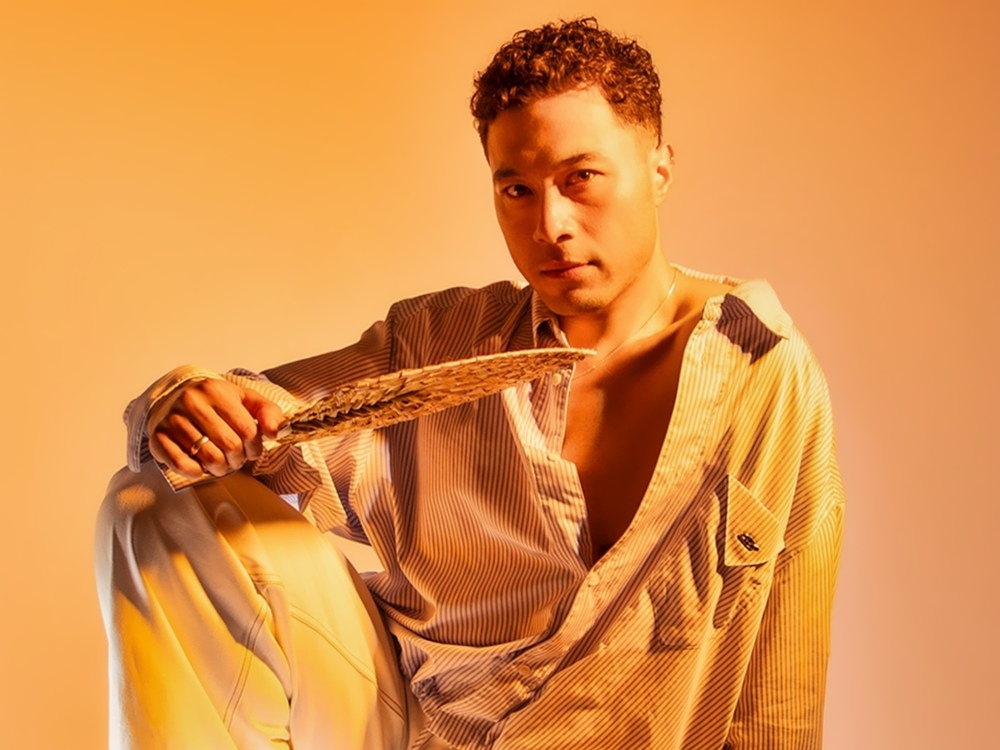

Aotearoa and Niuean artist Tyrun talks about blending growth, queer visibility and Vagahau Niue into his fresh contemporary sound
On Tyrun’s single FILA, the singer-songwriter questions what happens when love is forced to change.
For the Aotearoa and Niuean artist, that came from a period of personal reflection.
“Saturn returned!” he explains, laughing. “It made me hyper aware of how I had been living my life, and it was a good time to reflect on my growth as an adult.”
That sense of awareness feeds directly into FILA, a track that sits somewhere between devotion and doubt. Tyrun describes the song as growing out of conversations with his partner about change and the idea that relationships evolve in stages as you both age.
“We talked about falling in love again and again and again because with each new stage of growth we reach, it feels like that,” he explains. “Getting to know each other again with each new era.”
But FILA is not simply a love song. It is a song that does not fear asking, “what if?”
“I’m a ‘what if’ kind of guy,” he says. “What if that growth resulted in growing apart? What if we let the insecurities of inadequacies in a relationship win? What would falling in love again in the future look like?”
Writing in Two Languages, from the Heart
Part of what sets Tyrun’s work apart is how he moves between English and Vagahau Niue in the lyrics of the same song.
“I let the music guide me,” he tells us, explaining initially wrote FILA entirely in English, then had it translated into Vagahau Niue before shaping the final version.
“There’s an effort to not alienate listeners with extensive use of the language,” he explains. “I chose sections I thought fit well melodically, and parts where it almost becomes unavoidable to learn if you want to sing along.”
His approach considers how people encounter language, and how music can lower the barrier to that encounter. Shorter lines, stronger hooks, repetition that invites participation. The goal is not to simplify the language, but to make it more accessible.
That instinct comes from his own experience of disconnection.
“There was a time I felt really disconnected from my culture, like borderline internalised racism. It felt like nothing met me where I was,” he says.
For Tyrun, contemporary pop and R&B were already familiar spaces. What was missing was seeing Niuean identity reflected within them.
“It’s not like we as Pasifika people can’t speak the language of contemporary pop and R&B,” he says. “I just never saw it in a Niuean context, and certainly not in a queer context.”
That absence has become the foundation of his work.
“There are now people all over the world who have heard Niuean because of my latest releases. We are small but we are mighty, and I want to preserve our language in any way I can,” he tells us.
Finding Himself
Born in Tāmaki Makaurau, Tyrun spent a decade in Pōneke before returning north, a period he describes as formative.
“I loved growing up in Wellington, I found my chosen family there,” he says. “I was able to dream and fantasise about the life that we lived.”
That sense of chosen family was especially important given the environment he grew up in.
“I was raised Catholic and went to Catholic schools my whole life, so of course the typical idea of homosexuality was that it was bad,” he explains.
Even so, his experience was not defined by rejection.
“My best friend and I were able to find and hold onto each other pretty fast. That helped me through school a lot,” he says.
Support extended beyond friends. His family, he says, adjusted and learned, and ultimately accepted him.
“No one was particularly shocked. Overall, [my sexuality] wasn’t really treated as a big thing.”
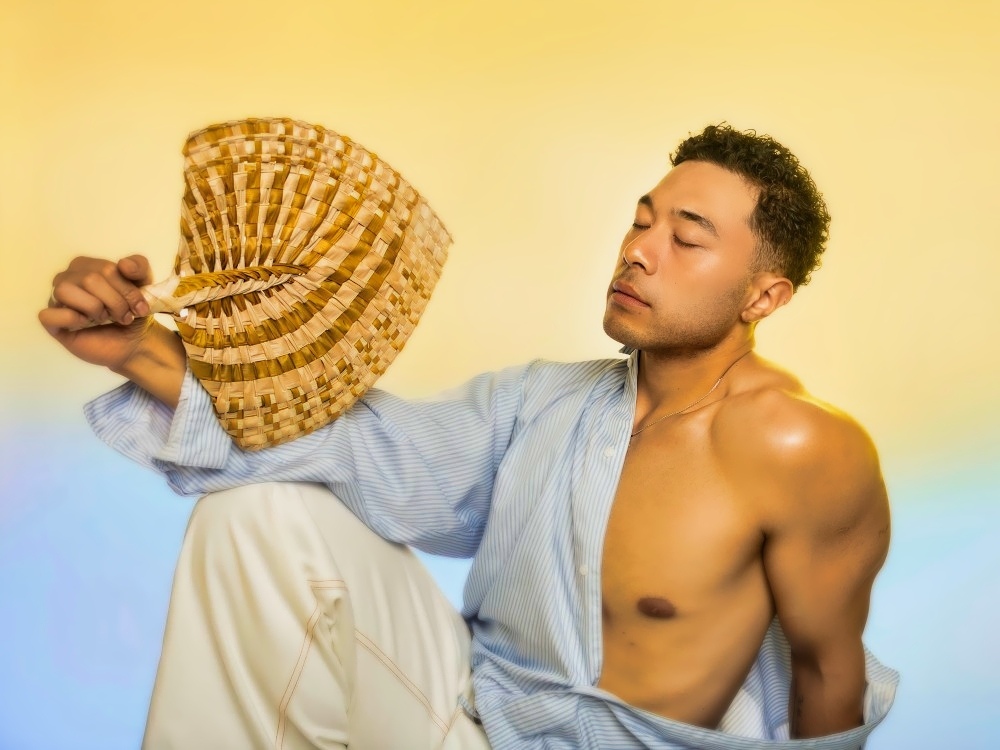
Visibility
In the industry, Tyrun is described as part of a new wave of artists creating space for queer Pasifika stories, but he does not overstate his role in that shift.
“It’s not something I’ve thought about too much, honestly,” he says. “I’m creating because it’s how I best express what I feel.”
Still, he recognises the impact that visibility can have.
“I hope the stories I’m telling find their way to queer Pasifika people who need or want to hear them,” he says. “Visibility just feels so good.”
That sense of connection becomes most tangible in his live performances.
“The energy is different, it feels warmer,” he says of the queer gigs he has played. “There’s just a bit more acceptance in the air. There’s more dancing and making noise!”
Finding His ‘Why’
If Tyrun’s music is about growth, it makes sense that he does not claim to have everything worked out.
“You’ve actually caught me at the worst time with this question,” he says when asked what success looks like to him.
What matters, for now, is the ability to keep exploring.
“Artistry is most important to me. Being able to express myself is what makes me feel successful, but I don’t know that I’ve said all I want to say yet,” he tells us.
Tyrun’s work is not about neat conclusions. It is about asking questions and staying with them.
If there is a message that runs through everything he does, it is one of encouragement. When asked if he has a message for young queer Niueans discovering their identity and language, he tells us: “You’ve done the hard part, starting. Move through your journey at your own pace and always remember why you chose to begin. There’s so much waiting for you.”
For NZ Music Month, Tyrun is not just adding another song to the conversation. He is helping reshape what that conversation can sound like.
‘FILA’ is available now on all major streaming platforms.