









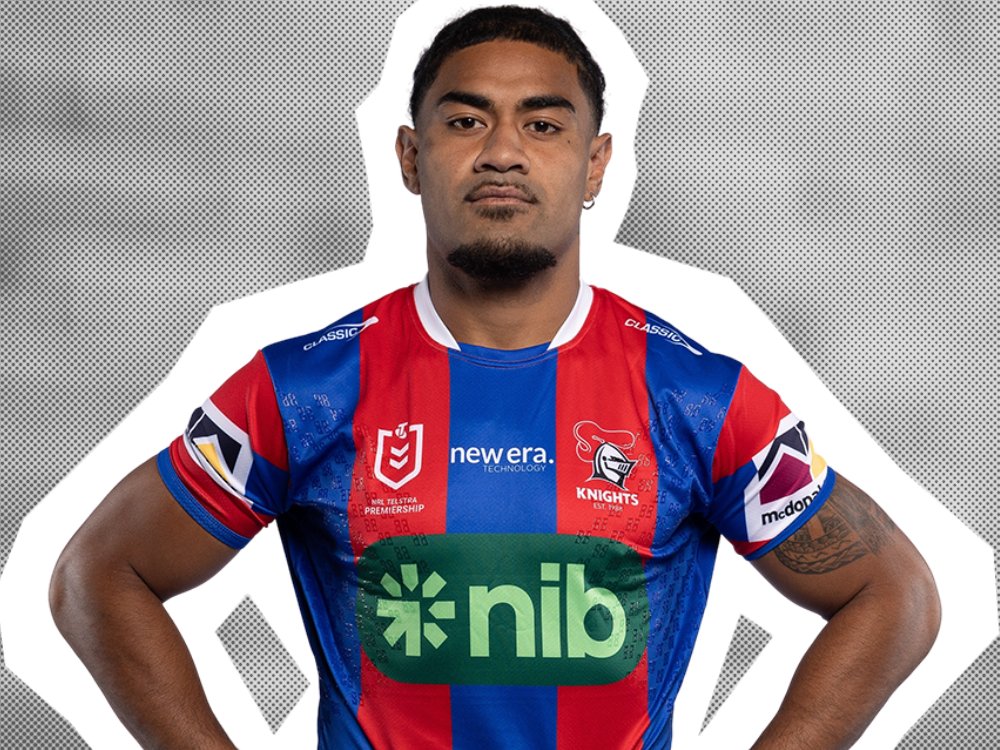
New Zealand-born rugby league player Asu Kepaoa has been banned for six weeks after using a homophobic slur during a New South Wales Cup match.
Appearing before the NSWRL judiciary on Wednesday, the 26-year-old NRL forward pleaded guilty to using the slur in a Round 16 match against St George Illawarra last week.
Officials sent Kepaoa off before halftime after reportedly hearing the comment. He was then referred directly to the judiciary.
“Language that causes harm has no place in our club”
According to a statement released by the Knights, Kepaoa issued a personal apology before the judiciary, “acknowledging the harm caused by his choice of words”.
“The Club accepts the outcome and fully supports the process,” the statement continued.
“The Newcastle Knights are an inclusive club and pride ourselves on being a welcoming place for all players, staff and supporters. Language that causes harm to individuals or communities has no place in our Club, in the NRL, or in our community.”
The club said it would work with Kepaoa to ensure he understands the impact of his language and better reflects the club’s values.
“The Club will work closely with Kepaoa to ensure he receives appropriate education around the impact of language and the responsibilities that come with representing the Newcastle Knights and the values we stand for,” the statement said.
A systemic issue in sport
Sadly, this headline feels all too familiar.
In the past three months alone, multiple Australian and New Zealand football codes have faced incidents involving players using homophobic slurs.
AFL players Lance Collard, Koby Evans and Max Knobel have each faced suspensions for homophobic language. In March last year, the AFL introduced an LGBTQIA+ education module in response to a series of on-field slurs, with all players and staff required to take part.
The last NRL player to be suspended for using a homophobic slur was Marcelo Montoya of the New Zealand Warriors in 2022.
This month, former Roosters prop Kane Evans became the second NRL player ever to come out as gay. In a powerful interview, he spoke about the shame he had carried around his sexuality and said it had nearly cost him his life.
Speaking on The Imperfects podcast last year, the AFL’s first openly bisexual player Mitch Brown said the repeated use of slurs in sport is not just about individuals.
“I would never point out an individual; I would never do that,” he said. “Because it’s more than that, it’s bigger than that, it’s cultural, it’s [systemic].”
“What I am disappointed with is the culture in the system,” Brown continued.
“One thing that really affected me was people telling me that I’m shaming clubs or making this about me or keeping myself relevant. I was never relevant in the first place … It’s about safety within your community, and I was disappointed that some football clubs missed that opportunity.”
Kepaoa’s suspension is another reminder that homophobic language remains a serious issue in Australian sport, and that education, accountability and cultural change are still urgently needed.