









With Egypt and Iran set to take the field for the 2026 FIFA World Cup Pride Match in Seattle at 3pm NZT today, the fixture has become one of the tournament’s most politically charged moments.
Eyebrows were raised when the draw confirmed that Iran and Egypt would be the two teams facing off. Neither country has a positive record on LGBTQ+ rights. In fact, for queer and trans people, the picture is grim.
FIFA has confirmed that rainbow flags and other LGBTQ+ symbols will be allowed inside the stadium, despite objections from both Iran and Egypt. The match also coincides with Seattle’s Pride weekend, with local organisers saying the city’s inclusive culture will be visible around the fixture.
LGBTQ+ rights in Egypt
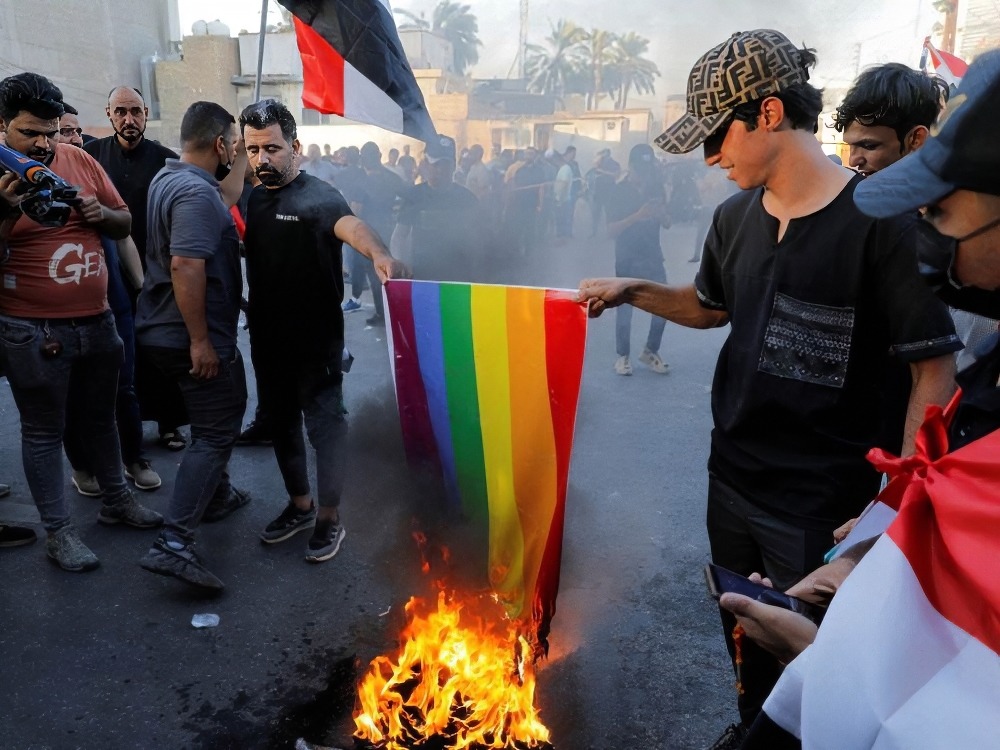
In Egypt, LGBTQ+ people face serious hardship, with violence, discrimination and police targeting reported by human rights organisations.
Same-sex sexual acts are not explicitly criminalised under Egyptian law. However, the country uses a range of morality provisions to target queer people in practice.
According to ILGA World, Egypt’s Law No. 10/1961 on the Combating of Prostitution is used to criminalise LGBTQ+ people, despite not directly banning same-sex activity.
Other laws relating to morality, public decency, religion and online conduct can also be used against LGBTQ+ people.
Behaviour or expression deemed immoral, scandalous or offensive to the teachings of recognised religious authorities may be prosecuted.
Most Egyptians are Sunni Muslim or Coptic Christian, and same-sex relationships are not recognised by either major religious tradition.
Same-sex marriage is not recognised under Egyptian law.
There are also no clear legal protections against discrimination based on sexual orientation or gender identity in areas such as goods and services, healthcare, education, school bullying, employment or housing.
Egypt is not believed to impose harsher penalties for hate crimes based on sexuality or gender identity.
It is also not legal for transgender Egyptians to change their gender marker.
LGBTQ+ rights in Iran
In Iran, the situation is even more severe.
Same-sex sexual activity is illegal, and in some cases can be punished by death.
The Islamic Penal Code criminalises all same-sex sexual activity, with penalties ranging from flogging to the death penalty depending on the act and circumstances.
Under Iran’s Islamic Penal Code, sex between men defined as “sodomy” can result in the death penalty for the receptive partner. The insertive partner may also face the death penalty in certain circumstances, including if force or coercion is involved, if he is married, or if he is non-Muslim and the receptive partner is Muslim. In other circumstances, the penalty can be 100 lashes.
Non-penetrative sexual acts between men are also criminalised, with punishments including lashes.
Other forms of physical intimacy between men can be punished at a judge’s discretion, with penalties ranging from 31 to 74 lashes.
Female same-sex sexual activity is also criminalised. Female-to-female genital contact is punishable by 100 lashes, while repeated convictions can lead to the death penalty.
Same-sex marriage is not legally recognised in Iran, and there are no broad protections against discrimination based on sexual orientation or gender identity.
According to ILGA World and other human rights sources, Iran remains one of the countries where the death penalty is legally prescribed for consensual same-sex sexual acts.
Trans people in Iran can legally change their gender in limited circumstances, but only after being diagnosed and undergoing gender-affirming medical procedures. Human rights advocates have long raised concerns about coercion, stigma and the lack of genuine bodily autonomy in that system.
Pride visibility on a global stage
The Seattle Pride Match has become a flashpoint because of the contrast between the host city’s visible LGBTQ+ inclusion and the laws and social conditions faced by queer people in Iran and Egypt.
Both countries reportedly objected to Pride-related activities and LGBTQ+ symbols connected to the match, but FIFA has said rainbow flags will be permitted inside the stadium as human rights expressions under its event rules.
For Seattle organisers, the moment is about showing Pride on a global stage, especially for LGBTQ+ fans and players from countries where being out can carry serious risks.
For Iran and Egypt, the match is also a crucial Group G fixture, with both teams still fighting for progression.
Whether they embrace it or not, their World Cup hopes now run through a match surrounded by rainbow flags, Pride weekend celebrations and global attention on LGBTQ+ rights.