








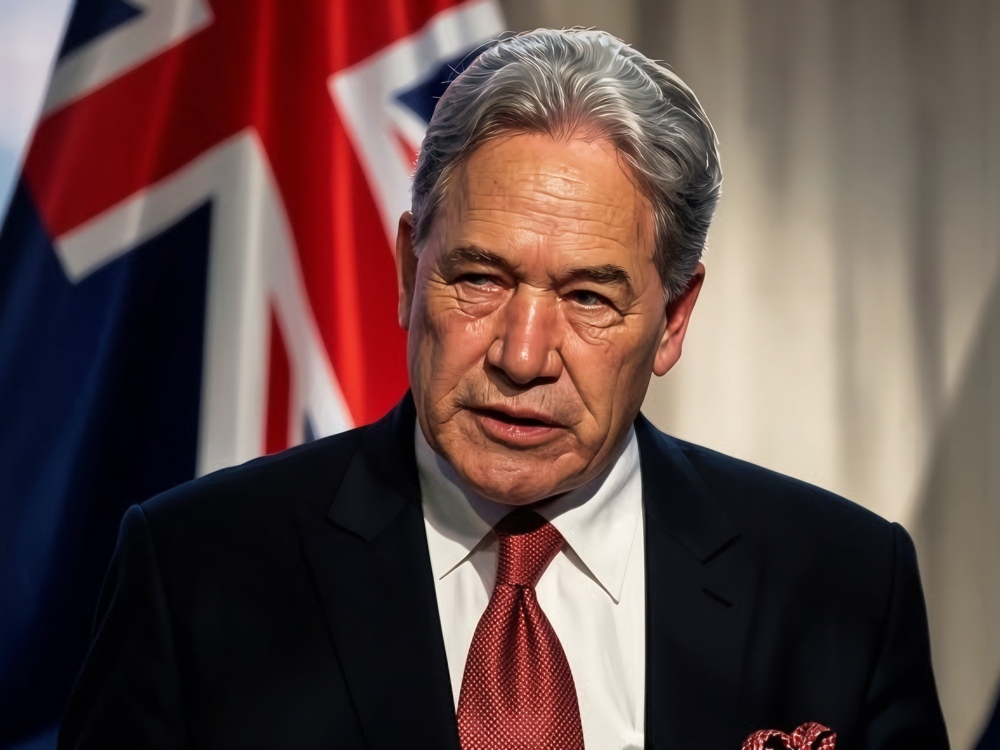

Foreign Affairs Minister Winston Peters personally intervened to stop New Zealand’s diplomatic posts around the world from publishing Pride Month content on official social media accounts, documents released under the Official Information Act show.
New Zealand embassies and high commissions have regularly marked Pride Month in previous years, sharing posts about Aotearoa’s human rights milestones, including being the first country to grant women the vote, having openly transgender MPs, and passing laws such as marriage equality.
Those posts have often included photos or footage of senior diplomatic staff marching in Pride parades overseas.
However, as reported by The Spinoff – when a batch of similar draft posts was circulated to the minister’s office for “awareness” earlier this year, Peters’ office intervened. That led to a new directive being sent to all posts — embassies and high commissions — about social media use, including guidance affecting Pride Month content from official Ministry of Foreign Affairs and Trade accounts.
Documents released to The Spinoff show the planned posts were similar in tone to previous years’ material.
One draft, featuring a photo of a Pride gathering, read: “It’s #PrideMonth and we are sharing our history. Pride festivals and fairs began in New Zealand in the 1970s and 1980s. Many of these festivals were a response to the global late-stage HIV pandemic and enabled the community to come together.”
The posts were included in a pack prepared by MFAT’s central communications division, which noted that New Zealand’s support for Rainbow community rights was one of “seven thematic human rights focus areas”.
“New Zealand’s support for rainbow communities is grounded in the core human rights principles of equality, dignity, and non-discrimination,” the document said.
The briefing also described Pride-related social media content as part of New Zealand’s “soft diplomacy”, arguing that visible support for Rainbow communities could build connection and understanding with community groups or government stakeholders in some countries.
Minister’s office intervened
According to the released documents, the minister’s office did not respond for several weeks. After a prompt on WhatsApp, senior adviser Michael Appleton replied on 27 May, explaining Peters’ discomfort with the proposed content.
The exact guidance was redacted, but the surrounding correspondence made clear that the posts should not proceed.
Appleton wrote that Peters viewed MFAT’s social media channels as primarily for communicating New Zealand’s positions on foreign and trade policy issues, and documenting engagement with other countries.
“I accept this is not a binary, black and white, either/or choice,” Appleton wrote, while saying he was placing the minister’s preference on Pride Month content in the wider context of his views on the proper scope of MFAT social media content.
The email added that the guidance should not be read as having wider implications for New Zealand’s human rights diplomacy, or for the activities and events diplomatic posts choose to attend.
Three days later, on 30 May, just before Pride Month began, a directive titled “UPDATING MINISTRY SOCIAL MEDIA GUIDELINES” was sent to all posts.
The summary said MFAT was updating its social media guidelines, and that the update would be “informed closely” by Peters’ direction that social media platforms should focus on communicating and advancing New Zealand’s foreign and trade policy positions.
It also noted that the change would affect the ministry’s social media engagement “most immediately, in relation to Pride Month”.
The exact application to Pride Month was contained in two redacted paragraphs, withheld under a section of the Official Information Act relating to the free and frank expression of opinions.
Those paragraphs were followed by a statement that the guidance “should not be read as having wider implications for our human rights diplomacy more broadly”.
No Pride Month posts found
The Spinoff reported that no posts concerning Pride Month in 2025 appeared on any of the dozen MFAT social media channels it reviewed. One post about global trade tensions did feature a rainbow umbrella.
Asked why Peters intervened, a spokesperson said: “The minister believes New Zealand’s diplomatic network should be focused on advancing New Zealand’s interests.”
The spokesperson added that Peters believed MFAT and post network social media content should primarily focus on communicating New Zealand’s foreign and trade policy positions, in line with Cabinet-agreed priorities, and documenting New Zealand’s engagement with other countries.
Peters’ own legislative record stands in contrast to several of the milestones previously highlighted in Pride posts. He voted against legalising sex between men in 1986 and against same-sex marriage in 2013.
The Spinoff asked whether that history played any part in the decision, but did not receive a direct response.
His office was also asked what message it had for queer diplomats angered by the decision.
A spokesperson said Peters had “the utmost respect for New Zealand’s diplomats and the important work they do on behalf of all New Zealanders,” adding that this had been demonstrated across his three terms as foreign minister.
For Rainbow New Zealanders, the intervention raises questions about how visibly Aotearoa will continue to promote LGBTQ+ human rights overseas, particularly when MFAT’s own briefing described support for Rainbow communities as grounded in equality, dignity and non-discrimination.