









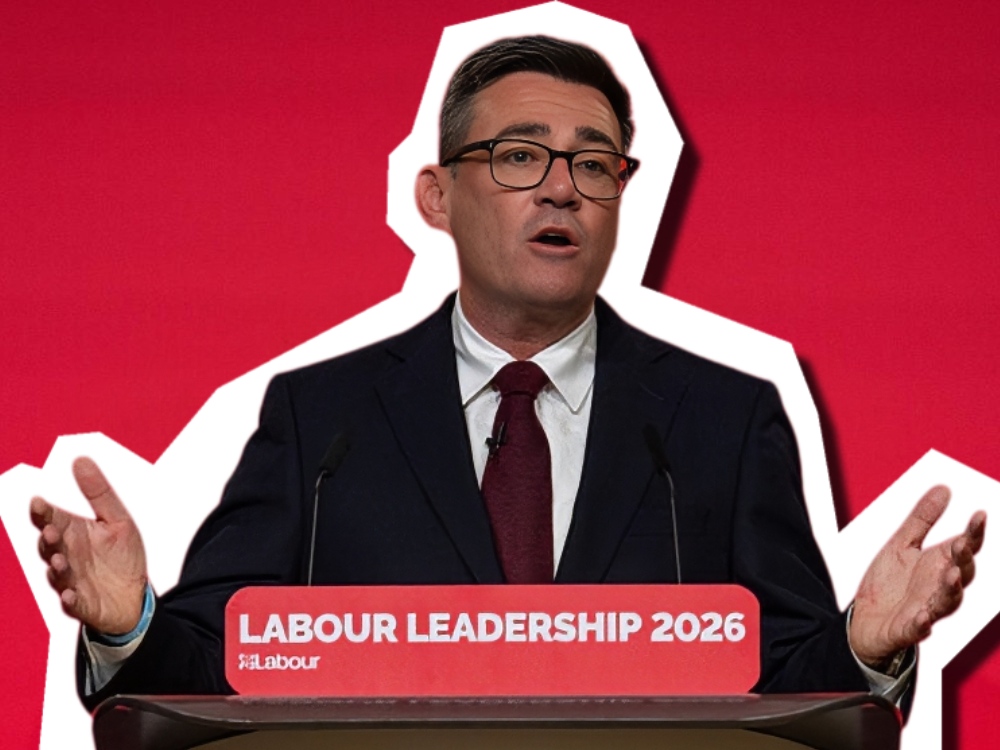
Andy Burnham has become the United Kingdom’s 59th prime minister following Keir Starmer’s resignation and a rapid Labour leadership transition.
Burnham formally took office on 20 July after King Charles III invited him to form a government. He had been elected Labour leader three days earlier after emerging as the only candidate with enough support to enter the contest.
Starmer announced on 22 June that he would resign as Labour leader while remaining prime minister until a successor was chosen. Burnham had returned to the House of Commons days earlier after winning the Makerfield by-election on 18 June.
From Greater Manchester to Downing Street
Burnham served as Mayor of Greater Manchester from 2017 until his return to Parliament in 2026.
Before becoming mayor, he held several senior government positions, including serving as health secretary under Gordon Brown between 2009 and 2010.
Although he is Catholic, Burnham has built a long record as an outspoken supporter of LGBTQ+ equality. He has previously said that his public positions caused tension with some members of his family.
During the 2015 Labour leadership contest, Burnham urged Pope Francis to support marriage equality and bring the Catholic Church “into the 21st century”.
His involvement with LGBTQ+ rights began much earlier. As a student in 1988, Burnham participated in a protest against Section 28, the legislation that prohibited local authorities and schools from supposedly “promoting homosexuality”.
Burnham’s Voting Record on LGBTQ+ Equality
During his earlier years in Parliament, Burnham generally supported major reforms advancing the rights of lesbian, gay and bisexual people.
His record included voting to repeal Section 28, supporting civil partnerships in 2004 and backing protections against discrimination based on sexual orientation in the provision of goods and services.
He also supported fertility treatment rights for lesbian couples and voted in favour of legalising same-sex marriage in England and Wales in 2013.
In 2015, Burnham backed a review of blood-donation rules affecting gay and bisexual men. He argued that “sexuality really shouldn’t be the issue” and that assessments should instead consider whether any individual was engaging in behaviour that presented a medical risk.
LGBTQ+ Initiatives in Greater Manchester
As mayor, Burnham introduced several initiatives intended to give LGBTQ+ residents a greater voice in regional decision-making.
In 2018, he appointed Carl Austin-Behan, a former Royal Air Force serviceman who had been discharged for being gay, as Greater Manchester’s LGBTQ+ adviser.
Burnham also established an LGBTQ+ advisory panel bringing together community representatives and specialists to address discrimination, health inequalities and safety concerns affecting queer residents.
He supported reforming the Gender Recognition Act and simplifying the process through which transgender people obtain legal recognition.
Burnham has also backed a comprehensive ban on conversion practices and apologised for the historic treatment of LGBTQ+ people by Greater Manchester Police.
Andy Burnham’s Position on Trans Rights
Burnham has repeatedly expressed support for transgender people, although some of his positions have attracted scrutiny from opposing sides of the debate.
In 2022, he defended the ability of trans women to use women’s toilets, rejecting attempts to turn access to facilities into a political “culture war”.
However, Burnham faced criticism from some LGBTQ+ campaigners after meeting with the LGB Alliance in 2020 to discuss possible reforms to the Gender Recognition Act.
A statement following the meeting said Burnham had “made his support for the trans community very clear over the years”.
After the UK Supreme Court’s 2025 ruling that the terms “woman” and “sex” in the Equality Act referred to biological sex, Burnham said the decision and subsequent guidance should be introduced “in the fairest and most compassionate way possible”.
He said single-sex spaces should be protected without “marginalising already marginalised communities”.
Burnham Promises a Political “Circuit-Breaker”
In his first address outside 10 Downing Street, Burnham promised to restore stability and introduce a new political and economic model for Britain.
He described the change of leadership as a “circuit-breaker” and pledged immediate assistance for people affected by the cost-of-living crisis.
“But I can do something to give people some breathing space now, some help with the cost of living, and I will set out some of those measures starting tomorrow, including how we pay for them,” Burnham said.
He also committed his government to ending long-term rough sleeping and announced additional funding for housing and homelessness programmes.
Burnham did not specifically address LGBTQ+ or transgender rights in his first speech. His government’s detailed policy programme is expected to provide a clearer indication of how his previous commitments will translate into national action.