









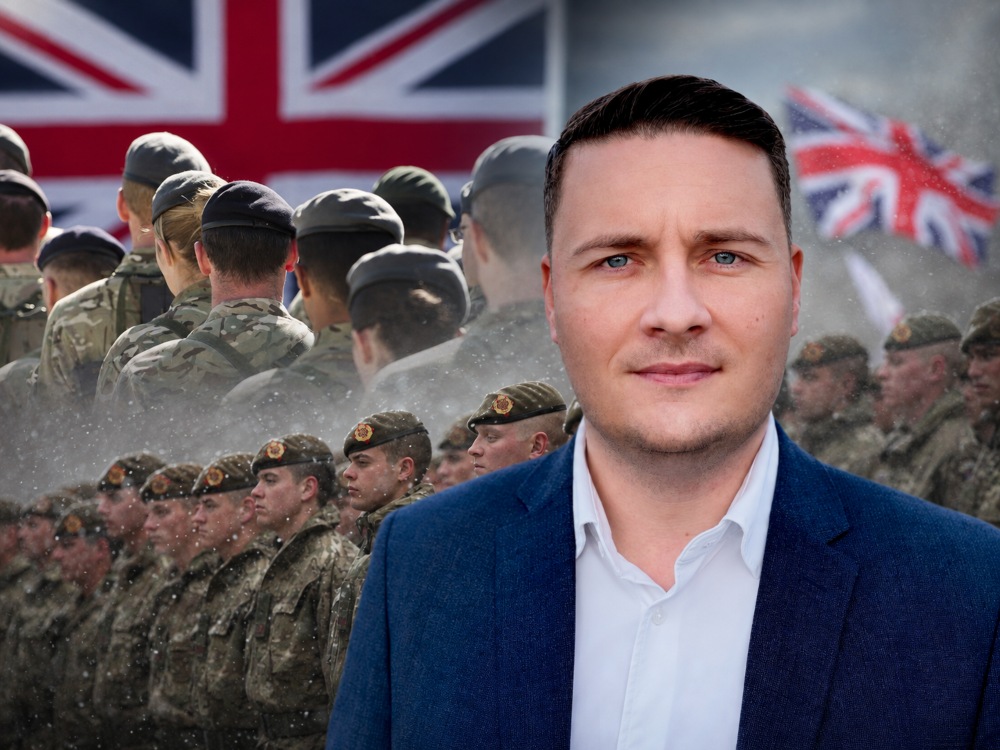
Britain’s first openly gay defence secretary, Wes Streeting, says he has faced an “unbelievable volume” of homophobic abuse online since taking on the role.
Streeting was appointed defence secretary in July as part of Prime Minister Andy Burnham’s first Cabinet, following the resignation of Sir Keir Starmer.
Speaking at an Edinburgh Fringe event, Streeting said he had experienced more online homophobia in the weeks since his appointment than at any other point in his political career.
He suggested some people were struggling with the idea of an openly gay man holding one of the UK Government’s most senior national security positions.
Despite the abuse, Streeting said his appointment also offered an opportunity to challenge stereotypes about gay men and demonstrate how far LGBTQ+ representation has progressed within British public life.
“I am proud of the fact that in my lifetime we’ve gone from gay people not being allowed to serve in the military to a gay defence secretary,” Streeting said.
His appointment carries particular significance because of the British military’s history of discrimination against LGBTQ+ personnel.
From military exclusion to an openly gay defence secretary
For decades, LGBTQ+ people serving in Britain’s armed forces faced institutional discrimination because of their sexual orientation or gender identity.
The UK Government identifies the period of its formal ban on LGBT personnel as running from 1967 until 2000. Although homosexuality was decriminalised for civilians in England and Wales in 1967, same-sex activity remained a criminal offence for members of the military until 1994.
Even after that changed, homosexuality continued to be regarded by the armed forces as conduct incompatible with military service. Gay and lesbian personnel could still be investigated or dismissed until the policy was finally overturned in January 2000.
The consequences for those affected were significant. LGBTQ+ service personnel experienced dismissals, intrusive investigations, harassment, loss of rank and, in some cases, imprisonment.
The UK Government has since formally recognised the injustice experienced by LGBTQ+ veterans and introduced restorative measures, including the LGBT Financial Recognition Scheme.
Launched in December 2024, the scheme provides financial recognition for veterans directly affected by the ban. As of June 2026, more than £54 million had been paid through the scheme.
Streeting said a gay Ministry of Defence colleague approached him during his first week in the job and told him how meaningful it was to see the country appoint its first openly gay defence secretary, particularly for those who remembered the military’s discriminatory past.
For LGBTQ+ communities, the contrast is striking: just over a quarter of a century after openly gay people could still be forced out of Britain’s armed forces, an openly gay politician now leads the government department responsible for them.
That progress does not erase the experiences of LGBTQ+ veterans, nor does Streeting’s account of online abuse suggest homophobia has disappeared. Instead, the two developments highlight how LGBTQ+ visibility in positions of power can coexist with continuing prejudice.
Streeting has faced criticism from parts of the LGBTQ+ community
Streeting’s appointment is significant for LGBTQ+ representation, but his political record has not been without controversy within the community.
Before becoming defence secretary, Streeting served as health secretary under Starmer. He resigned from the government in May after saying he had lost confidence in Starmer’s leadership.
During his time overseeing health policy, Streeting attracted criticism from trans advocates and other LGBTQ+ campaigners over the UK Government’s approach to puberty blockers for transgender people under 18.
His status as an openly gay Cabinet minister therefore does not necessarily translate into universal support across Britain’s diverse LGBTQ+ communities.
Streeting had been considered a possible contender to replace Starmer as Labour leader but ultimately backed Burnham rather than entering the leadership contest himself.
He has since begun his work as defence secretary, including travelling to Ukraine, where he met Ukrainian President Volodymyr Zelenskyy and discussed Britain’s continuing support for Ukraine and wider European security.
Streeting’s appointment represents a significant milestone for LGBTQ+ representation in British politics and defence. At the same time, his experience of homophobic abuse demonstrates that greater visibility at the highest levels of government does not automatically bring an end to anti-LGBTQ+ prejudice.
For LGBTQ+ people in Aotearoa New Zealand watching developments overseas, it is another reminder that legal and political progress can be substantial while discrimination and hostility remain challenges that require continued attention.