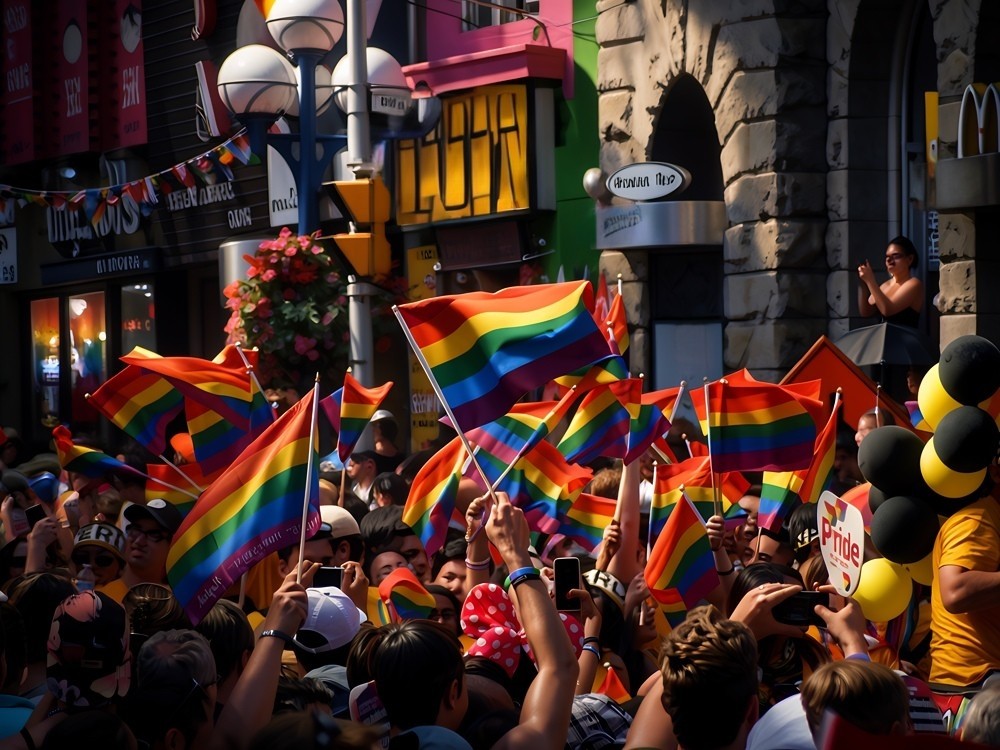








Around 12% of adults in the United States identify as LGBTQ+, according to a new analysis of millions of responses collected by the US Census Bureau.
The Human Rights Campaign Foundation analysed more than 2.4 million responses from the Census Bureau’s Household Pulse Survey collected between 2021 and 2024, offering one of the largest recent snapshots of America’s LGBTQ+ population.
The findings reinforce something rainbow communities have long known: LGBTQ+ people are not confined to a few famously queer cities or liberal states.
They are everywhere.
Human Rights Campaign president Kelley Robinson said the figures demonstrate that LGBTQ+ Americans represent a significant and increasingly visible part of the country.
“LGBTQ+ Americans are everywhere,” Robinson said.
“We’re not a niche constituency, and no campaign, brand, or employer can afford to treat us like one.”
LGBTQ+ People Make Up More Than 10% Of Adults In 40 States
One of the most striking findings challenges stereotypes about where LGBTQ+ Americans live.
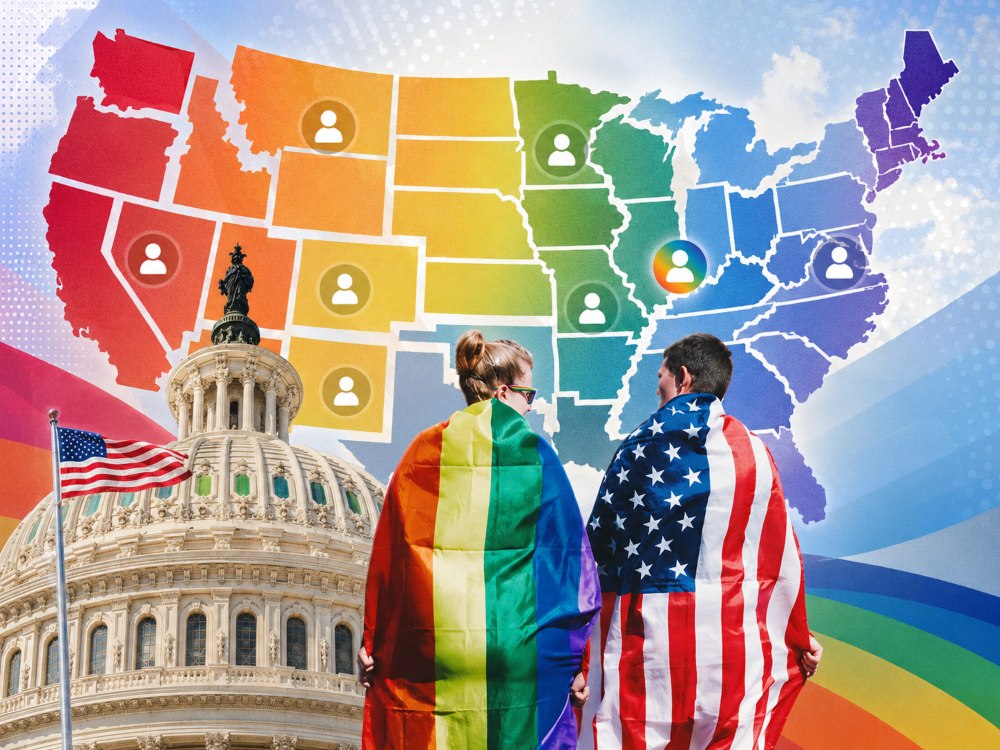
The analysis found LGBTQ+ adults make up more than 10% of the population in 40 states.
That includes politically conservative states such as Texas, Georgia and Arizona, alongside places more commonly associated with large and visible queer communities.
The figures highlight why LGBTQ+ rights are not simply an issue affecting people in New York, California or other major urban centres.
Rainbow communities exist in small towns, suburbs, rural areas and politically conservative states throughout the country.
For LGBTQ+ people living in those places, however, visibility does not necessarily mean equality.
Many states continue to debate or introduce legislation affecting transgender healthcare, LGBTQ+ education, sports participation and other civil rights.
The new demographic picture makes clear that those policies affect substantial local populations.
Younger Adults Are Driving The Growth
Age remains one of the strongest predictors of LGBTQ+ identification.
More than half of LGBTQ+ adults captured in the HRC analysis were aged between 18 and 34.
That reflects a broader pattern seen across numerous surveys: younger generations are considerably more likely to identify openly as LGBTQ+ than older Americans.
Gallup has reported a particularly dramatic generational difference, with almost one in four US adults under 30 now identifying as LGBTQ+.
That does not necessarily mean LGBTQ+ identities suddenly appeared among younger generations.
Greater social acceptance, broader language for describing sexuality and gender, and reduced pressure to remain closeted all make it easier for younger people to identify openly.
Older generations grew up in environments where coming out could mean losing family, employment, housing or personal safety.
For many, remaining invisible was a survival strategy.
Bisexual People Make Up The Largest Group
Bisexual people represent the largest individual group within America’s LGBTQ+ population.
The HRC analysis estimates that more than 7% of US adults identify as bisexual.
That finding broadly reflects other major surveys.
Gallup has consistently found bisexuality to be the most common LGBTQ+ identity, particularly among younger adults and women.
In its latest polling, bisexual people represented well over half of LGBTQ+ respondents.
The visibility of bisexual people is particularly important because bisexuality has historically been undercounted or overlooked — even within LGBTQ+ communities.
Bisexual people can face stereotypes that their sexuality is temporary, determined by their current partner or somehow less legitimate than being gay or lesbian.
Population data increasingly demonstrates just how significant bisexual people are within the wider rainbow community.
Why The Figure Differs From Gallup
The HRC analysis arrives alongside another widely cited measure of America’s LGBTQ+ population from Gallup.
Gallup estimated that 9% of US adults identified as LGBTQ+ in 2025, essentially unchanged from the previous year.
So why does one analysis suggest around 12% while another puts the number at 9%?
The answer lies largely in methodology.
Gallup’s figure comes from telephone interviews with more than 13,000 adults, while the HRC analysis draws from millions of responses to the Census Bureau’s Household Pulse Survey.
Surveys can also differ in the identities they include, how questions are phrased, who responds and how results are weighted.
That means the figures should not necessarily be treated as contradictory.
Instead, they provide different estimates of a population that can be difficult to measure precisely, particularly when some people remain uncomfortable disclosing their sexual orientation or gender identity.
Both datasets point towards the same broader trend: substantially more Americans openly identify as LGBTQ+ today than did a decade ago.
America’s LGBTQ+ Population Has Grown Sharply
When Gallup first began regularly measuring LGBTQ+ identification in 2012, just 3.5% of US adults identified as LGBTQ+.
Its latest figure is 9%.
That means the proportion has more than doubled in little over a decade.
The shift is overwhelmingly generational.
Younger adults are significantly more likely to use LGBTQ+ labels, and each new generation entering adulthood has increased the overall proportion.
Researchers generally expect the percentage to continue rising as more members of Generation Z reach adulthood and younger people feel increasingly comfortable describing their identities.
LGBTQ+ America Is Also Racially Diverse
The HRC findings also underscore that LGBTQ+ Americans are not a single demographic group.
Rainbow communities span every racial and ethnic background.
The analysis found Hispanic adults represented a significant proportion of the LGBTQ+ population, while Black Americans likewise make up an important part of the community.
That intersectionality matters because LGBTQ+ people can experience very different realities depending on race, gender, income, disability, immigration status and where they live.
A white gay man in New York may face very different challenges from a Black trans woman in the South or a queer Latino teenager in rural Texas.
Talking about an LGBTQ+ population numbering in the tens of millions therefore means recognising an enormous range of experiences.
Federal LGBTQ+ Data Is Becoming Increasingly Important
The analysis is also notable because it relies on federal government data collected before significant changes to the way the Trump administration approaches questions about sexual orientation and gender identity.
LGBTQ+ advocates have raised concerns about the removal or reduction of sexuality and gender-identity questions across federal surveys.
Collecting that information matters for far more than simply knowing how many LGBTQ+ people exist.
Government data can influence healthcare planning, funding, discrimination research, housing programmes and understanding inequalities faced by minority communities.
If LGBTQ+ people disappear from official datasets, advocates warn it becomes much harder to identify — and address — those disparities.
‘We’re Not A Niche Constituency’
For the Human Rights Campaign, the political message behind the numbers is difficult to ignore.
A community representing roughly one in every eight adults cannot reasonably be treated as a tiny special-interest group.
LGBTQ+ Americans are voters, workers, parents, consumers, business owners, students and members of virtually every community in the country.
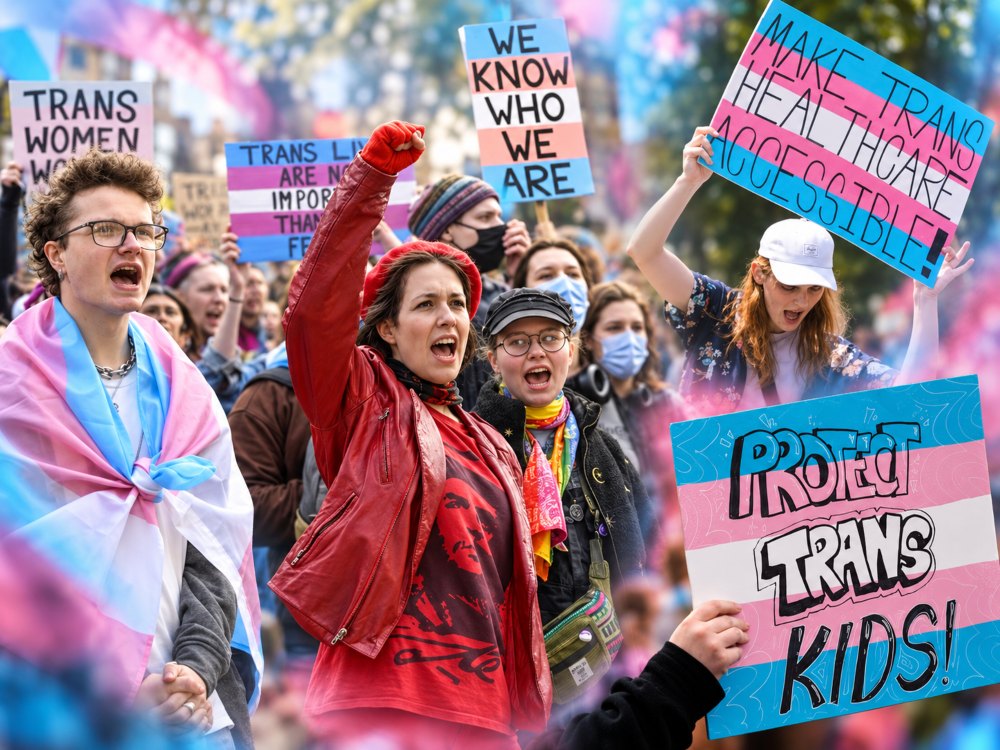
The findings are particularly significant at a time when LGBTQ+ rights — and transgender rights in particular — remain central to political battles across the United States.
For rainbow communities in Aotearoa New Zealand, the demographic shift also reflects a wider international pattern.
As stigma decreases and younger generations gain access to more inclusive language and representation, more people feel able to describe themselves openly.
The LGBTQ+ population may appear to be growing.
But much of what is really growing is visibility.
Millions of queer people were always there.
Increasingly, they are able to say so.