









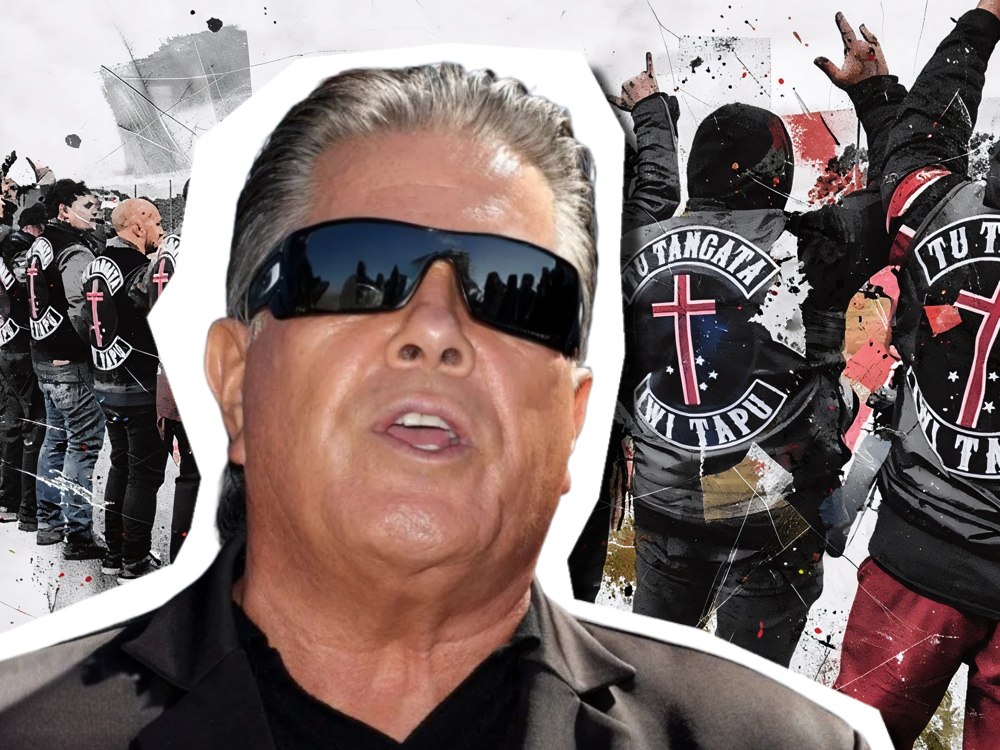

Drag performers suing Brian Tamaki and Destiny Church have asked the High Court to prevent several defendants from contesting the case, alleging they repeatedly failed to disclose private messages relevant to the lawsuit.
Sunita Torrance, Daniel Lockett and their entertainment company, Haus of Flash Ltd, filed proceedings in 2024 seeking more than $2 million in connection with protests and campaigns against their Rainbow Storytime and Living Library events.
The performers allege defamation, breach of contract, conspiracy to injure and unlawful means conspiracy. Their allegations against Tamaki, Destiny Church and the remaining defendants have not yet been determined at trial.
At a High Court hearing in Auckland, their lawyer, Chris Griggs, applied to have the defences of Tamaki, Destiny Church and two church members struck out.
If granted, the order could prevent those defendants from presenting a substantive defence when the court determines the claims. It would not necessarily mean the performers automatically receive everything they have sought, as the court could still need to consider whether the claims are established and what damages or other remedies are appropriate.
Justice Liz Gellert reserved her decision.
Performers Allege Court Orders Were Not Followed
The dispute centres on the legal discovery process, which requires parties to identify and provide documents relevant to a case.
Griggs told the court that previous orders had required Tamaki, Destiny Church and other defendants to disclose internal communications from the period surrounding protests against the drag performers’ library events.
An earlier High Court ruling ordered named Destiny Church members to provide relevant electronic messages after the material initially produced was found to be insufficient. The defendants were warned that continued non-compliance could eventually result in them being prevented from defending the case.
Griggs argued that the latest disclosure still failed to include communications he believed must exist.
The alleged “smoking gun”, he said, was evidence showing that Tamaki and other defendants belonged to a Facebook Messenger group in which the church leader had shared an advertisement for a Living Library event in Gisborne.
No record of that group conversation had been disclosed by Tamaki, Destiny Church or its trustees, the court heard.
Griggs argued that the plaintiffs could not receive a fair trial without access to communications between the people they accuse of organising a coordinated campaign.
He said it was “inherently implausible” that the church could have mobilised against the events without “a single” relevant Facebook message. RNZ reported that the performers argued the missing material prevented them from properly preparing and proving their case.
Lawyers Dispute Claims About Lost Phones
Griggs also challenged explanations provided by church members Leighton Packer and Terangimarie Ngahuka about the mobile phones they used during the relevant period.
The court heard that the women initially said in affidavits that their phones had broken and were unusable.
In later affidavits, they said those accounts were mistaken and that the devices had instead been lost when they separately moved house.
“That strains credibility beyond breaking point,” Griggs said.
He noted that when the women were first asked to provide documents during discovery, the only item they produced was a copy of the King James Bible.
Lawyer Umar Kuddus, representing Packer and Ngahuka, strongly objected to the suggestion that their accounts were false.
He said accusing the women of lying was improper and amounted to an unproven allegation of perjury.
Kuddus argued that the performers’ legal team had turned suspicions about inconsistencies into a claim that a fair trial was impossible. The fact that Griggs expected additional messages to exist did not prove that his clients had destroyed evidence or deliberately withheld it, he said.
“Expectation is not clear evidence.”
Junior lawyer Nicholas Johnson said both women had made concerted attempts to recover information from their former devices.
Any inconsistencies in their evidence could be tested through cross-examination at trial, he argued, rather than being used to justify the “extreme response” of striking out their defences.
Tamaki Says Searches Were Completed
Scott McColgan, acting for Tamaki and Destiny Church, told the court that Tamaki had only one relevant electronic device at the time: his iPhone.
McColgan said his clients had searched the phone using agreed keywords and had attempted to comply with the court’s discovery orders.
He acknowledged that he did not know why those searches had failed to locate the Facebook group conversation identified by the performers.
However, he argued that the defendants had not “wilfully failed to comply”. Now that they better understood the specific material being sought, he said, they could investigate why it had not appeared and conduct more targeted searches.
That approach would be more appropriate than taking the exceptional step of striking out their defence, McColgan argued.
“They are God-fearing Christian people, so when they put their hand on the Bible, there should be some recognition of that.”
Throughout the hearing, Justice Gellert reminded the lawyers that Facebook Messenger accounts can generally be accessed from more than one device.
She indicated that Griggs and McColgan might be able to agree on further searches before a final decision was required.
Lawsuit Followed Cancellation of Library Events
Torrance, who performs as Coco Flash, and Lockett, known as Erika Flash, ran Rainbow Storytime events at libraries and community venues.
Their lawsuit alleges that statements and protests by Tamaki and Destiny Church members caused venues to cancel some scheduled performances and damaged the performers personally and professionally.
Among the disputed descriptions were claims that their events involved “grooming” children or were “targeting our innocent kids with their filth”.
When filing the lawsuit in June 2024, Torrance said the events involved performers dressing in colourful costumes, reading stories and promoting kindness, inclusion and opposition to bullying.
She alleged that public attacks, threats and intimidation had forced the cancellation of shows and seriously affected the company’s business.
Tamaki responded at the time that the church would continue advocating for children’s wellbeing and said it was not afraid of the legal action. The defendants deny the plaintiffs’ allegations.
One Defendant Has Already Been Found Liable
A separate defendant, Destiny Church member Hohepa Haeata, elected not to defend the proceedings against him.
According to the judgment described during the latest hearing, Haeata commented on social media that the performers were “pedos”, “sick” and “demons”.
Justice David Johnstone found those comments defamatory and ordered Haeata to pay a combined $40,000 in damages to Haus of Flash, Torrance and Lockett.
“The accusation of paedophilia is intrinsically a grave and [where inaccurate] cruel allegation,” the judge said.
That decision concerned Haeata alone and did not determine the performers’ outstanding claims against Tamaki, Destiny Church or the other defendants.
Decision on Strike-Out Application Reserved
The court must now decide whether the alleged discovery failures are serious enough to justify striking out the relevant defences or whether further searches and disclosure can still ensure a fair trial.
Striking out a defence is generally treated as a severe procedural sanction. The performers argue it is necessary because missing communications make it impossible to establish how the campaign against their events was organised.
The defendants say they attempted to comply, that the claims of deliberate withholding remain unproven and that any weaknesses in their evidence should be examined at trial.
Until Justice Gellert delivers her ruling, Tamaki, Destiny Church, Packer and Ngahuka retain their ability to defend the case.
The court has not yet ruled on whether the alleged defamatory statements, contractual interference or conspiracies occurred.