









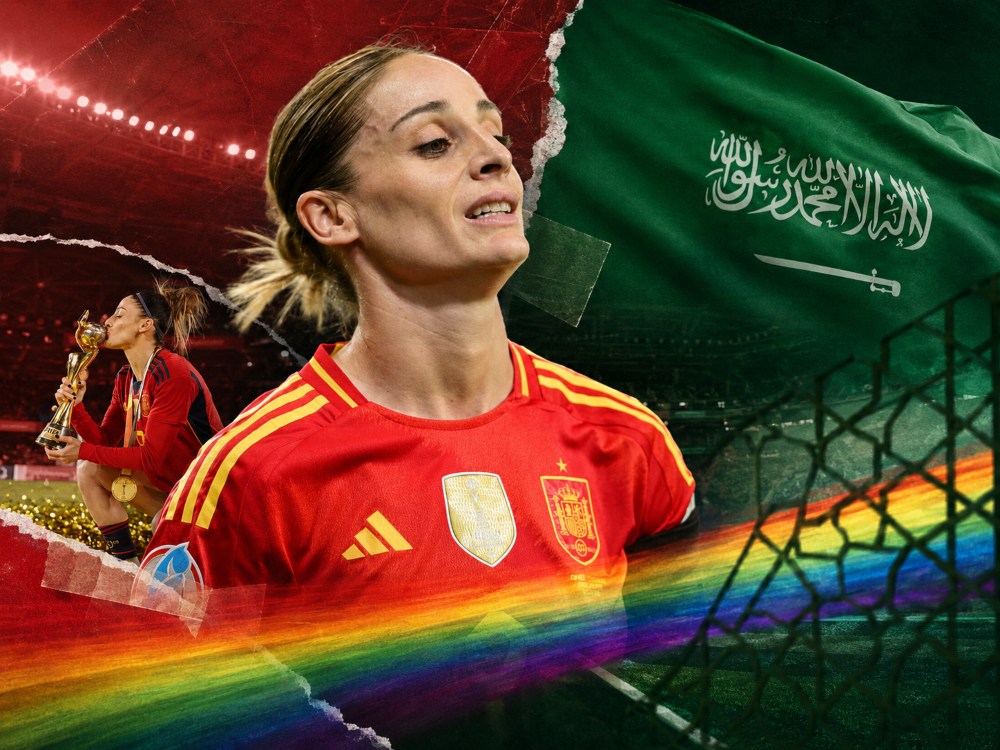

Spanish football star Esther González is facing criticism from some LGBTQ+ fans after signing with Saudi Women’s Premier League club Al-Qadsiah.
The 33-year-old World Cup winner, who is married to Estefanía Cruz, joined the Saudi club in August after leaving NWSL side Gotham FC the previous month.
Her move has sparked debate because same-sex relationships are criminalised in Saudi Arabia, while González has previously been open about her wife and family.
González Signs With Al-Qadsiah
González left Gotham FC in July after the club agreed to terminate her contract early so she could deal with personal matters in Spain.
Less than a month later, Al-Qadsiah announced she had signed a contract through 2027.
González enjoyed a successful spell in the US, helping Gotham win major trophies and becoming one of the club’s leading scorers.
She was also part of Spain’s 2023 FIFA Women’s World Cup-winning squad.
Family Photos Spark Further Debate
The transfer attracted even more attention after several media outlets reported that González had removed or archived many visible photos featuring her wife and child from Instagram.
González and Cruz welcomed their first child in January and had previously shared parts of their family life publicly.
However, González has not explained the changes to her social media account, and there is no confirmed evidence that Al-Qadsiah or Saudi authorities instructed her to remove the images.
That has not stopped fans from questioning whether the move will require her to be less publicly open about her sexuality.
LGBTQ+ Rights Remain Heavily Restricted
Same-sex sexual activity is criminalised in Saudi Arabia under the country’s interpretation of Sharia law.
Human rights groups have documented arrests and prosecutions targeting LGBTQ+ people, while public advocacy for queer rights can also carry serious risks.
Saudi Arabia has increasingly invested in international sport, including women’s football, as part of a wider effort to expand its sporting profile.
Critics argue those investments can sit uneasily alongside the country’s record on LGBTQ+ rights and other human rights issues.
Queer Fans Question The Decision
Some LGBTQ+ football fans have criticised González for accepting the move, arguing that a high-profile international player may enjoy protections and privileges unavailable to queer people living in Saudi Arabia.
Others have noted that professional athletes regularly make complicated career decisions and that González has not publicly explained the personal or financial factors behind hers.
That distinction matters. It is fair to scrutinise the wider environment she is entering, but it would be speculation to claim she has abandoned her identity or family.
For now, the biggest question is how openly one of women’s football’s most prominent gay players will be able to live while playing in a country where same-sex relationships remain criminalised.