









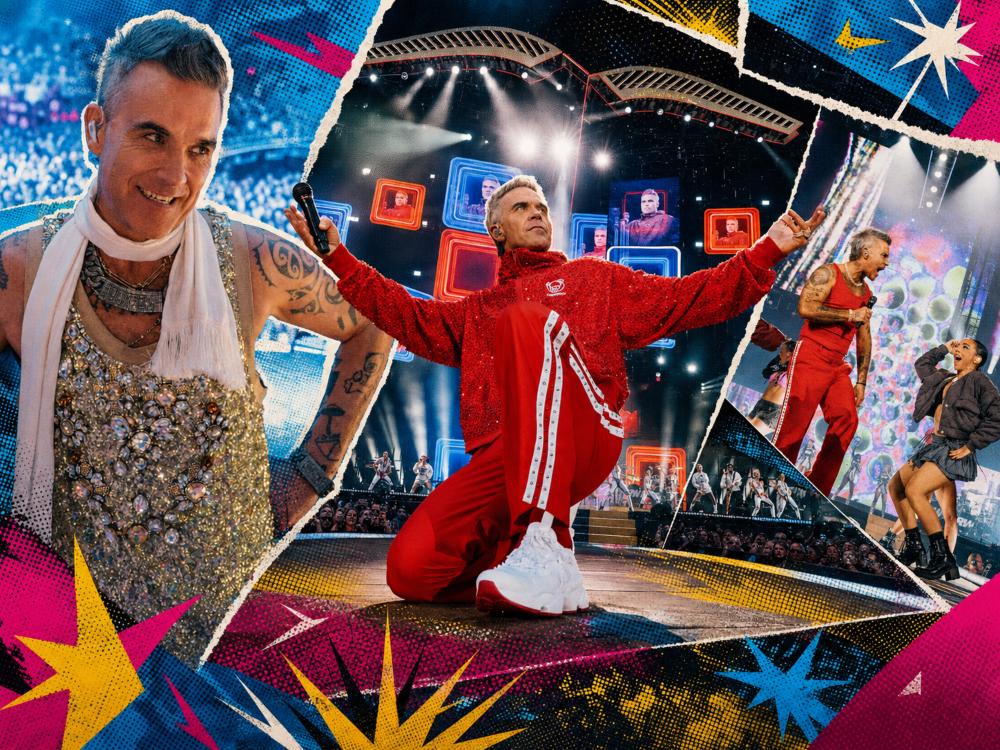

An early ally to queer fans, a candid survivor of addiction and anxiety, and one of pop’s greatest live showmen, Robbie Williams has earned his return, this November, to Aotearoa’s biggest stages.
THE ALLY
When Robbie Williams began breaking away from Take That in the late 1990s, male pop stars were rarely encouraged to embrace gay audiences. Female icons could be openly supportive, but men were expected to guard their masculinity carefully.
Williams never seemed interested in those rules. Take That had cut their teeth performing in gay clubs, frequently dressed in leather and Lycra, and Williams remembered those rooms as places of humour, freedom and safety. Recalling how nights out in his home town could feel shadowed by violence, he told the Guardian that entering the gay scene brought “total acceptance, humour and abandon”. Williams, who joined Take That when he was just 16, added that the gay clubs had been “an incredibly safe place for me to grow up”.
As his solo fame exploded, he kept that uninhibited energy. He played gleefully with camp fashion and treated questions about his sexuality as opportunities for mischief rather than panic. In 2013, he explained to The Daily Star that his love of musical theatre made him feel connected to the gay community. At a time when being mistaken for gay could still threaten a male star’s carefully managed image, Robbie refused to present gayness as an insult.
Discussing persistent speculation around his sexuality with The Guardian, he said: “You want to be an ally while at the same time protecting your own authenticity and your own life.” That balance explains why queer audiences have stayed loyal. Robbie has never claimed an identity that is not his, but he has consistently shown affection for the people who welcomed him before the mainstream did.
THE SURVIVOR
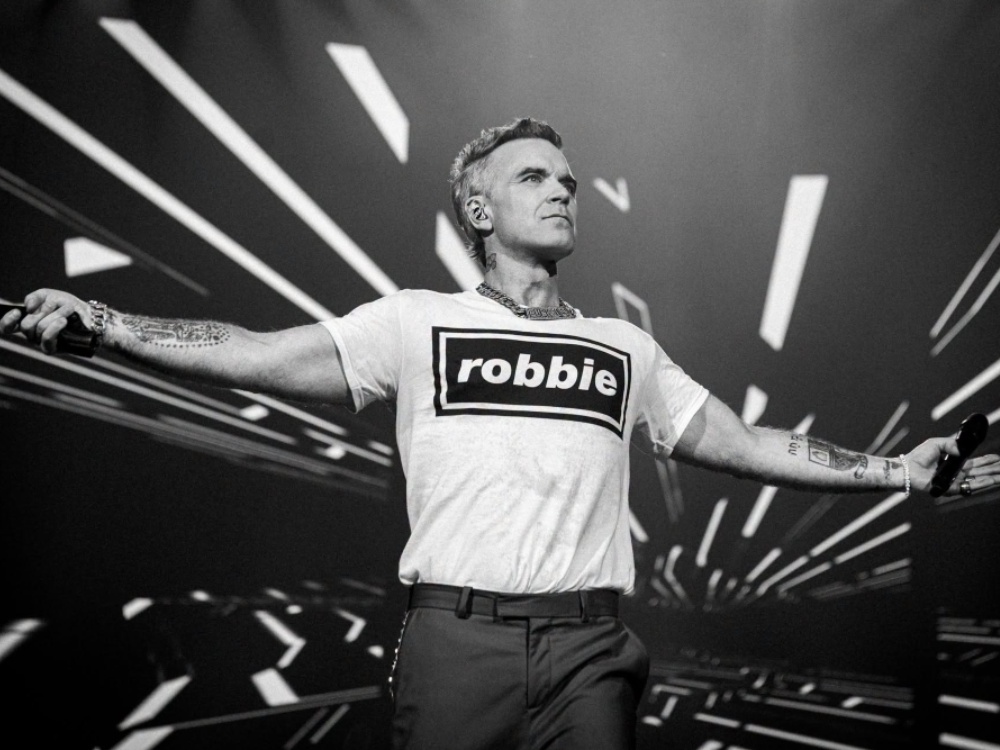
Robbie’s swagger has always been accompanied by a darker counterweight. Behind the winks, pelvic thrusts and stadium-sized confidence sat somebody battling depression, addiction, body dysmorphia, agoraphobia and crippling anxiety.
The four-part Netflix documentary Robbie Williams forced him to watch decades of private footage charting his ascent and deterioration. He described the process as witnessing mental illness, breakdowns, alcoholism and depression in slow motion. The film Better Man went further, turning his life into an audacious musical biopic in which he appears as a CGI chimpanzee, reflecting the “performing monkey” he felt fame required him to become.
Neither project sanitised his decline. The film depicts drug use, self-harm and suicidal despair, while the documentary shows how success intensified rather than cured his feelings of worthlessness. Williams entered rehab for drug and alcohol abuse in 1997 and returned to treatment for dependency on prescription medication in 2007.
His survival story feels inspiring because it avoids the fantasy of a permanent cure. In 2025, he admitted that social interactions can still fill him with panic and that, in 2006, his anxiety had got so bad that he struggled to leave the house for three years.
That honesty has been valuable for people living with depression, anxiety or addiction. A man who once struggled to leave the house can once again step before tens of thousands of people and command every corner of a stadium. That’s inspiring.

THE SHOWMAN
Plenty of singers can deliver hits. Robbie Williams builds communal events around them.
His three Knebworth concerts in 2003 drew around 375,000 people, creating one of British music’s defining live spectacles. Three years later, his Close Encounters Tour sold more than 1.6 million tickets in a single day, earning a Guinness World Record. Those figures reflect more than nostalgia. Robbie understands the golden rule of stadium pop: the audience wants to feel part of something enormous, and to make that happen, he has to assure every person that they are part of the show and the night depends on them.
The staging has frequently matched the scale of his ego, knowingly and spectacularly. His Take the Crown shows featured a monumental sculpted head bearing his own face. On The Heavy Entertainment Show Tour, he entered like a boxer to a mock national anthem, then soared above audiences on a giant rotating boxing glove. The European leg of The BRITPOP World Tour, which lands here in November, features a daredevil aerial stunt involving Williams standing atop an enormous rocket as it takes off!
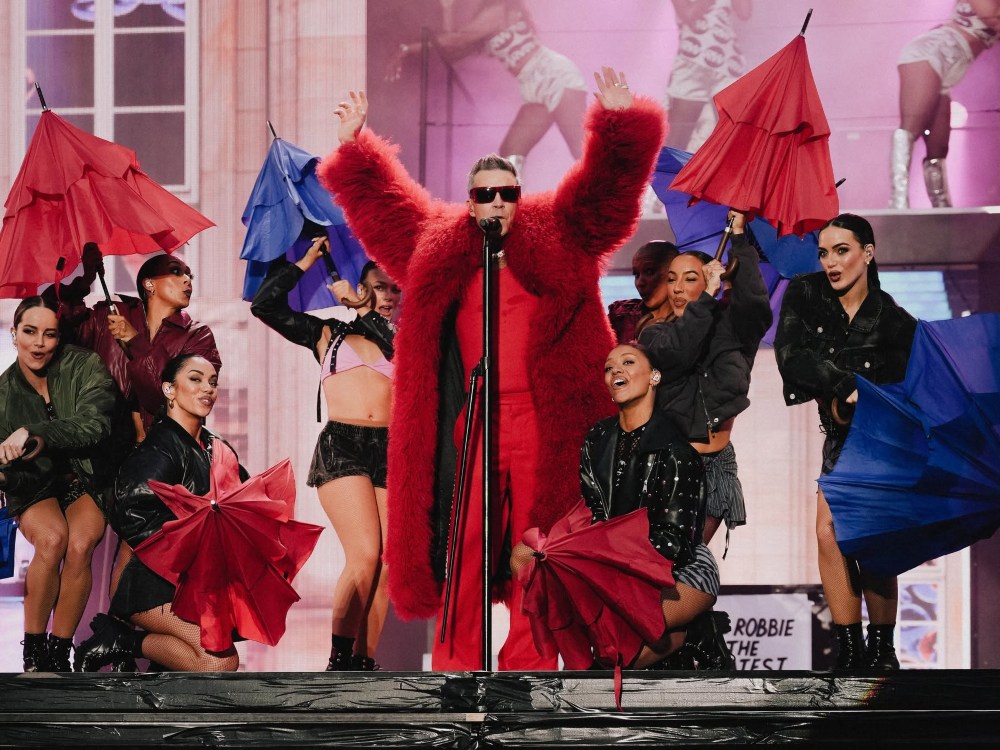
Aotearoa has signed up for that showmanship repeatedly. Robbie first toured here in 2001, while The Heavy Entertainment Show reached Auckland and Dunedin in 2018. In 2023, he sold all 25,000 tickets to his Mission Estate concert in under an hour, prompting the addition of a second show.
The BRITPOP World Tour reaches Auckland’s Eden Park before Williams becomes the first international artist to perform at Christchurch’s new One New Zealand Stadium. It will also be his first performance in the city for 25 years. For an entertainer whose career has survived excess, collapse and reinvention, there could be no more fitting finale to the tour than opening a brand-new stage and proving, once again, that nobody entertains quite like Robbie Williams.
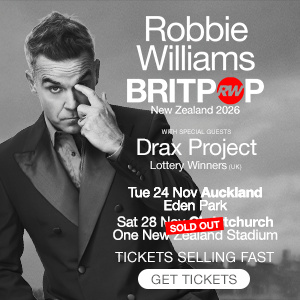
Robbie Williams’ BRITPOP World Tour plays Eden Park, Auckland, on Tuesday 24 November and One New Zealand Stadium, Christchurch, on Saturday 28 November. Drax Project and Lottery Winners support. Buy tickets at frontiertouring.co.nz
FIVE ROBBIE WILLIAMS SONGS WE CANNOT WAIT TO HEAR LIVE
LET ME ENTERTAIN YOU
The theatrical bravado and instantly shoutable wild chorus turn a vast stadium into Robbie’s personal cabaret. Deployed early in the setlist, it is a promise that the spectacle has officially started.
ROCK DJ
Few pop videos have announced a star’s willingness to expose himself more literally. Live, its elastic groove and infectious energy will have everyone on their feet.
MY WAY
As a point of reflection on his truly massive career and roller-coaster life, Williams covers Frank Sinatra’s classic for a stadium-sized karaoke session.
BETTER MAN
Already one of his most affecting ballads, the song now carries the additional weight of his biopic. Its plea for patience and growth feels like a message sent by the chaotic young Williams to the survivor standing onstage.
ANGELS
Williams may sing it, but by the final chorus the audience has usually taken ownership. ‘Angels’ transforms tens of thousands of strangers into one enormous choir and remains the emotional release every Robbie show demands. Expect tears and hugs.