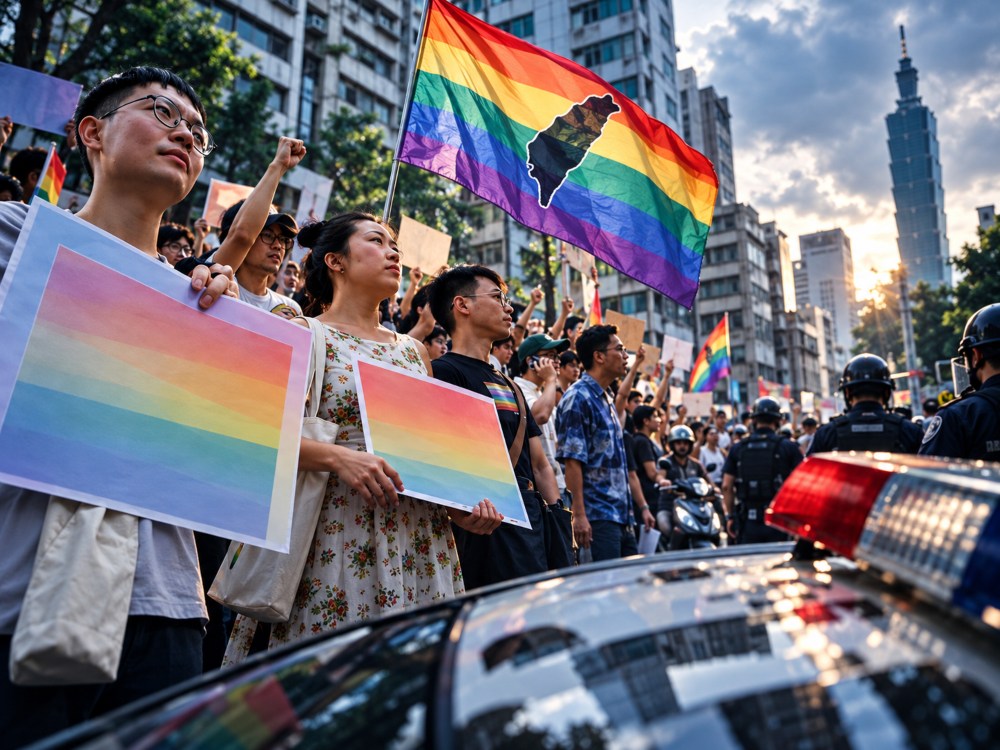











Tasmania has launched a new awareness campaign encouraging people persecuted under the state’s former homosexuality and cross-dressing laws to apply for financial redress.
The campaign was developed in consultation with Tasmania’s LGBTIQA+ community and aims to reach people who may not realise that their historical charges or convictions can now be removed.
Tasmania is the first Australian state or territory to offer financial redress specifically to people charged or convicted under former laws criminalising consensual homosexual activity and cross-dressing. The scheme opened in December 2025 following amendments to the state’s existing expungement legislation.
Payments of Up to $77,911
The redress scheme originally provided payments ranging from $15,000 to $75,000, with the legislation requiring the amounts to be indexed annually.
As of 1 July 2026, the available payments are:
- $15,582 for somebody who was charged but not convicted and did not serve time in prison.
- $46,746 for somebody who was convicted but did not receive a further court-ordered sanction.
- $77,911 for somebody who was convicted and received a sanction such as imprisonment, a suspended sentence, fine, probation, community service or mandatory treatment.
A successful applicant can receive only one payment, even when several charges are expunged. They will receive the highest amount for which they qualify.
Payment is contingent on successfully applying to have an eligible charge or conviction expunged from the person’s criminal record.
Charges that were dismissed and convictions that were later overturned may also qualify, recognising that being arrested or prosecuted could still have caused lasting harm and affected employment, travel and other opportunities.
“Acknowledgement and Justice”
Equality Tasmania spokesperson Rodney Croome welcomed the campaign as an important attempt to reach people harmed by laws that should never have existed.
“This is about acknowledgement and justice for those gay, bisexual and transgender Tasmanians persecuted because of who they were,” Croome said in the campaign material.
“No-one can change the past, but the future can be better.”
Croome said the scheme demonstrated how dramatically Tasmania had changed since the campaign to decriminalise homosexuality.
“Financial redress is evidence of how profoundly Tasmania has changed for the better in the last quarter century and shows we are not going back,” he said.
People prosecuted under the former laws could face imprisonment, fines, involuntary outing, loss of work, family rejection and long-term difficulty obtaining employment or housing because of their criminal records.
Equality Tasmania has noted that the cross-dressing offence was disproportionately enforced against transgender women.
From Australia’s Harshest Laws to National Leadership
Tasmania was the final Australian jurisdiction to decriminalise consensual sexual activity between men, doing so in 1997 after years of domestic and international pressure.
The state was also the only Australian jurisdiction to specifically criminalise cross-dressing. That offence applied to a person assigned male at birth who appeared in public in women’s clothing between sunset and sunrise, and remained in force until April 2001.
In 2017, Tasmania passed legislation allowing historical homosexuality and cross-dressing charges to be expunged. The scheme commenced in April 2018, meaning an eligible record could be removed from official police and court histories.
The law was expanded in 2025 to introduce automatic redress payments following a successful expungement application and to include some related offences, such as charges arising from resisting an arrest made under the former laws.
The reform received support across Tasmania’s Parliament after an earlier redress proposal from the Greens helped place compensation on the political agenda.
Relatives Can Apply for Deceased People
A spouse, partner or other eligible representative may apply to have the record of somebody who has died expunged.
The legislation establishes an order of priority for representatives, beginning with a spouse or significant partner, followed by an adult child, parent, adult sibling, adult niece or nephew, legal personal representative or another person approved by the Secretary of the Department of Justice.
However, no redress payment is made when an application concerns a deceased person. The process instead removes the historical charge or conviction and provides formal acknowledgement that the conduct should not have been criminalised.
A representative can also apply on behalf of a living person who lacks the legal capacity to complete the process themselves. In those circumstances, the affected person can still receive a redress payment if the application succeeds.
Applicants Do Not Need to Remember Everything
Some people may remember very little about their arrest or prosecution, while others may find revisiting the experience distressing.
Applicants are encouraged to provide whatever information they can. The Department of Justice will request a Tasmania Police history check and seek relevant material from police, prosecutors and the courts.
Most applicants will not need to appear in court or give evidence. Additional information, documents or a statutory declaration may be requested when official records are incomplete.
Applications are confidential, with access restricted to the officials and agencies involved in assessing and locating the records. Unauthorised disclosure of information connected to an application is an offence under the legislation.
The Secretary of the Department of Justice determines whether the historical conduct would still constitute an offence today and whether the record should be expunged.
An unsuccessful applicant can seek a review through the Tasmanian Civil and Administrative Tribunal.
Applications can be completed online or submitted by email or post using the Department of Justice application form.
For those who lived under Tasmania’s former laws, the scheme cannot undo the arrests, public exposure, lost opportunities or trauma they experienced.
However, advocates say it represents a significant acknowledgement that the state was responsible for injustice — and that those affected deserve both recognition and material redress.