










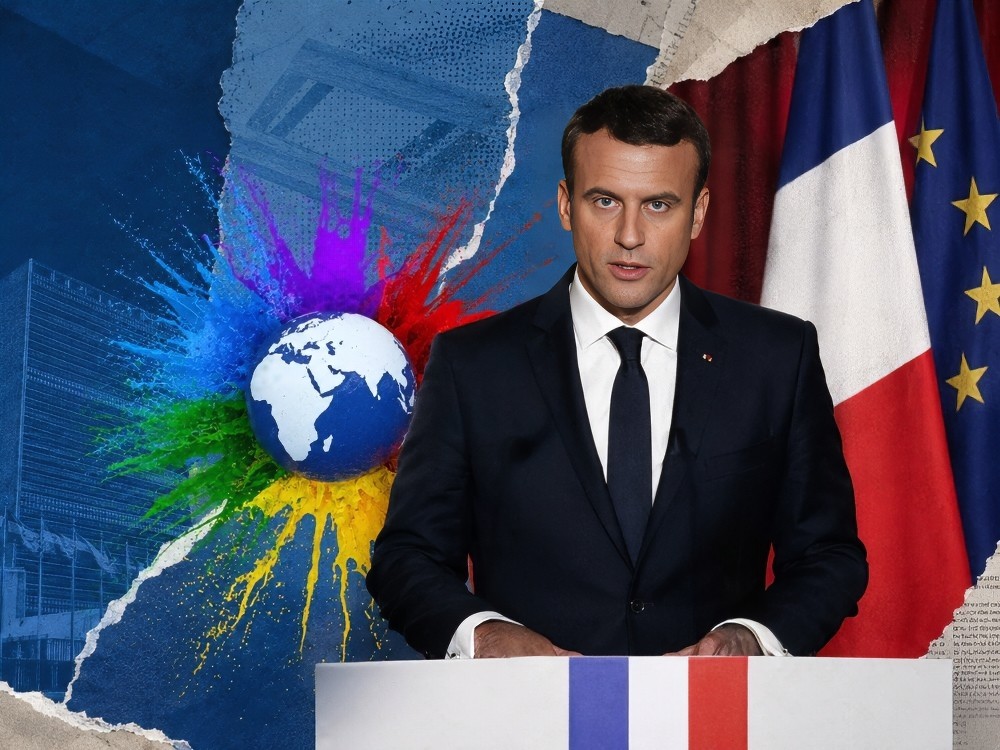
Civil society organisations working in countries where consensual same-sex relations remain criminalised are urging French President Emmanuel Macron to halt plans for a new United Nations Human Rights Council resolution on decriminalisation.
It might initially sound counter-intuitive. The 141 organisations behind the appeal strongly support the worldwide repeal of laws criminalising LGBTQ+ people.
Their concern is not the goal.
It is how that goal is pursued — and whether a high-profile international intervention led by France could unintentionally place local LGBTQ+ activists and communities at greater risk.
In a letter to Macron, the organisations argue that those living and working under criminalisation must have a meaningful role in deciding how international advocacy is conducted.
“Our concern is not with the objective. It is with the strategy.”
France has long positioned universal decriminalisation as a foreign-policy priority. Its Ministry for Europe and Foreign Affairs says the country advocates for the repeal of laws criminalising homosexuality and trans identities and intends to campaign at the United Nations for universal decriminalisation.
However, the organisations signing the letter fear a new Human Rights Council resolution could have serious unintended consequences in countries where LGBTQ+ rights are already portrayed by political or religious leaders as a foreign or Western agenda.
‘First, do no harm’
The groups are calling for international LGBTQ+ advocacy to operate according to a “first, do no harm” principle.
They argue that initiatives should be assessed not only by what governments and international organisations hope to achieve, but also by the potential consequences for people living under hostile laws.
In some countries, governments and non-state actors already depict LGBTQ+ equality as something being imposed by foreign powers.
The signatories fear a prominent France-led UN initiative could reinforce that narrative, potentially providing opponents of LGBTQ+ rights with ammunition to justify greater surveillance, intimidation and restrictions on civil society.
They also warn that backlash could result in punitive action against queer communities or even attempts to strengthen existing criminal laws.
Those consequences, the organisations stress, would not primarily be experienced by diplomats debating resolutions in Geneva.
They would be felt by local LGBTQ+ people and human rights defenders who must continue living and organising within those countries after the international attention has moved elsewhere.
Local movements must lead change
The letter highlights how decriminalisation has often been achieved through sustained, locally driven advocacy.
Strategies can include litigation, working with parliamentarians, coalition-building, community education, engagement with faith and traditional leaders, research and years of grassroots organising.
Those approaches rely heavily on local knowledge, relationships and political credibility.
The organisations fear an international strategy perceived as externally imposed could undermine that work by allowing governments to dismiss local activists as agents of foreign interests.
They are therefore calling for international partners to strengthen locally led movements rather than determine advocacy strategies on their behalf.
‘Nothing about us without us’
Central to the dispute is the principle of “nothing about us without us”.
The signatories question whether organisations based in countries that continue to criminalise LGBTQ+ people have been sufficiently involved in developing France’s proposed approach.
Meaningful consultation, they argue, cannot simply involve informing communities once a strategy has already been designed.
Those most affected should have genuine power to shape the strategy, assess its risks and determine whether an international initiative should proceed.
Activists operating under criminalisation understand the local political environment, the limits of public advocacy and the potential consequences of foreign pressure in ways international organisations and governments may not.
For the signatories, their involvement is therefore not merely desirable. It is essential.
France’s colonial responsibility
The letter also places the debate within the history of European colonialism.
Many laws criminalising consensual same-sex activity across Africa, Asia, the Caribbean and elsewhere were introduced, codified or strengthened under European colonial administrations.
The organisations argue that contemporary decriminalisation efforts cannot be separated from that history.
They want France to acknowledge the role colonial powers played in creating and reinforcing legal systems that continue to punish LGBTQ+ people today.
That recognition, they argue, should be accompanied by meaningful reparative action rather than an international strategy dominated by former colonial powers.
The issue is particularly sensitive because opponents of LGBTQ+ equality in some countries portray queer rights as a Western import, despite many anti-homosexuality laws themselves having colonial origins.
An alternative pathway to decriminalisation
The organisations are not asking France to abandon its commitment to ending criminalisation.
Instead, they propose redirecting its political influence and resources towards strategies led by communities directly affected.
Among their recommendations is a high-level French commitment to universal decriminalisation that explicitly recognises colonial history while supporting locally determined legal reform.
They also propose creating a Global Decriminalisation Justice Initiative governed in partnership with organisations from criminalising countries.
Such an initiative could provide sustained and flexible funding to grassroots groups while supporting strategic litigation, legal assistance, movement-building, research, public education and community mobilisation.
The letter also calls for stronger security and protection mechanisms for activists facing reprisals and more sustained consultation with affected communities.
Rather than beginning a potentially divisive new negotiation at the Human Rights Council, the organisations want France to place greater emphasis on implementing decriminalisation recommendations already produced through existing United Nations human rights mechanisms.
Measuring leadership by its impact
France says more than 130 UN member states have decriminalised homosexuality, while consensual same-sex relations remain criminalised in 61 countries. Its foreign ministry says universal decriminalisation remains one of its central international LGBTQ+ rights priorities.
The organisations behind the letter are not challenging that ambition.
Instead, they argue that successful international leadership should be judged by what happens to LGBTQ+ people after diplomatic declarations have been made.
“Leadership should be measured by whether communities living under criminalisation are safer, stronger, better resourced, and able to achieve sustainable legal reform on their own terms,” the organisations state. “It should not be measured by the adoption of a new resolution.”
For the 141 groups appealing to Macron, the destination remains the same: a world in which nobody is criminalised for consensual same-sex relationships.
The disagreement is over the route.
And they argue that the people facing the greatest consequences if an international strategy goes wrong must have the strongest voice in deciding how that journey is made.