








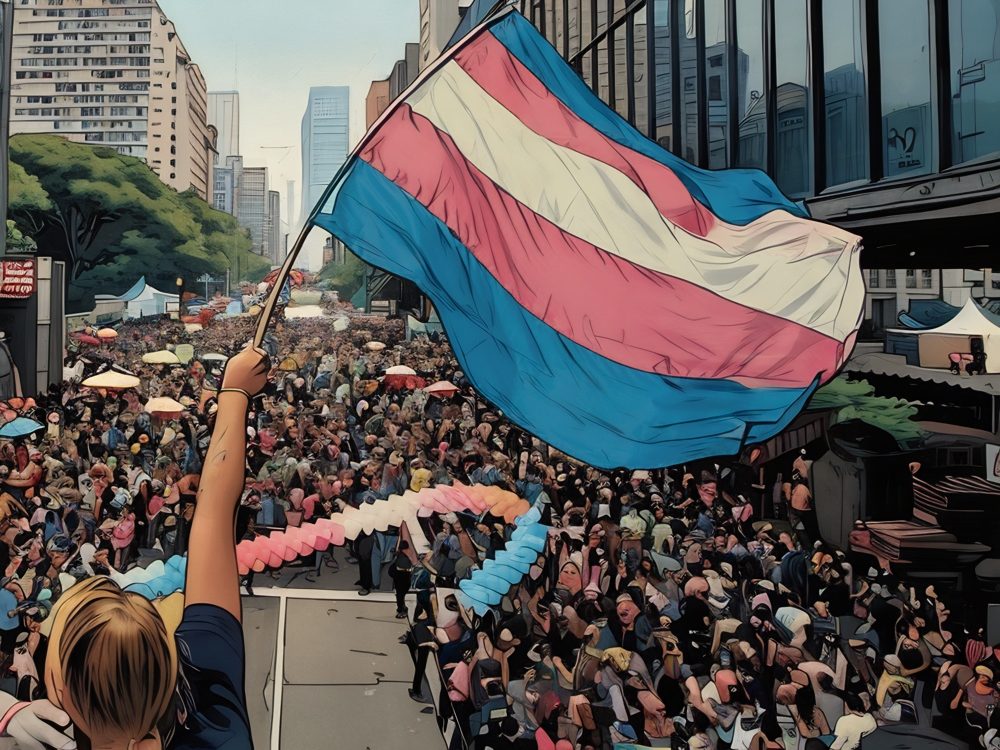

An Alabama city has ended private access to its downtown banner programme after Pride Month displays were followed by banners declaring: “Protect Our Children From Gender Ideology”.
The City of Mobile says that once the current September campaign ends, banners on public light poles will be restricted to official city programmes and events.
The decision follows months of controversy after privately funded Pride banners appeared downtown in June, prompting local pastor Travis Johnson to organise his own campaign targeting what he calls “gender ideology”.
Anti-Trans Banners Follow Pride Display
Johnson’s banners appeared across downtown Mobile in September, including along Government Street.
He has made clear that the campaign was directly inspired by the earlier Pride display.
“I figured if somebody could be ideological and put up their Pride Month banners, then I could be ideological and defend children and the nuclear family,” Johnson said.
On social media, he also asked: “Who can honestly argue with protecting children from radical gender indoctrination?”
The wording has been criticised by LGBTQ+ residents and advocates who say rhetoric about “gender ideology” is commonly used to portray trans identities and trans-inclusive healthcare or education as a threat to children.
Mobile resident Bryan Fuenmayor, who organised the Pride Month banners, said he would have had no objection to a general child-protection message.
“When he attaches the ‘protect kids from gender ideology,’ you know, that is a message that attacks a minority community, one that is very misunderstood,” he said.
City Ends Private Access Completely
Rather than continuing to approve competing private campaigns, Mobile has now decided to close the banner programme to outside groups.
The city’s existing rules had allowed eligible downtown events, attractions and non-profit organisations to request banner placements, with designs requiring approval from the Special Events Department.
Mobile Media Relations Manager Dale Liesch said managing private requests could become a distraction for staff and take attention away from the city’s core work.
Johnson’s banners will be permitted to remain through September, after which the poles will only carry official city messaging.
Liesch stressed that the decision should not be interpreted as the city taking a position on either Pride or Johnson’s campaign.
“The First Amendment protects lawful expression and we are simply adhering to the law,” he said, adding that the city was committed to “fairness, consistency and respect for all Mobilians”.
Pride And Anti-Trans Messaging Are Not The Same Thing
Legally, the city faced an obvious problem once it opened public banner space to private expression: it could not simply approve viewpoints it liked while rejecting others because of their political or religious message.
That does not mean the content of the two campaigns had the same impact.
Pride banners celebrated the visibility and existence of LGBTQ+ people. Johnson’s campaign, by his own account, was created in opposition to Pride and framed ideas associated with transgender people as something children require protection from.
Local LGBTQ+ supporters have therefore argued that treating the dispute merely as two equivalent “sides” risks overlooking the way one campaign directly targeted an already marginalised community.
The Mobile Bay Democratic Socialists of America also condemned the September banners, describing them as homophobic political grandstanding.
Johnson has rejected that criticism and maintains that his message is about defending children and families.
No More Private Banners
For Mobile, the solution has ultimately been to remove the public forum rather than continue refereeing increasingly political campaigns.
After September, neither Pride organisers, churches nor other private organisations will be able to use the downtown programme in the same way.
The rainbow banners may have disappeared months ago, and the anti-trans banners will soon follow.
But the debate they triggered over queer visibility, trans rights and whose messages get displayed in public space is unlikely to disappear quite so easily.