









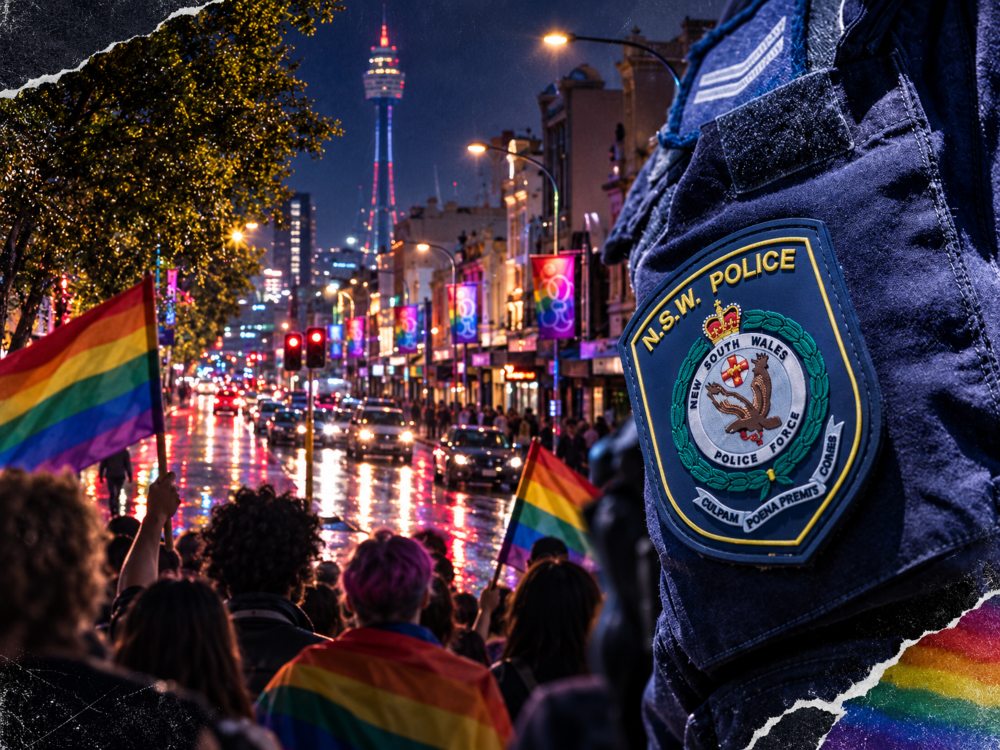

NSW Police have defended a major drug-dog operation across Sydney’s Oxford Street nightlife precinct after LGBTQ+ patrons and community advocates described the police presence as intimidating and questioned why queer venues were again being searched.
Around 15 to 20 officers were filmed entering at least one Oxford Street venue on Saturday, 12 September, accompanied by a drug detection dog.
NSW Police say the wider operation visited 14 licensed premises, including five or six venues frequented by LGBTQ+ communities.
Deputy Commissioner Peter McKenna has rejected claims queer venues were specifically targeted, calling some of the reaction “considerable exaggerations” and “histrionics”.
But the raids have reopened a much larger debate about drug policing on Oxford Street — particularly because a similar operation just three months ago is already the subject of scrutiny by the state’s police watchdog.
Police Deny Targeting LGBTQ+ Venues
Speaking to ABC Sydney, McKenna said the September operation was intelligence-led and did not single out LGBTQ+ businesses.
“People saying that we were raiding or targeting any community — or picking on anyone in particular — that’s not the case,” he said.
“That’s complete misinformation.”
Police say 65 people were searched over the course of the operation, resulting in 28 drug detections, 12 fines, six cannabis cautions and one move-on direction.
McKenna said he had personally reviewed body-worn camera footage and believed officers acted professionally.
He also pointed to drug-dog operations carried out elsewhere in Sydney that same night as evidence the policing was not limited to LGBTQ+ venues.
Some patrons saw the situation very differently.
Video from Oxford Street shows more than a dozen officers entering a nightclub with a detection dog, while patrons told ABC Sydney the size and visibility of the police presence made them feel intimidated and caused people to leave.
A Second Raid In Three Months
The reaction is heightened by what happened on Oxford Street in June.
That operation involved drug detection dogs at numerous venues in and around Sydney’s LGBTQ+ nightlife district and led to complaints that some officers behaved aggressively or intimidatingly.
Those complaints were referred to the Law Enforcement Conduct Commission, and the matter remains under scrutiny.
That history carries particular weight on Oxford Street.
Sydney’s LGBTQ+ community has a long and complicated relationship with police, stretching back to the violent arrests and treatment of protesters during the first Sydney Gay and Lesbian Mardi Gras in 1978.
For some patrons and advocates, repeated high-visibility operations inside queer venues therefore carry significance beyond ordinary nightlife policing.
Drug Dogs Face Wider Criticism
The controversy is not limited to whether LGBTQ+ venues were deliberately targeted.
Harm-reduction advocates have long questioned the use of drug detection dogs more broadly.
Redfern Legal Centre says the presence of detection dogs can encourage people carrying drugs to consume them rapidly before encountering police, a practice sometimes referred to as panic consumption or “preloading”.
Rian Terrell from the centre said the organisation regarded the Oxford Street operations as disproportionate.
“Drug detection dogs are intimidating and a safety risk,” Terrell said, arguing that their use can encourage risky behaviour.
The centre is calling for greater investment in harm-reduction approaches rather than high-visibility drug policing.
The NSW Government has taken some steps towards harm minimisation, including funding ongoing drug-checking services at selected music festivals, but has not accepted calls to stop using detection dogs.
Community Questions The Focus
Nightlife industry representatives have also questioned whether searching patrons for small quantities of drugs meaningfully disrupts organised supply.
Night Time Industries Association vice-chair James Thorpe said issuing fines for low-level possession was different from dismantling drug distribution networks.
NSW Police, however, argue officers must be able to conduct operations across licensed venues where intelligence suggests drug activity may be occurring.
That disagreement sits at the centre of the current dispute.
Police say they are enforcing drug laws across the nightlife economy.
Community advocates argue the repeated presence of large numbers of officers and detection dogs inside queer venues creates unnecessary harm and risks damaging trust.
Protest Planned For Taylor Square
LGBTQ+ activists are now organising a protest against the raids at Taylor Square in Darlinghurst.
Organisers are calling for an end to police drug-dog operations inside LGBTQ+ bars and community spaces.
The action comes as pressure also grows from elected representatives for greater scrutiny of the September operation and the intelligence used to determine which venues were visited.
For Sydney’s queer community, the dispute is about more than one Saturday night.
It raises a broader question about how policing, harm reduction and community safety should operate in a precinct where the relationship between LGBTQ+ people and police has been contested for decades.
NSW Police insist the operation was not targeted.
Many patrons and advocates remain unconvinced.