










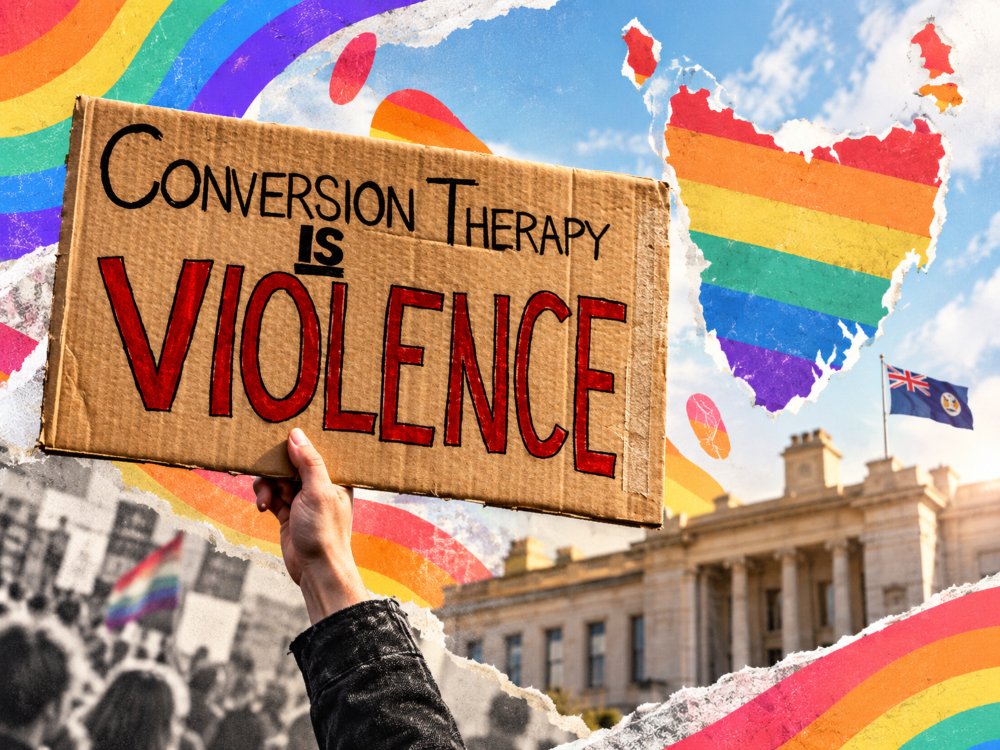
Tasmanian Liberal MPs will be free to vote according to their conscience on proposed legislation banning conversion practices, as debate intensifies over what the bill would — and would not — prohibit.
The Tasmanian Greens’ Conversion Practices Prohibition Bill 2026 seeks to outlaw practices intended to change, suppress or eradicate a person’s sexual orientation or gender identity.
The bill was formally introduced to Parliament on 10 September and is expected to be debated later this year.
Premier Jeremy Rockliff has said he supports banning conversion practices in principle, while arguing that changes may be needed before he can support the Greens’ legislation in its current form.
“Liberal Party members are always able to express their own views,” Rockliff said after the Parliamentary Liberal Party agreed to a free vote.
Several Liberal MPs Say They Will Vote No
Police Minister Felix Ellis has announced he intends to oppose the bill.
Ellis said he was concerned doctors, psychologists, counsellors or parents could potentially face legal consequences for taking what he described as a cautious approach with a young person experiencing distress about their body or gender.
Former deputy premier Michael Ferguson has also said he will vote against the legislation, arguing that its definition of conversion practices is too broad and could interfere with freedom of speech.
Primary Industries Minister Gavin Pearce has similarly said he cannot support the bill in its current form.
The Greens dispute those interpretations.
Deputy leader Vica Bayley said the legislation targets intentional efforts to change, suppress or eradicate a person’s sexual orientation or gender identity — rather than ordinary parenting, counselling, medical treatment or religious expression.
What The Bill Actually Exempts
The proposed legislation contains several explicit exemptions.
A health practitioner would not be committing a conversion practice by providing healthcare they genuinely consider appropriate, provided that treatment complies with relevant legal, professional and ethical standards.
The bill also excludes:
- participation in public debate;
- expressions of beliefs or principles, including through prayer;
- parents discussing sexual orientation, gender identity, sexual activity or religion with their children; and
- other specified forms of good-faith healthcare, counselling and discussion.
Those exemptions are important because many of the concerns being raised publicly by opponents relate specifically to prayer, parenting and medical care.
Whether the remaining provisions strike the right legal balance is ultimately what Parliament will debate.
What Are Conversion Practices?
Conversion practices are efforts intended to change or suppress a person’s sexual orientation or gender identity.
They can range from formal counselling or purported therapeutic interventions to religious or community-based practices that tell LGBTQ+ people they should suppress same-sex attraction, reject their gender identity or attempt to become heterosexual or cisgender.
They are distinct from ordinary counselling or healthcare that supports a person without a predetermined goal of changing or suppressing their sexuality or gender.
Mainstream medical and psychological bodies have rejected conversion practices as ineffective and potentially harmful.
Tasmanian Law Reform Institute Found ‘Severe Harm’
Tasmania has been debating the issue for years.
A 2022 report from the Tasmanian Law Reform Institute found that conversion practices were still occurring in the state and had caused “severe harm” to people subjected to them.
The Institute concluded that sexual orientation and gender identity are not faults or disorders and that attempts to change them are neither safe nor effective.
It recommended legal reforms while also stating that legitimate healthcare, good-faith expressions of religion, parental guidance and public discussion should remain protected.
Tasmania’s government previously developed its own legislation in 2023, but that proposal did not proceed after criticism from both supporters and opponents.
Equality Advocates Back Current Bill
Equality Tasmania spokesperson Rodney Croome has welcomed the Liberal Party’s decision to allow a conscience vote.
He has urged MPs who oppose the legislation or remain undecided to meet survivors of conversion practices before casting their votes.
Croome argues the current bill already addresses concerns surrounding freedom of religion, parenting and healthcare.
Labor and several crossbench MPs have indicated support for the Greens legislation, meaning the bill could potentially pass even without unified government backing.
For LGBTQ+ advocates, the debate now centres on whether Tasmania will finally join other Australian jurisdictions that have moved to prohibit conversion practices.
For opponents, the question is whether the legislation’s protections and exemptions go far enough.
That argument will now move to the floor of Parliament.