







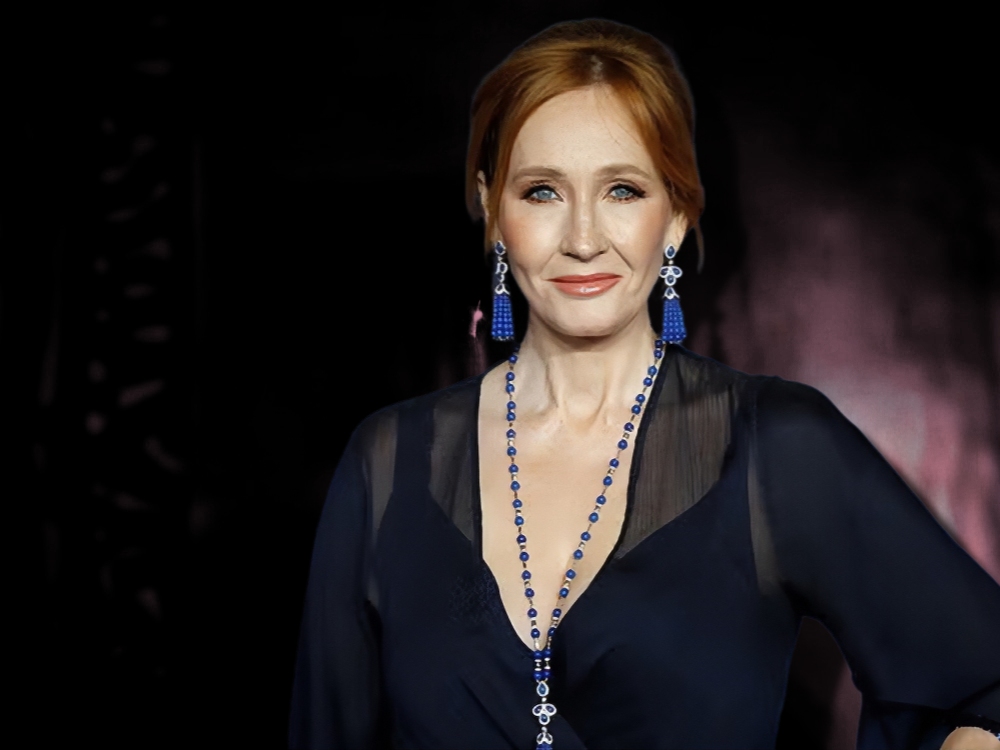
JK Rowling has published a new essay defending her long-standing views on sex and gender, describing what she calls the “dominant strain” of modern trans activism as “elitist to its core” while insisting she does not want trans people denied human rights or personal safety.
JK Rowling has returned to one of the most divisive debates surrounding her public life, publishing a lengthy new essay setting out why her views on sex and gender have not changed.
The Harry Potter author posted the more than 2,000-word piece to her website on 21 October 2026, describing it as an update to the essay she first published in June 2020.
“My views haven’t changed,” Rowling wrote, while adding that the wider political and legal landscape had.
Her latest intervention comes at a time when her campaigning on sex and gender has become increasingly practical as well as rhetorical, including through the creation of the J.K. Rowling Women’s Fund and her support for women-only services.
Rowling calls trans activism ‘elitist’
One of the strongest passages in the essay concerns what Rowling describes as the “current, dominant strain of trans activism”.
She contrasts it with historic civil-rights, gay-rights and women’s-rights movements, which she says were built by people with limited institutional power organising from the grassroots.
“Twenty-first-century trans activism is the very inverse of those movements,” she writes.
“It is elitist to its core.”
Rowling argues that ideas around gender identity have gained influence within institutions including universities, government, corporations and advocacy organisations.
That is her interpretation of the political movement around trans rights.
Trans advocates and LGBTQ+ organisations generally reject the idea that their campaigns amount to an elite project, instead arguing that they are seeking protection from discrimination and equal treatment for a minority population.
Rowling says she has received violent threats
Rowling also writes extensively about the personal consequences of becoming one of the world’s most prominent critics of gender-identity-based policy.
She says she has received what she describes as an “avalanche of death, rape and torture threats” since becoming more outspoken on the issue.
Threats of violence are not legitimate political criticism, regardless of the target or their views.
At the same time, the existence of threats against Rowling does not mean that criticism of her positions is itself abusive or violent.
Her comments and campaigning continue to attract substantial opposition from trans people and LGBTQ+ organisations, particularly where they believe her preferred policies would reduce protections or access for transgender people.
‘I don’t want trans people eradicated’
The essay also directly addresses claims that Rowling is hostile to trans people themselves.
She acknowledges that vulnerable trans people exist and writes that transgender people should not face discrimination in housing or employment.
She also says they should not be denied human rights or personal safety.
Where she draws the line is around whether transgender women should always be treated as women in law, sport and single-sex settings.
Rowling argues that biological sex should remain decisive in some settings including changing rooms, prisons, sport and services for survivors of sexual violence.
She writes that women seeking single-sex spaces do so because of safeguarding concerns, “not because we hate trans people” or want them “eradicated from existence”.
Trans-rights advocates dispute many of the conclusions she draws from those premises, particularly where policies based exclusively on sex would exclude trans women from facilities, services or participation aligned with their gender identity.
Her activism is now backed by money
Since her original 2020 essay, Rowling has increasingly put her considerable financial resources behind legal and charitable initiatives reflecting her views.
She founded and funds Beira’s Place, a women-only sexual-violence support service in Edinburgh.
She has also established the J.K. Rowling Women’s Fund, which provides financial assistance to women pursuing legal cases connected to sex-based rights.
In the new essay, Rowling says she intends to continue funding litigation and women-only services.
“I’ll continue to speak out,” she writes, while promising to continue using her money to support women who would otherwise struggle to afford legal action.
That financial role has made her more than simply a celebrity commentator in the debate.
She is now also funding legal and advocacy activity intended to influence how sex and gender are interpreted in institutions and law.
The UK legal landscape has changed since 2020
Rowling’s update comes after a major shift in British equality law.
In 2025, the UK Supreme Court ruled in For Women Scotland Ltd v Scottish Ministers that the terms “woman”, “man” and “sex” in the Equality Act 2010 refer to biological sex.
The ruling did not remove protections for transgender people, who remain protected from discrimination under the Act’s separate protected characteristic of gender reassignment.
Rowling presents the judgment as vindication of her longstanding view that the legal category of sex should not be replaced by gender identity.
Trans-rights organisations, meanwhile, have focused on how the judgment is being interpreted and implemented, particularly around access to services and facilities.
Rowling remains a lightning rod around Harry Potter
The essay also arrives just days after transgender-rights protesters disrupted a gala performance of Harry Potter and the Cursed Child at London’s Palace Theatre.
Several demonstrators entered the red carpet and lay down during arrivals, with one wearing a shirt reading “Rowling money kills”.
Rowling’s agent, Neil Blair, subsequently said he respected the right to peaceful protest but argued that the action had put audience members, performers and theatre staff at risk.
The protest reflected a growing tactic among some activists: targeting Harry Potter-linked events because they argue that money generated through Rowling’s intellectual property contributes to her ability to fund legal and political activity.
That remains an advocacy argument rather than evidence that the purchase of any individual ticket directly funds a specific campaign.
A BBC documentary is also on the way
Rowling’s public evolution will soon receive another major examination.
The BBC has commissioned a two-part documentary tracing her rise from aspiring writer to global cultural figure and, later, one of Britain’s most polarising public voices.
The second episode will examine her interventions on feminism, free speech and gender identity.
Rowling is not participating directly in the project, which will instead draw on archive material, her own writing and interviews with people who have worked with her.
The documentary is expected to air in 2027.
The debate is unlikely to disappear
Six years after Rowling first published a lengthy explanation of her position, the underlying dispute has only become more entrenched.
Her supporters describe her as defending women’s sex-based rights and freedom of expression.
Her critics argue that many of the policies she supports would make life harder for transgender people and restrict their ability to participate fully in public life.
Rowling’s latest essay does not attempt to bridge that divide.
Instead, it makes clear that she intends to continue campaigning, speaking and spending money in support of her position.
“My views haven’t changed,” she writes.
On that point, at least, there is little ambiguity.