








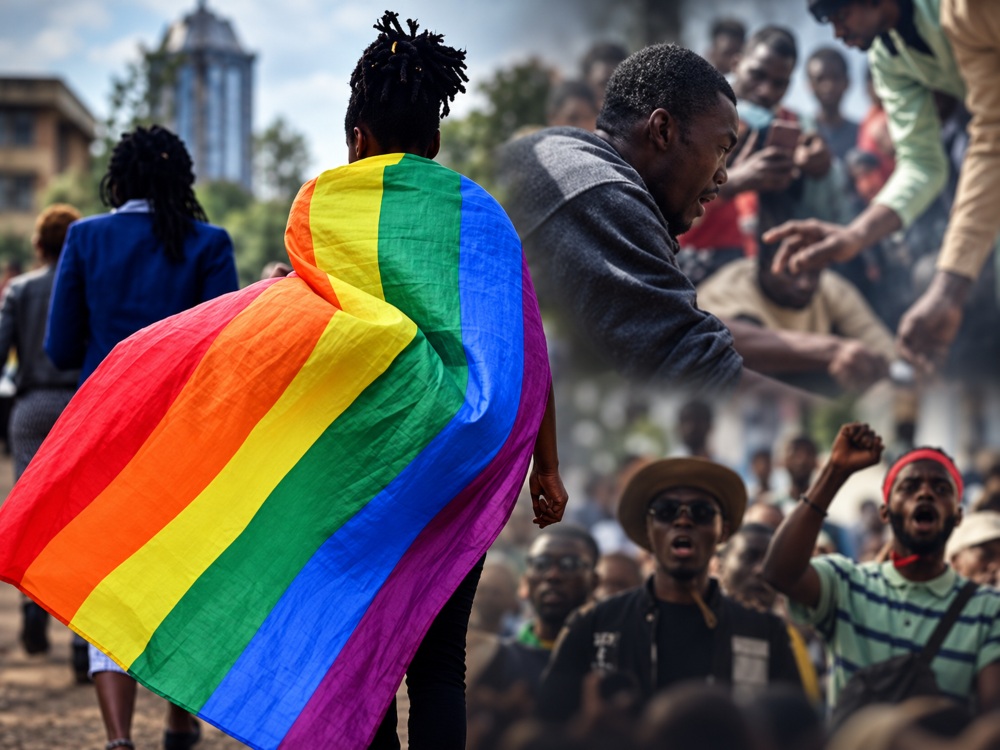

Human Rights Watch has called on Senegal to immediately end an escalating crackdown on LGBTQ+ people, warning that mass arrests, alleged forced HIV testing and barriers to legal representation are spreading fear and undermining access to healthcare.
Human Rights Watch is urging Senegalese authorities to halt what it describes as an intensifying crackdown on LGBTQ+ people, just weeks before the country hosts Africa’s first Olympic event.
In a major investigation published on 12 October, the organisation documented allegations of arbitrary arrests, physical abuse, forced HIV testing, prolonged detention and difficulties accessing lawyers.
It also found that fear of arrest and public exposure is pushing some LGBTQ+ people into hiding, forcing community activities to stop and discouraging people from accessing HIV testing and treatment.
“LGBT people are being forced to curb their normal activities and to keep from exercising their rights for fear of arrest and increased stigma,” Human Rights Watch researcher Larissa Kojoué said.
Senegal strengthened its anti-LGBTQ+ law this year
Consensual same-sex sexual activity has been criminalised in Senegal since 1965.
But on 11 March 2026, parliament significantly increased the penalties attached to Article 319 of the country’s penal code.
The maximum prison sentence for consensual same-sex conduct was doubled to 10 years, while the maximum fine rose to 10 million CFA francs.
The amendments also introduced prison sentences of up to seven years for offences involving the “promotion” or “glorification” of homosexuality, as well as financing or supporting LGBTQ+ people and organisations.
The legislation passed by 135 votes to none, with three abstentions.
Human Rights Watch says hostility towards LGBTQ+ people has intensified alongside political and public rhetoric portraying homosexuality as incompatible with Senegalese or African values.
Those narratives are contested by human-rights advocates, who point out that laws criminalising same-sex relationships across many African countries are themselves heavily shaped by colonial legal systems.
Hundreds reportedly arrested
The March amendments followed an arrest campaign that had already begun escalating.
Human Rights Watch said it could not independently verify the total number of people detained under Article 319.
However, Senegalese human-rights organisation RADDHO recorded at least 212 arrests between February and July, while the HIV Justice Network reported more than 300 during the same period.
Of those arrested, 82 people were also charged with alleged voluntary HIV transmission, although those charges were dismissed by a court in August.
HRW says police and gendarmes have used information obtained from confiscated phones, reports from third parties and raids on private premises to identify people suspected of same-sex activity.
The organisation interviewed 39 people in Senegal, including former detainees, lawyers, healthcare professionals, journalists, civil-society representatives and members of the queer community.
Allegations of forced HIV testing
Some of the report’s most serious findings relate to HIV testing.
Human Rights Watch says authorities subjected detainees to HIV testing without informed consent and then used positive results to support additional criminal charges.
Senegal’s own 2010 HIV/AIDS law protects informed consent, medical confidentiality and the privacy of health information, including protections against mandatory HIV testing of detainees.
Healthcare workers told HRW that the crackdown is already damaging trust in medical services.
One doctor in Dakar said around one-third of some patients had stopped attending appointments for HIV treatment because of fear surrounding arrest, disclosure and stigma.
“If, because of the law, people decide to stop coming to health clinics, it becomes a public health problem,” another doctor told researchers.
For people living with HIV, interruption of treatment can have serious consequences for individual health and wider HIV-prevention efforts.
Lawyers also report fear
The investigation found that the crackdown is affecting access to legal representation.
Some lawyers reportedly fear that taking on cases involving LGBTQ+ defendants could expose them to accusations of supporting or “promoting” homosexuality under the newly expanded law.
HRW also documented allegations that detainees were pressured to waive their right to legal representation or questioned without lawyers present.
The organisation says lengthy pretrial detention has become another serious concern.
In one major case involving people arrested from February onwards, dozens remained referred to trial months after the initial arrests, even after HIV-transmission charges were dismissed.
Fear reaching beyond those arrested
For many LGBTQ+ Senegalese people, the impact begins well before someone is detained.
Interviewees described changing their routines, avoiding neighbours, withdrawing from social media, relocating or leaving Senegal altogether.
A university student told HRW that harassment became so severe he began waiting until dark before returning home to avoid being recognised.
Another person described a partner fleeing across the border after friends were arrested and police raided his home.
A psychologist at Cheikh Anta Diop University told HRW that consultations had tripled since March, with young men seeking support for severe anxiety, fear and withdrawal from everyday life.
Olympic spotlight turns to Senegal
The investigation comes just before Senegal hosts the Dakar 2026 Youth Olympic Games, running from 31 October to 13 November.
The Games will bring around 2,700 athletes to Senegal and will become the first Olympic or Youth Olympic Games ever staged in Africa.
Human Rights Watch says the timing raises questions about Senegal’s obligations under the Olympic Charter, which prohibits discrimination and places human dignity among the principles of the Olympic movement.
The organisation is calling on Senegalese authorities to publicly guarantee that athletes, visitors and residents will be protected from discrimination and arbitrary arrest during the Games.
But the issue extends beyond the fortnight of competition.
LGBTQ+ Senegalese people will remain subject to the country’s criminal laws after athletes and international media leave.
What Human Rights Watch wants changed
Human Rights Watch is calling for the immediate release of people it considers arbitrarily detained under Article 319.
It also wants Senegal’s parliament to repeal provisions criminalising consensual same-sex conduct and the “promotion”, “glorification” or support of homosexuality.
The organisation has further called for independent investigations into alleged abuse, an end to forced HIV testing, stronger protections for medical confidentiality and guarantees that detainees can access lawyers without intimidation.
HRW wrote to Senegalese authorities on 29 September outlining its findings and seeking responses.
It said it had received no reply by the time the investigation was published.
“Senegal’s government should call a halt to this crackdown, which threatens everyone’s rights,” Kojoué said.