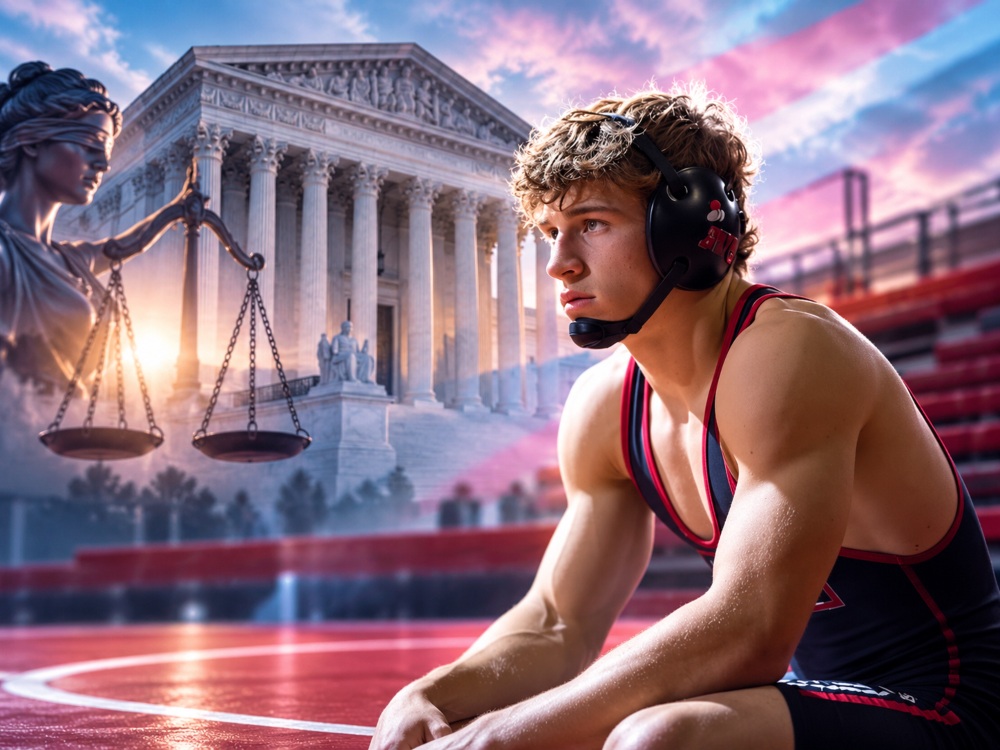










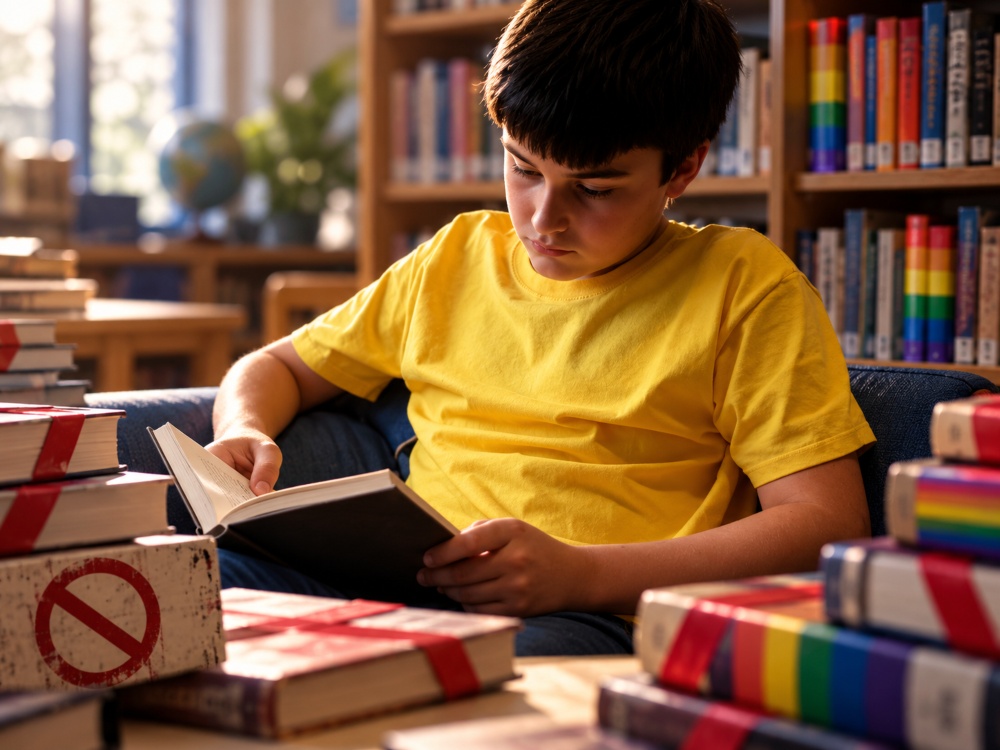
US public schools recorded a record 11,982 book bans over the past school year, with PEN America saying books featuring LGBTQ+ people, race and racism continue to be disproportionately targeted.
Book bans in US public schools have reached their highest level since free-expression organisation PEN America began tracking them five years ago.
Its latest Banned in the USA report recorded 11,982 instances of book bans during the 2025–26 school year, affecting 7,370 individual titles.
More than 4,500 of those titles had never previously appeared in PEN America’s database, while 114 school districts recorded bans — another record for a single school year.
PEN America says books featuring LGBTQ+ characters and themes, race and racism, people of colour, sexual violence and sexuality remain among those most frequently removed from classrooms and libraries.
Texas and Florida drive much of the increase
The majority of bans came from two states.
Texas recorded more than 8,100 instances during the 2025–26 school year, overtaking Florida, which recorded more than 3,200.
PEN America attributes much of the increase to new state laws, pressure from political and activist groups, and school districts responding to broad restrictions on what students can access.
The organisation says these measures have created an environment where books can be removed not only following individual complaints but also through wider district or state-level processes.
PEN America argues that school libraries are particularly important because they give young people access to stories and perspectives they may not encounter elsewhere.
Its report says removing those books limits students’ exposure to a broader range of experiences, identities and ideas.
LGBTQ+ stories remain disproportionately affected
For rainbow readers, one of the clearest trends remains the targeting of books containing LGBTQ+ characters or themes.
PEN America says its analysis over the past five years has consistently found that books about LGBTQ+ people, race and racism and people of colour are disproportionately represented among banned titles.
That includes books explicitly centred on queer lives as well as titles in which LGBTQ+ characters appear as part of a wider story.
Picture books have not been exempt either, with PEN America noting that several of the most frequently banned picture books feature gay or transgender characters.
The American Library Association has identified a similar pattern.
Its 2025 data found that 1,671 of the 4,235 unique titles challenged — 39% — represented the lived experiences of LGBTQIA+ people and people of colour.
Stephen King tops the banned-author list again
For the second year running, Stephen King was PEN America’s most frequently banned author.
His books recorded 312 bans across 81 titles during the 2025–26 school year.
The most-banned individual book was Patricia McCormick’s Sold, which was removed 25 times.
The novel follows a 13-year-old girl from Nepal who is trafficked into sexual slavery and was previously a National Book Award finalist.
Other frequently banned books included Laurie Halse Anderson’s Speak, Margaret Atwood’s The Handmaid’s Tale, John Green’s Looking for Alaska and titles by Ellen Hopkins.
The latest report also shows bans spreading into manga and graphic novels, with series including Tokyo Ghoul, Attack on Titan, Fire Force and Inuyasha affected.
AI is being used to identify books for removal
Another development highlighted by PEN America is the increasing use of artificial intelligence in school book reviews.
The organisation says some districts have used automated tools to screen large numbers of titles against state rules or content criteria, allowing whole groups of books to be flagged or removed at once.
PEN America argues that this can produce sweeping removals without individual books being properly reviewed in context.
Why do different organisations report different totals?
Book-ban figures can vary substantially depending on who is counting.
PEN America focuses specifically on public-school book removals and restrictions and records individual instances of a title being banned in a particular district.
The American Library Association, meanwhile, gathers reports from school, public and academic libraries and separately tracks challenges, bans and other access restrictions.
For 2025, ALA recorded 4,235 unique titles challenged, along with 5,668 books banned and another 920 subject to access restrictions, such as relocation or parental-permission requirements.
Because the organisations use different sources, definitions and reporting periods, their totals should not be treated as directly interchangeable.
What both datasets show, however, is that attempts to remove or restrict books remain at historically high levels — and LGBTQ+ stories continue to be among those most frequently caught in the debate.