









One of Lebanon’s most prominent newspapers has taken a public stand for LGBTQ+ rights, dedicating its front page to a campaign calling for the repeal of a law used to prosecute consensual same-sex relationships.
Lebanese daily Annahar has launched a campaign urging Parliament to repeal Article 534 of the country’s Penal Code, drawing international attention to the continuing legal risks faced by LGBTQ+ people in Lebanon.
The newspaper published its campaign on Monday 16 November 2026, coinciding with the International Day for Tolerance.
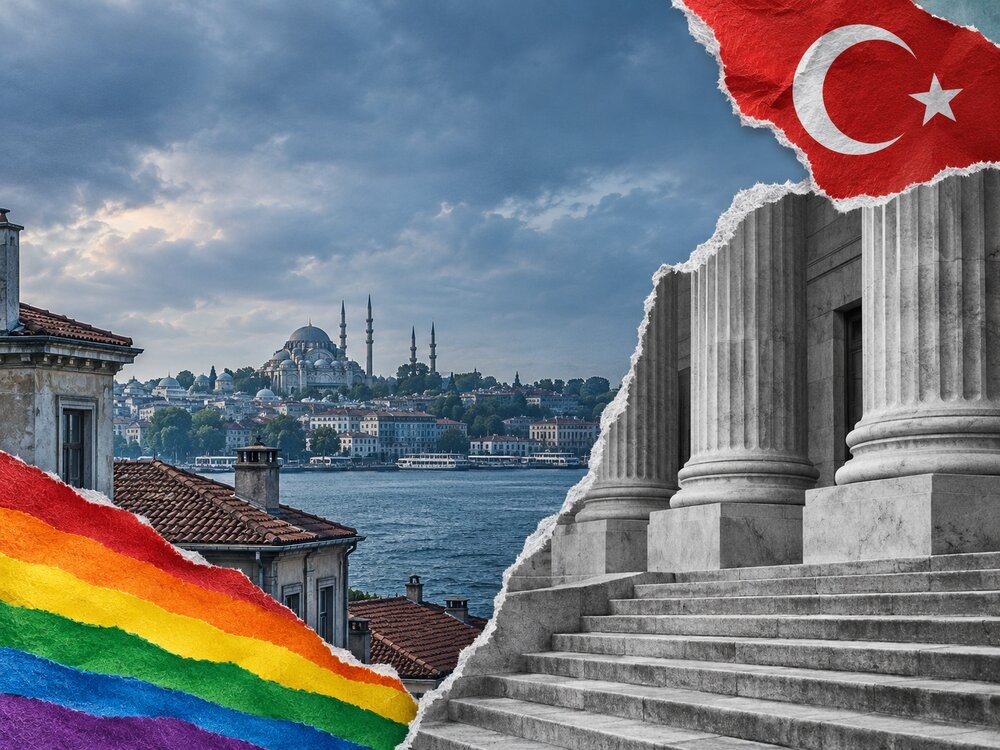
Its front page featured a striking use of rainbow colours and political imagery, while the accompanying editorial challenged the continued existence of legislation that can be used to criminalise consensual same-sex intimacy.
The newspaper also launched the hashtag #Abolish534, encouraging public discussion about the law and its impact.
The campaign is a notable intervention from a major Arabic-language publication in a region where LGBTQ+ rights remain politically and socially contested.
What Is Lebanon’s Article 534?
Article 534 dates back to Lebanon’s 1943 Penal Code.
The provision criminalises sexual intercourse described as being “contrary to nature”, carrying a potential sentence of up to one year in prison.
Although the wording does not explicitly refer to homosexuality, it has historically been used to prosecute people for consensual same-sex sexual activity.
Human rights organisations have long argued that the law is vague and discriminatory, allowing authorities to interfere with people’s private lives.
The provision has also been criticised for creating opportunities for harassment, intimidation and blackmail.
LGBTQ+ advocates say the possibility of prosecution can discourage people from reporting violence or seeking help from authorities.
Lebanese Courts Have Already Challenged The Law’s Interpretation
Over the years, some Lebanese judges have ruled that consensual same-sex intimacy between adults should not be prosecuted under Article 534.
In 2018, an appeals court dismissed charges against defendants accused under the provision, finding that consensual same-sex relations did not fall within the law’s prohibition.
The decision followed earlier rulings that similarly challenged the interpretation of Article 534.
However, these judgments did not remove the provision from Lebanon’s Penal Code.
It remains legally in force, meaning the question of its application has not been conclusively resolved through legislation.
For LGBTQ+ advocates, that continuing uncertainty is one of the central reasons for calling on Parliament to repeal the law.
Newspaper Calls On Parliament To Act
Annahar’s editorial argues that the issue is not simply one of differing personal or religious beliefs about same-sex relationships.
Instead, it raises questions about privacy, individual freedoms, dignity and how far the state should be permitted to interfere in consensual relationships between adults.
The newspaper also highlights the wider consequences of criminalisation.
Its reporting draws attention to accounts of people experiencing threats, blackmail, humiliation and violence.
Some LGBTQ+ people reportedly avoid seeking police assistance because they fear their sexuality could become grounds for investigation or prosecution.
The campaign’s message is that laws intended to protect society should not make people afraid to seek protection themselves.
The newspaper is urging lawmakers to examine the legislation and the impact it has on people’s everyday lives.
Nine MPs Previously Tried To Repeal Article 534
The campaign is not the first attempt to remove the provision.
In 2023, nine Lebanese MPs submitted a draft law seeking the repeal of Article 534.
The proposal marked an important development in efforts to decriminalise consensual same-sex activity.
However, the bill has stalled in Parliament.
Annahar’s latest reporting draws renewed attention to the proposal and asks why the repeal has not progressed.
The newspaper also examined the positions of Lebanese political parties on changing the law, highlighting the divisions that have contributed to the ongoing debate.
Some political and religious groups oppose repeal, citing moral, cultural or religious objections.
LGBTQ+ advocates, meanwhile, argue that criminalising consensual adult relationships violates fundamental rights to privacy and equal treatment.
A Rare Public Stand In The Region
The front-page campaign has attracted international attention.
Reporting by The Washington Post described Annahar’s editorial as an unusual public intervention by a major Arabic-language newspaper.
While Lebanon has an established LGBTQ+ community and a history of queer activism, public advocacy continues to face legal and social challenges.
Human Rights Watch has documented harassment, threats and restrictions affecting LGBTQ+ organisations and individuals in the country.
The newspaper’s decision to devote prominent coverage to decriminalisation therefore represents a significant moment in the national conversation.
It also demonstrates how media organisations can use investigative reporting and editorial campaigns to raise questions about laws affecting marginalised communities.
What Does This Mean For Rainbow Communities?
For LGBTQ+ and takatāpui communities in Aotearoa New Zealand, the story offers a reminder of the different legal realities facing rainbow people around the world.
New Zealand decriminalised consensual sex between men in 1986, following years of public campaigning and parliamentary debate.
Forty years later, activists in Lebanon are still working to remove a provision that can be used to prosecute consensual same-sex relationships.
The circumstances are different, but both histories show how legal reform can require sustained advocacy and public discussion.
Lebanon’s campaign also highlights an important distinction between court decisions and parliamentary reform.
Although courts have sometimes interpreted Article 534 in ways that protect consensual same-sex relationships, the legislation itself remains unchanged.
A Call For Law Reform
Annahar’s campaign has brought renewed visibility to the efforts of LGBTQ+ advocates and lawmakers seeking to repeal Article 534.
However, the newspaper’s editorial does not change the legal position.
Parliament would still need to consider and pass legislation to remove the provision.
There is currently no confirmed timetable for a parliamentary vote.
For now, the campaign has placed the issue prominently before Lebanese readers and political leaders.
And its central question is clear: should consensual relationships between adults continue to carry the threat of criminal prosecution simply because of whom someone loves?