







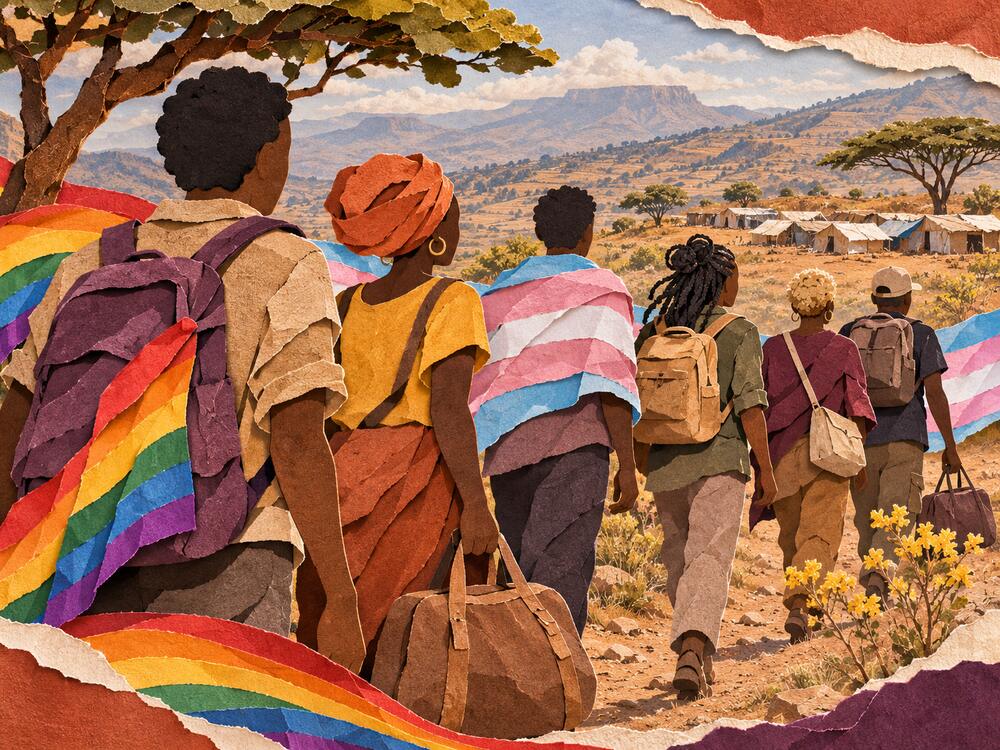

Thousands of people have fled renewed fighting in Ethiopia, but for LGBTQ+ refugees escaping the violence, crossing the border doesn’t necessarily mean finding safety. Human rights advocates are warning that rainbow people face further threats, discrimination and barriers to essential humanitarian aid.
An urgent appeal from the International PRIDE Centre has highlighted the dangers facing LGBTQ+ refugees and asylum seekers escaping conflict in southern Ethiopia, with some experiencing further persecution after reaching neighbouring countries.
The organisation is calling on humanitarian agencies, including the United Nations, Red Cross, non-governmental organisations and international donors, to ensure rainbow refugees can access safe accommodation, healthcare, food, water and legal protection without discrimination.
Its concerns follow renewed fighting in Ethiopia’s Oromia and Somali regions, which has forced tens of thousands of people to cross into neighbouring Kenya.
For LGBTQ+ people among those displaced, the journey to safety can involve additional risks linked to their sexuality or gender identity.
Thousands Flee Fighting In Southern Ethiopia
According to the Kenya Red Cross, approximately 47,952 people had crossed into Kenya by 2 November 2026, escaping violence near the border town of Moyale.
The United Nations Refugee Agency (UNHCR) has also reported significant displacement, with local authorities estimating that up to 50,000 people had fled across the border by late October.
Those figures remain provisional as humanitarian organisations continue registering arrivals and assessing their needs.
The International PRIDE Centre estimates that at least 2,400 LGBTQIA+ people could be among the displaced population.
However, that figure is not a verified count of individual rainbow refugees.
Instead, the organisation calculated it using an assumption that approximately 5% of the displaced population may identify as LGBTQIA+.
The actual number remains unknown, particularly as many LGBTQ+ people may conceal their identities out of fear of discrimination or violence.
Escaping War Doesn’t Always Mean Escaping Persecution
For refugees fleeing conflict, reaching another country can bring relief from immediate fighting.
However, the PRIDE Centre warns that LGBTQ+ people often continue facing serious dangers after arriving in refugee settlements.
These can include physical and sexual violence, harassment, threats, exploitation and exclusion from humanitarian services.
The organisation says that the support networks LGBTQ+ people relied on before being displaced may disappear during an emergency.
People who previously had access to trusted friends, discreet healthcare or community support can suddenly find themselves living among strangers in crowded and unfamiliar environments.
For some, revealing their sexual orientation or gender identity can increase their risk of being targeted.
The PRIDE Centre says its community surveys across the countries where it operates found that 92% of surveyed forcibly displaced LGBTQIA+ people had experienced targeted sexual or gender-based violence.
That is a finding from its surveyed communities, not a representative estimate for every LGBTQ+ refugee or those newly displaced from Ethiopia.
LGBTQ+ Refugees Report Attacks In Kenya’s Kakuma Camp
Kenya’s Kakuma refugee camp has become a particularly concerning example of the challenges facing LGBTQ+ people seeking protection.
The settlement houses refugees from multiple countries across East Africa and beyond.
According to the PRIDE Centre, LGBTQ+ asylum seekers living in a designated area of Kakuma have reported repeated violent attacks, discrimination and degrading treatment.
The organisation alleges some mistreatment has involved other refugees as well as individual staff members working within humanitarian and government services.
It also raises concerns about barriers to asylum registration for people seeking protection because of their sexual orientation or gender identity.
The PRIDE Centre says these difficulties have led many LGBTQ+ refugees to leave the camp for towns and cities where they hope to find greater safety.
Several hundred people have reportedly travelled onwards to South Sudan in search of refugee registration and better protection.
However, moving again can introduce new risks, particularly for people with limited resources, uncertain legal status or no established support network.
South Sudan Refugees Describe Further Violence
The dangers do not necessarily end for those who reach South Sudan.
Reporting by Geographical, published in September 2026, documented serious concerns among LGBTQ+ residents of the Gorom Refugee Settlement, near the capital, Juba.
Refugees interviewed by the publication described physical attacks, intimidation, harassment and discrimination linked to their sexuality or gender identity.
Some reported being assaulted while collecting water, while others described threats from fellow residents and difficulties obtaining assistance.
A transgender woman interviewed for the report also alleged harassment by security personnel while travelling to seek medical care.
The settlement accommodates refugees from several countries, including people who previously sought asylum in Kenya.
The experiences documented at Gorom should not be taken as evidence that everyone affected had recently fled Ethiopia. They instead illustrate the wider dangers that LGBTQ+ refugees can face across the region.
South Sudan also criminalises consensual same-sex sexual activity, adding another layer of legal vulnerability for rainbow people seeking protection.
What Are Human Rights Advocates Calling For?
The PRIDE Centre says humanitarian organisations must recognise that LGBTQ+ refugees can have specific protection needs that are overlooked in conventional emergency responses.
Its appeal identifies several priorities:
- Safe accommodation: Shelter arrangements that do not expose LGBTQ+ refugees to violence or discrimination.
- Healthcare access: Medical treatment, including sexual and reproductive healthcare, provided without judgement or exclusion.
- Support for survivors: Appropriate medical, psychological and protection services for people who have experienced sexual or gender-based violence.
- Legal assistance: Help with refugee registration, documentation and accessing protection procedures.
- Food and water: Safe access to essential supplies without threats or harassment at distribution points.
The organisation is also encouraging humanitarian agencies to work closely with LGBTQ+ refugee-led groups and local organisations that understand the communities’ needs.
UNHCR’s own protection guidance recognises that LGBTQ+ people may experience heightened risks during displacement and that services must account for their safety, privacy and dignity.
It also emphasises the importance of confidential registration processes and ensuring that disclosing someone’s identity does not expose them to further harm.
Why This Matters For Rainbow Aotearoa
For LGBTQ+ and takatāpui communities in Aotearoa New Zealand, the situation highlights a side of the international refugee crisis that can receive relatively little public attention.
People forced to leave their homes because of war may also be fleeing discrimination based on their sexuality or gender identity.
Even after reaching a country where they can seek asylum, they may face additional obstacles accessing the protection and services they need.
Organisations such as the International PRIDE Centre and Rainbow Railroad work to address these challenges through advocacy, emergency assistance, support for community-led services and pathways towards safety.
The situation in East Africa also raises wider questions about how governments and humanitarian organisations can ensure that protection is available to everyone affected by conflict.
For LGBTQ+ refugees, meaningful safety can require much more than reaching a border or receiving a place in a settlement.
It can mean having somewhere secure to sleep, being able to collect food without fear, receiving appropriate healthcare and knowing that reporting abuse will not expose them to greater danger.
A Call For Protection Without Discrimination
As humanitarian agencies continue responding to the displacement crisis along the Ethiopia–Kenya border, the International PRIDE Centre is urging them to ensure LGBTQ+ people are not overlooked.
The organisation’s appeal calls for practical changes in how emergency assistance is delivered, particularly where existing systems fail to recognise the risks faced by sexual and gender minorities.
The full scale of LGBTQ+ displacement from Ethiopia remains uncertain, and independent verification of some reported protection incidents is limited.
However, established humanitarian guidance and accounts from refugees across East Africa demonstrate why targeted, confidential support is an important part of emergency protection.
For LGBTQ+ refugees forced to flee their homes, reaching safety should mean more than escaping war. It should also mean being able to live without fear of violence, discrimination or exclusion from the services meant to protect them. 🏳️🌈