Transgender women in the Australian state of Victoria could face new restrictions on accessing public toilets, changing rooms, family violence refuges and women’s sport under a policy announced by One Nation ahead of the 28 November state election.
Australia’s One Nation party has unveiled plans to overhaul Victoria’s anti-discrimination laws, proposing changes that would prioritise sex over gender identity when determining access to women-only spaces and sporting competitions.
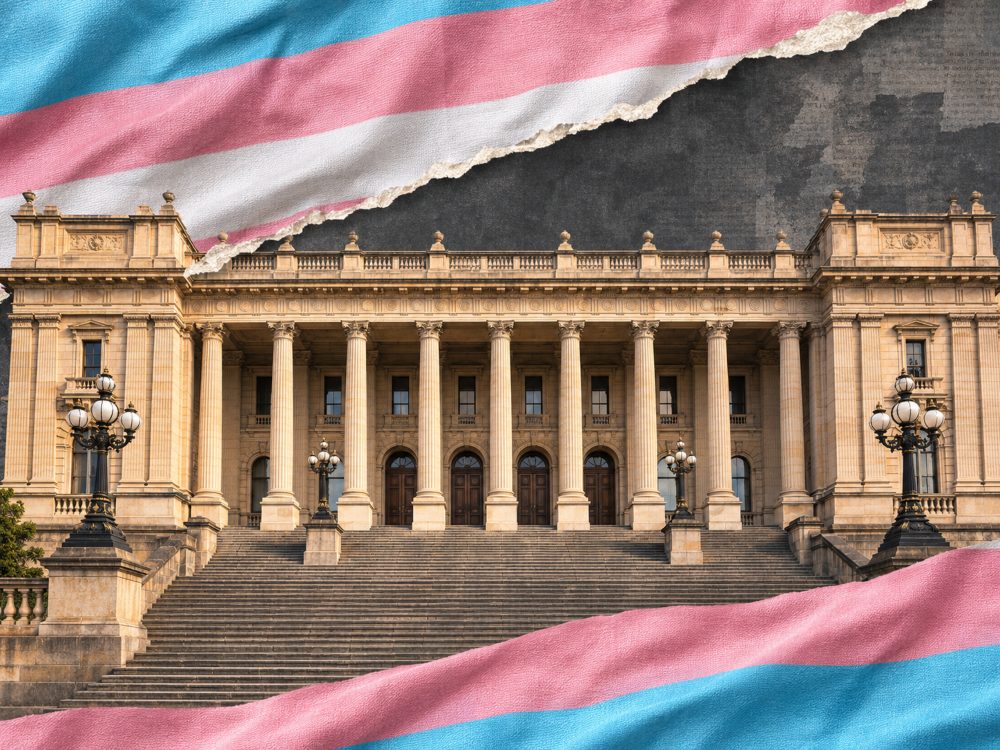
Victorian deputy leader Colleen Harkin announced the policy outside Parliament House in Melbourne on Monday 16 November, arguing that the changes are necessary to protect women’s safety, privacy and fairness in sport.
However, LGBTQ+ advocacy organisation Victorian Pride Lobby has condemned the proposal, warning that it could expose transgender and gender-diverse people to greater discrimination and make it harder for those experiencing family violence to find safe accommodation.
The announcement comes less than two weeks before Victorians head to the polls on Saturday 28 November 2026.
Importantly, the policy remains an election proposal. No changes have been made to Victoria’s existing discrimination protections.
What Is One Nation Proposing?
One Nation says it would amend Victoria’s Equal Opportunity Act 2010 to establish what it describes as biological definitions of women and men.
Under the proposed changes, sex would take priority over gender identity in state law, policy and decisions about access to certain facilities.
Harkin said the restrictions would apply to women-only facilities funded or regulated by the Victorian Government, including:
- Public toilets and changing rooms.
- Domestic and family violence refuges.
- Women’s shelters and accommodation services.
- Prisons and other state-regulated facilities.
- Women’s sporting competitions receiving state funding or using state facilities.
The party argues the changes would protect women’s privacy and safety and establish consistent eligibility requirements for female sporting categories.
Harkin said the current legal framework allows transgender women to access spaces designated for women, something One Nation wants to change.
The proposed policy would substantially alter how Victoria currently protects people from discrimination based on their gender identity.
What Would Happen To Trans Women Escaping Family Violence?
One of the most significant concerns involves access to domestic and family violence refuges.
These services provide emergency accommodation and support for people escaping abuse, often when they have nowhere else safe to go.
Under One Nation’s proposal, transgender women could be excluded from women-only refuges receiving state funding or operating under state regulation.
When questioned about where transgender women experiencing family violence would seek protection, Harkin suggested separate services could be considered.
However, no detailed plan for establishing, funding or operating those services was announced.
The proposal has raised concerns among LGBTQ+ advocates who say restricting access to existing refuges could leave already vulnerable people facing additional barriers to safety.
Victorian Pride Lobby Warns Of Increased Discrimination
Victorian Pride Lobby co-convenor Gregory Storer has strongly criticised the announcement.
“Everyone, including women and girls, deserves to be safe,” Storer said.
He argued that weakening gender identity protections would expose transgender and gender-diverse Victorians to greater discrimination and exclusion.
Storer also called for stronger family violence services that support everyone who needs protection.
“Family violence services should be strengthened for everyone who needs them, without pitting one vulnerable group against another,” he said.
The organisation pointed to concerns about the limited availability of specialist LGBTQ+ family violence accommodation.
According to the Pride Lobby, Victoria has only two dedicated LGBTIQA+ family violence refuge beds.
The group argues that further restricting access to existing services could create additional difficulties for transgender people escaping abuse.
What Does The Evidence Say About Trans Inclusion And Safety?
The debate comes amid ongoing disagreements about transgender inclusion in public spaces.
One Nation maintains that sex-based restrictions are necessary to protect women and girls.
However, the Australian Human Rights Commission has examined research concerning transgender people’s access to gendered facilities.
Its March 2026 report, Equal Identities, found that the available evidence does not support claims that trans-inclusive policies increase the risk of harm in public toilets and changing rooms.
The Commission also documented significant discrimination and safety concerns affecting transgender and gender-diverse Australians.
These findings are particularly relevant to arguments about public facilities, although they do not address every operational question concerning prisons, shelters or competitive sport.
Victorian Pride Lobby says the evidence supports maintaining protections while addressing legitimate safety concerns through appropriate services and policies.
Victoria Already Has Rules For Women’s Sport
One Nation’s sporting proposal would introduce broader restrictions across female-designated competitions receiving state funding or using state facilities.
However, Victoria’s existing laws already allow some restrictions based on sex or gender identity in competitive sport.
Under the Equal Opportunity Act, participation can be restricted for competitors over the age of 12 in specified circumstances.
These include competitions where strength, stamina or physique are relevant to the particular sporting activity, as well as certain pathways to elite competition.
The current approach requires the circumstances of a particular activity to be considered.
One Nation wants to replace that more conditional framework with broader sex-based rules for the female sporting categories covered by its proposal.
The policy would apply across age groups and sporting levels within its proposed scope.
Supporters argue this would create clearer standards for competitive fairness.
Critics say the changes would exclude transgender athletes from competitions they may currently be eligible to enter and remove flexibility for individual sporting organisations.
What Protections Do Trans Victorians Currently Have?
Victoria’s Equal Opportunity Act 2010 makes it unlawful to discriminate against someone because of protected personal characteristics, including gender identity.
The legislation covers areas such as employment, education, accommodation, goods and services, and sporting organisations.
It also includes protections relating to sexual orientation, sex and sex characteristics.
The law recognises certain exceptions where different treatment may be justified, including in specific sporting circumstances.
One Nation’s proposal would change the balance between sex-based restrictions and gender identity protections.
However, changes to the state legislation would require the appropriate parliamentary process.
Federal anti-discrimination protections would also remain relevant, meaning the legal implications could be more complex than changing Victoria’s legislation alone.
What Happens At The Victorian Election?
Victorians will vote in their state election on Saturday 28 November 2026.
The election will determine the composition of Victoria’s Legislative Assembly and Legislative Council.
One Nation’s proposed restrictions are part of its election platform, but their introduction would depend on the party securing sufficient parliamentary support to change existing laws.
The announcement has also prompted responses from other political parties.
Victorian Liberal leader Jess Wilson has expressed her personal opposition to transgender women competing in female sporting categories, while indicating that sporting codes should determine their own eligibility rules.
Labor has criticised One Nation’s proposal, arguing that it brings divisive debates into Victorian politics.
The different positions highlight ongoing disagreements about gender identity protections, sporting eligibility and access to public services.
No election result has been determined, and the proposed restrictions are not currently in force.
Why This Matters For Rainbow Aotearoa
For transgender, non-binary and takatāpui communities in New Zealand, the Victorian announcement highlights debates that also arise in discussions about inclusion and discrimination across Aotearoa.
Access to gender-affirming services, appropriate public facilities, family violence support and participation in sport can have significant consequences for people’s everyday lives.
The proposed Victorian changes also raise questions about how governments balance privacy, safety, competitive fairness and legal protections against discrimination.
While Australia and New Zealand have different legal frameworks, the issues will be familiar to many rainbow communities on both sides of the Tasman.
One distinction is particularly important: the proposed Victorian restrictions would not automatically apply elsewhere in Australia, and they would have no legal effect in New Zealand.
What Happens Next?
For now, Victoria’s existing Equal Opportunity Act remains in effect.
One Nation has outlined the changes it wants to pursue, while Victorian Pride Lobby and other advocates have raised concerns about their potential consequences.
The election on 28 November will determine which candidates enter Parliament, but any changes to anti-discrimination legislation would require further political and legislative action.
For transgender Victorians, the outcome could have implications for everyday activities, from participating in community sport to accessing appropriate facilities and seeking safety from family violence.
The debate now centres on how Victoria will balance different claims about safety, fairness and inclusion — and whether the state will retain or alter its existing protections for transgender and gender-diverse people.