Familiar faces, unexpected perspectives and a little queer creativity! Two Brisbane artists are bringing together colourful celebrity portraits and poetry in a new exhibition exploring what it means to recognise someone when faces don’t always look familiar.
Queensland painter Jesse Jones and award-winning poet Rae White are joining creative forces for faces, a new exhibition opening at Woolloongabba Art Gallery in Brisbane on Tuesday 24 November 2026.
The five-day exhibition features ten celebrity portraits created by Jones, accompanied by poems written by White.
But there’s an interesting story behind the artwork.
Jones lives with prosopagnosia, commonly known as face blindness, a neurological condition that makes recognising people’s faces difficult.
Rather than trying to conceal how he experiences faces, the artist has embraced that perspective as a central part of his creative practice.
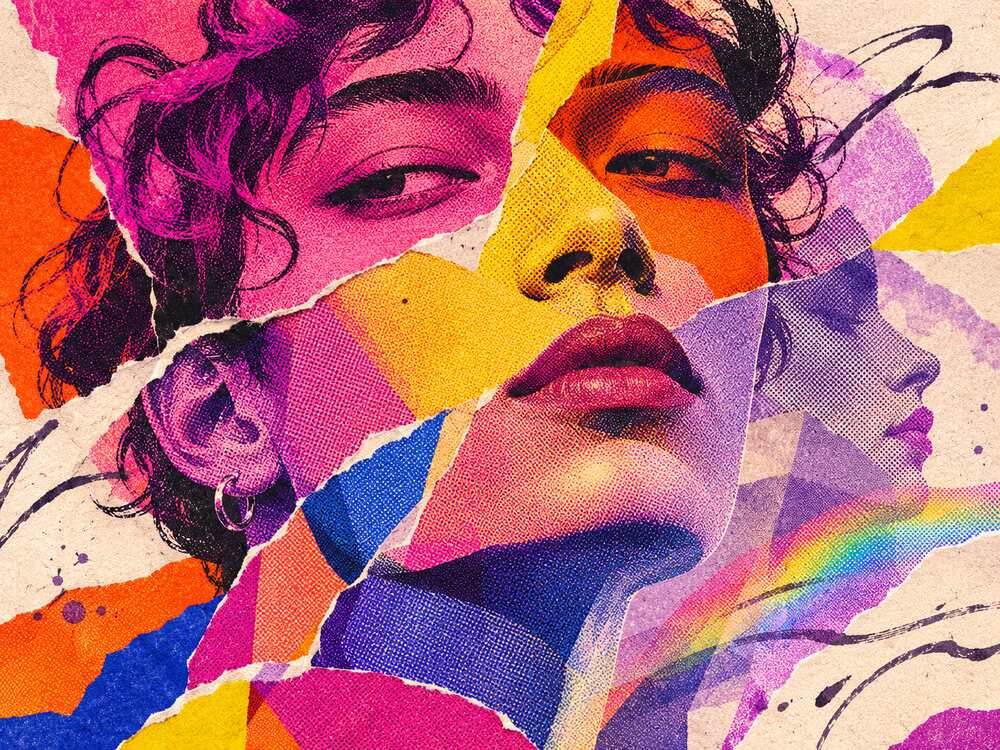
The result is a striking collection of portraits that combine queer cultural influences with bold colour, exaggerated features and unconventional expressions.
Seeing Famous Faces Through A Different Lens
For many people, recognising a familiar celebrity’s face happens almost instantly.
But for Jones, facial recognition can be a very different experience.
Prosopagnosia affects the ability to identify people by their faces, although individuals with the condition may still recognise people through other clues, including their voice, hairstyle or mannerisms.
Some people with face blindness can also recognise particular faces more easily than others.
Jones has turned those differences into the foundation of his artistic style.
Speaking to Australian LGBTQ+ publication QNews, the painter explained that he deliberately exaggerates and distorts facial features to reflect the way he sees people.
The ten portraits in faces feature celebrities whom Jones can recognise, including queer cultural icons and figures connected to his interests in music and film.
Rather than presenting conventional celebrity likenesses, his paintings explore the features and visual details that make those people distinctive to him.
It’s a creative approach that invites viewers to reconsider something many of us take for granted: recognising a face.
Celebrity Portraits Meet Queer Poetry
The exhibition also features a collaboration with poet Rae White, whose writing frequently explores gender, identity and the body.
White has created an original poem in response to each of Jones’s ten portraits.
The style is known as ekphrastic poetry, where a writer responds to a work of visual art through words.
Visitors will be able to experience the paintings and poems alongside one another, discovering how two artists interpret the same subjects through different creative forms.
White’s writing incorporates references to music, film and popular culture, including inspiration from artists such as Freddie Mercury.
The poet also draws on the visual techniques Jones uses to create his paintings.
Together, the artworks and poems offer different perspectives on celebrity, recognition, identity and personal experience.
Two Years In The Making
Although faces runs for just five days, the collaboration has been more than two years in development.
The exhibition marks the pair’s first major creative partnership.
White told QNews they were delighted when Jones suggested working together on the project.
They also praised his dedication and talent, describing the collaboration as an opportunity to explore the relationship between painting and poetry.
For Jones, the exhibition brings together several important parts of his identity and artistic practice.
His experience of face blindness influences how he approaches portraiture, while his interests in queer culture, music and cinema help shape the subjects he chooses.
The result is a collection that celebrates individuality rather than conventional ideas about how a portrait should look.
A Queer And Neurodivergent Perspective On Art
The exhibition offers an opportunity to explore how different people perceive and interpret the world around them.
For LGBTQ+ audiences, faces also highlights queer cultural icons and the influence they can have on personal identity and artistic expression.
For neurodivergent visitors, Jones’s work provides another example of an artist drawing on his lived experience to develop a distinctive creative language.
The exhibition doesn’t present prosopagnosia as something that needs to be overcome in order to create art.
Instead, it shows how Jones has developed an artistic approach shaped by how he recognises and remembers faces.
White’s poems add another layer, encouraging visitors to spend time considering how different forms of expression can respond to one another.
Take Home A Little Piece Of The Exhibition
Alongside the original paintings, visitors will be able to read White’s poems displayed in the gallery.
The poems will also be available as a printed zine for purchase.
For fans of independent publishing, poetry and queer visual art, the zine offers a way to take part of the collaboration home.
The exhibition will conclude with a special closing event on Saturday 28 November, bringing the artists and visitors together to celebrate the project.
faces — Exhibition Details
Exhibition: faces
Artists: Jesse Jones and Rae White
Dates: Tuesday 24 – Saturday 28 November 2026
Venue: Woolloongabba Art Gallery
Address: 613 Stanley Street, Woolloongabba, Brisbane, Australia
Closing event: Saturday 28 November, 3pm–6pm Brisbane time
New Zealand closing event time: 6pm–9pm NZDT
Accessibility: The gallery has a wheelchair ramp, with parking available at the rear.
More information: Woolloongabba Art Gallery
Why This Exhibition Is Worth Discovering
For rainbow art lovers visiting Brisbane, faces offers something different from a traditional portrait exhibition.
It brings together an artist’s lived experience of face blindness, a poet’s exploration of identity and a shared fascination with the faces of people who have shaped popular culture.
The portraits invite visitors to look more closely, while the poems offer another way to connect with the subjects.
And for those following from Aotearoa, it’s another example of the diverse work emerging from LGBTQ+ artists across our wider region.
Ten faces, ten poems and two unique creative perspectives. Sometimes the most interesting art comes from seeing the familiar in a completely different way.