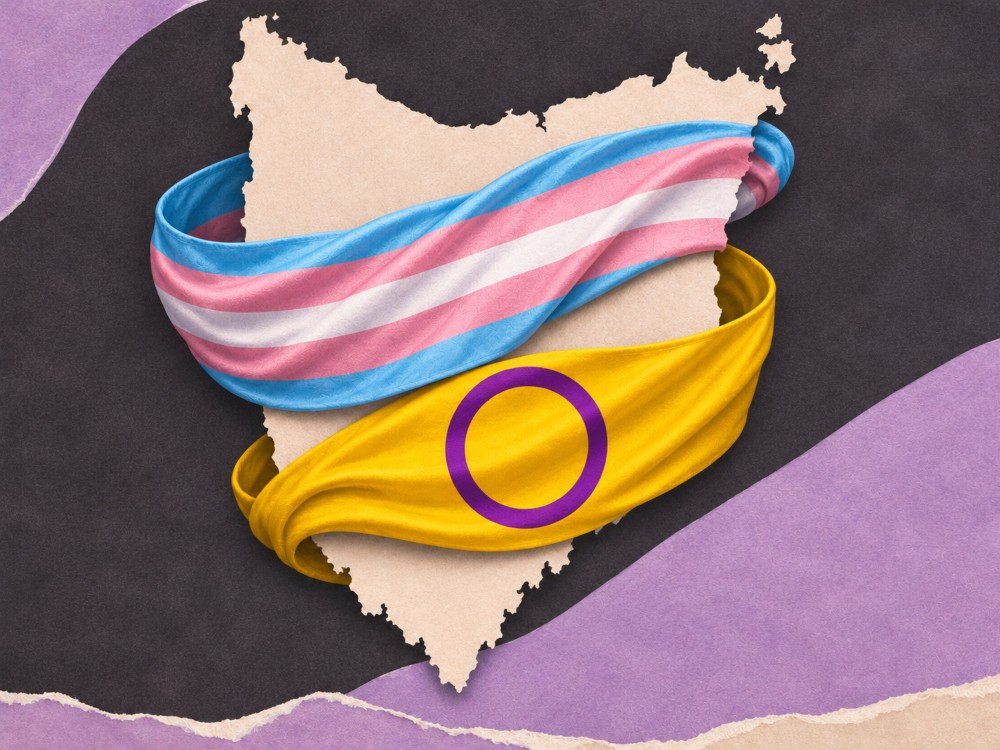
Sixteen feminist and women’s organisations in Tasmania have joined forces to support transgender, gender-diverse and intersex people, launching a new alliance dedicated to protecting discrimination laws and making community services more inclusive.
In a significant show of solidarity during Trans Awareness Week, women’s organisations across Tasmania have launched the Tasmanian Feminist Alliance for Trans Equality (TasFATE).
The coalition officially launched at Parliament House in Hobart, bringing together representatives from the community sector alongside politicians from Labor, the Liberals, the Greens and independent MPs.
The alliance argues that protecting women’s rights and supporting transgender and intersex inclusion are compatible goals.
Its launch comes amid ongoing debates across Australia about how sex and gender identity should be defined in anti-discrimination laws.
But rather than simply issuing a statement, TasFATE has also introduced a practical tool to help women’s services improve access for transgender and gender-diverse people.
‘All Women’ Includes Trans Women
The alliance has released a joint statement opposing proposals to introduce narrower biological definitions of sex into state and federal discrimination legislation.
TasFATE argues that such changes could weaken existing protections for transgender, gender-diverse and intersex people.
The group is particularly concerned about the potential consequences for people seeking healthcare, family violence assistance and other essential services.
Yvette Cehtel, chief executive of Women’s Legal Service Tasmania, says equal access to services for transgender women is central to the alliance’s work.
“We believe it is important to stand up for the rights of all women, including trans women, and to ensure they have equal access to services,” she said.
Cehtel also pointed to Tasmania’s existing anti-discrimination framework, arguing that protections for women and LGBTQ+ communities can operate together.
TasFATE’s position is that changing legal definitions could create new barriers for people who already experience discrimination.
A Practical Tool For Women’s Services
Alongside its public statement, TasFATE has launched a Trans and Gender Diverse Inclusion Audit Tool for Women’s Services.
The resource is designed to help organisations examine how they support transgender, gender-diverse and intersex people who use their services.
That might include reviewing policies, service eligibility requirements, staff training and how clients are treated when seeking assistance.
The aim is to help providers identify barriers and make practical improvements.
For organisations offering family violence support, legal assistance or healthcare, those details can have significant consequences.
Someone escaping abuse, for example, may need to know whether a service will recognise their identity, respect their privacy and offer appropriate support.
TasFATE argues that inclusive policies should be reflected in everyday practice, not simply statements of support.
Women’s Organisations Challenge Exclusionary Proposals
The alliance includes representatives from women’s legal, health and sexual violence services.
Kathryn Fordyce, chief executive of specialist sexual violence service Laurel House, has emphasised that feminist advocacy does not need to treat different groups’ rights as competing interests.
“True feminism does not ask us to choose whose rights matter,” she said.
The organisations warn that rigid assumptions about what women should look like could also affect cisgender women whose appearance does not conform to conventional gender expectations.
They also raise concerns about the implications of narrow legal definitions for transgender men and people with innate variations of sex characteristics.
The alliance’s position differs from that of groups advocating sex-based definitions in law, who argue that such measures are needed for privacy, safety and fairness.
Those proposals remain subjects of political and legal debate.
Why This Matters For Rainbow Aotearoa
For transgender, non-binary, intersex and takatāpui communities in New Zealand, the Tasmanian initiative raises a practical question about inclusion.
What happens when someone approaches a community organisation seeking help?
Do staff understand their needs? Can they access the service safely? Are the organisation’s policies clear and respectful?
These questions are relevant well beyond Australia.
In Aotearoa, organisations providing housing assistance, healthcare, legal support and family violence services also make decisions that affect how accessible their services are to rainbow communities.
TasFATE’s audit tool offers an example of how organisations can examine those questions rather than relying solely on public statements.
An Alliance Focused On Practical Change
TasFATE’s launch brings together 16 organisations around a shared commitment to maintaining protections for transgender, gender-diverse and intersex people.
Its members are calling for inclusive discrimination laws and services that recognise the needs of everyone seeking support.
The new audit tool provides a way for organisations to translate those commitments into everyday policies and procedures.
For the alliance, the goal is to ensure that equality and inclusion are reflected not only in legislation but also in people’s experiences when they access essential services.
It’s a reminder that meaningful inclusion isn’t just about who is mentioned in a policy. It’s also about who can walk through the door and receive the help they need.