A United Nations committee has narrowly rejected an attempt to remove explicit references to sexual orientation and gender identity from a resolution condemning unlawful killings, with the United States among 69 countries supporting the proposed change.
The vote has raised concerns among international LGBTQ+ human rights organisations, which warn that removing specific recognition of vulnerable communities could weaken the attention given to violence targeting people because of their identities.
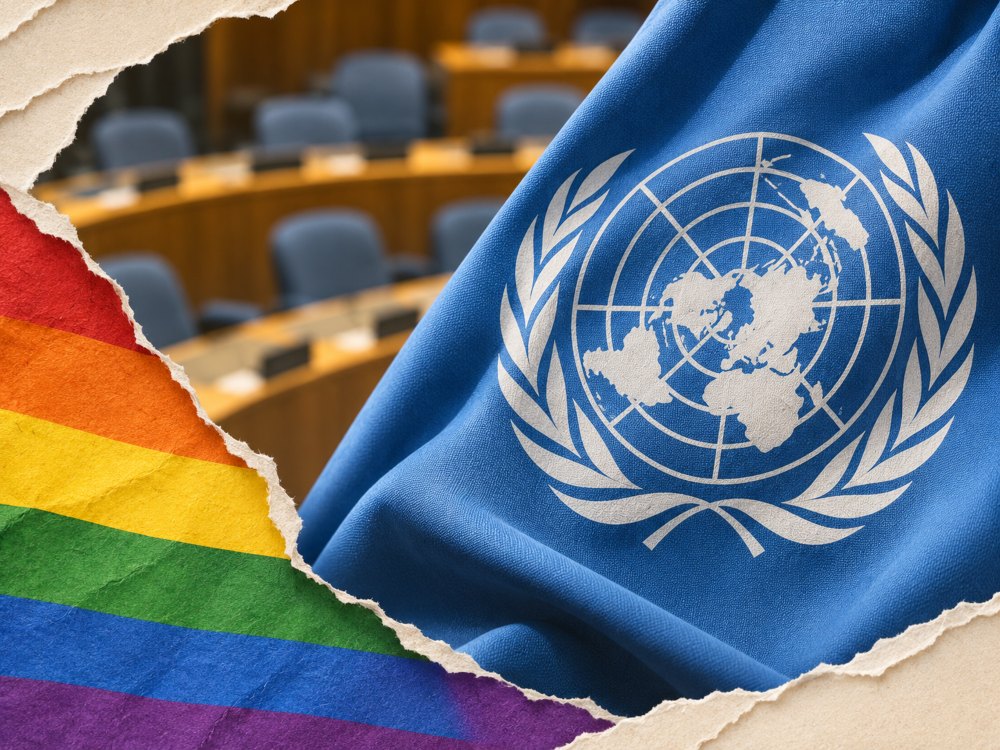
On Friday 13 November 2026, the United Nations General Assembly’s Third Committee voted against an Egypt-led amendment seeking to delete references to sexual orientation and gender identity from a draft resolution addressing extrajudicial, summary and arbitrary executions.
The proposed amendment was defeated by 74 votes to 69, with 24 countries abstaining and 26 not voting.
The United States supported the amendment, marking a significant change from its previous voting record on the issue.
Although the committee retained the LGBTQ+ references, the narrow result has prompted warnings that international agreement on explicitly recognising these victims is becoming increasingly contested.
What Was The UN Voting On?
The resolution concerns unlawful killings, including executions carried out without proper legal process and killings where governments fail to investigate or hold perpetrators accountable.
Presented every two years by the Nordic countries, the resolution calls on governments to protect the right to life, investigate unlawful deaths and pursue accountability.
It also identifies groups that may face heightened risks of targeted violence.
These include journalists, human rights defenders, Indigenous peoples, religious minorities, refugees and others who can face violence because of their identities or circumstances.
People targeted because of their sexual orientation have been explicitly referenced in the resolution since 2002, while gender identity was added in 2012.
The language recognises that LGBTQ+ people can face particular risks of targeted killings and that authorities have a responsibility to investigate such crimes.
However, this year’s negotiations saw another attempt to remove those references.
Egypt-Led Amendment Narrowly Defeated
Egypt introduced the proposed amendment on behalf of most members of the Organisation of Islamic Cooperation.
The measure sought to remove the specific references to sexual orientation and gender identity.
Countries supporting the amendment included the United States, Ghana, Nigeria and Uganda.
South Africa voted against the proposed deletion, joining other countries seeking to retain the existing wording.
The amendment ultimately failed, but only by five votes.
That was considerably closer than the equivalent vote in 2024, when a similar proposal was rejected by 78 votes to 47.
International LGBTQ+ rights organisation Outright International says the narrowing margin is concerning because it suggests increased support for removing the specific references.
The United States Changes Its Position
One of the most notable developments was the United States’ decision to support the amendment.
According to Outright International, this was the first time in the recorded votes dating back to 2002 that the US had backed removing references to sexual orientation and gender identity from this resolution.
The organisation highlighted the contrast with the country’s earlier position.
In 2010, the United States helped restore sexual orientation references after they were removed during an earlier stage of the UN process.
Its support for the 2026 amendment therefore represents a shift in its approach to the wording.
The vote took place during President Donald Trump’s second administration, which has pursued changes to several areas of federal policy affecting LGBTQ+ people.
However, the committee vote should not be confused with a change to US domestic criminal law.
It concerns the wording of an international resolution rather than legislation introduced within the United States.
More Than 230 LGBTQ+ Killings Documented Worldwide
The debate comes shortly after Outright International published a report examining targeted killings of LGBTQ+ and intersex people around the world.
Its report, Killed for Who They Are, documents more than 230 targeted killings between January 2020 and July 2026.
The research examines cases across multiple regions, including deaths involving people targeted because of their actual or perceived sexual orientation, gender identity, gender expression or sex characteristics.
The organisation says the documented cases likely represent only a fraction of the true number.
In many countries, violence targeting LGBTQ+ people is poorly recorded, while discrimination, criminalisation and fear of authorities can discourage reporting.
Outright also identified cases in which victims’ sexual orientation or gender identity was not properly investigated as a possible motive.
The report highlights the importance of accurate documentation and accountability when dealing with violence targeting marginalised communities.
Its findings do not represent a complete global count of LGBTQ+ killings.
Why Does Explicitly Naming LGBTQ+ People Matter?
The controversy centres on whether resolutions addressing unlawful killings should specifically identify people targeted because of their sexuality or gender identity.
Supporters of retaining the language argue that explicit recognition helps draw attention to documented patterns of violence and encourages authorities to investigate possible discriminatory motives.
Removing those references would not make unlawful killings of LGBTQ+ people permissible under international human rights law.
However, advocates argue that leaving these communities unnamed could reduce their visibility within international reporting and accountability processes.
In a statement ahead of the vote, Finland’s representative, speaking on behalf of the Nordic countries, emphasised that removing references to vulnerable groups would not change the evidence that such people face particular risks.
The Nordic countries also stressed that the resolution’s purpose was to reaffirm the obligation to investigate unlawful killings without discrimination.
Countries seeking changes to the language have raised objections to the inclusion of sexual orientation and gender identity in UN texts.
The disagreement reflects continuing differences between governments over the recognition of LGBTQ+ identities in international human rights documents.
Committee Approves Resolution With LGBTQ+ References Intact
Following the rejection of the amendment, the Third Committee voted on the full draft resolution.
It was approved by 131 votes in favour, none against and 47 abstentions, with 15 countries not voting.
The references to sexual orientation and gender identity remained in the text.
That represents a successful committee-stage outcome for countries and organisations seeking to retain explicit LGBTQ+ recognition.
However, the process is not finished.
The draft must still go before the full United Nations General Assembly in December.
Another amendment could be introduced during that stage, potentially reopening the debate over the wording.
Even after adoption, a General Assembly resolution of this kind would not automatically create new criminal laws or directly enforceable protections in individual countries.
Its significance lies in reaffirming international human rights principles and encouraging governments to act on their obligations.
Why This Matters For Rainbow Aotearoa
For LGBTQ+, intersex and takatāpui communities in Aotearoa New Zealand, the vote highlights the importance of international human rights standards and the continuing challenges of achieving agreement between countries.
New Zealand has legal protections relating to sexual orientation and has made significant progress in areas including marriage equality and the decriminalisation of consensual same-sex relationships.
However, LGBTQ+ people in many parts of the world continue to face criminalisation, discrimination and violence.
International resolutions provide opportunities for governments to acknowledge those risks and outline expectations concerning investigations and accountability.
The 2026 committee vote also shows that such recognition can remain contested, even when the underlying principle — that no one should be unlawfully killed — is widely accepted.
For rainbow communities following international developments, the next key moment will be the full General Assembly’s consideration of the resolution.
What Happens Next?
The United Nations General Assembly is expected to consider the draft resolution in December 2026.
Outright International and other human rights organisations are calling for governments to retain the references to sexual orientation and gender identity when the final vote takes place.
The organisations argue that recognising targeted violence against LGBTQ+ people is an important part of ensuring those crimes are investigated and victims’ families can seek justice.
The committee’s decision means the current draft retains those references, but the final wording is still subject to the General Assembly process.
For now, the United Nations has kept explicit recognition of LGBTQ+ victims in its draft resolution on unlawful killings — but the narrow vote shows that debate over those protections is far from over.