










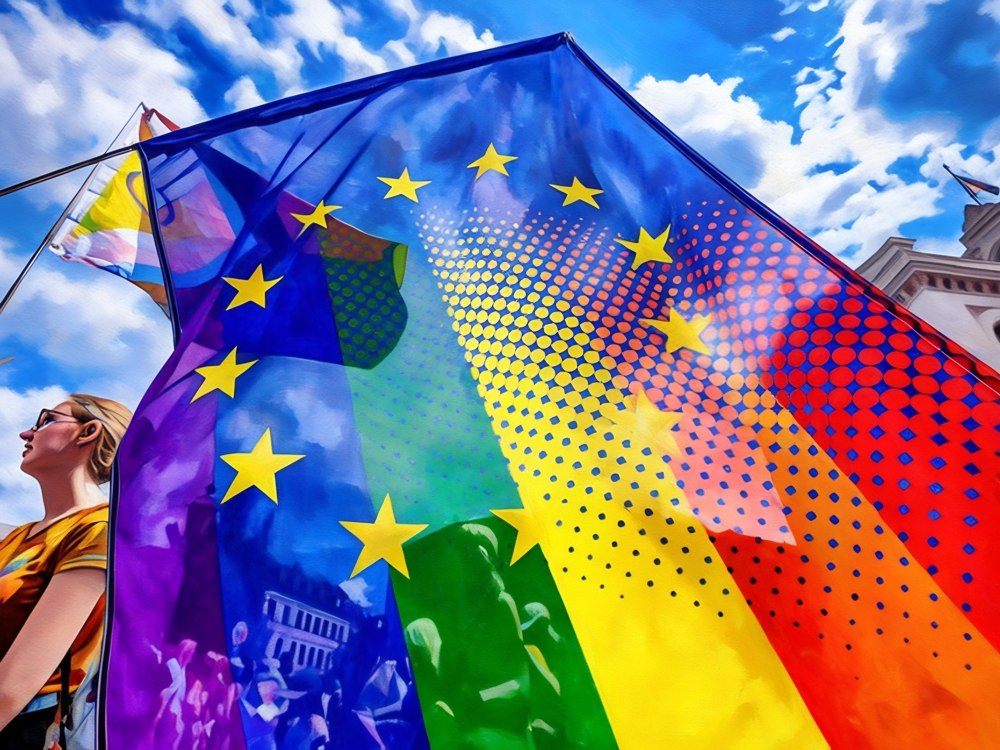

In a landmark victory for LGBTQ+ rights, the Court of Justice of the European Union (CJEU) has ruled that all EU Member States must recognise same-sex marriages legally performed in other EU countries—even if they do not permit such unions domestically.
The decision comes after Polish authorities refused to recognise the marriage of Jakub Cupriak-Trojan and Mateusz Trojan, a same-sex couple who legally wed in Germany before returning to Poland. Without official recognition, the couple were treated as legal strangers in their home country.
Poland’s Supreme Administrative Court referred the case to the CJEU to determine whether such a refusal violated EU law. On 5 December, the CJEU issued a decisive ruling: Member States must recognise same-sex marriages registered in another EU country to uphold citizens’ rights to free movement and family life.
EU Free Movement Protections Apply to All Couples
The court found that denying recognition to same-sex couples married in other Member States is incompatible with EU treaties, which guarantee the right to move freely across the Union while maintaining family life.
If one Member State permits same-sex marriage, the court held, all other Member States must at least recognise that union for administrative and legal purposes. This applies even in countries that do not allow same-sex marriage under domestic law.
The refusal to recognise such marriages, the ruling stated, causes “serious inconvenience” in areas like tax filing, inheritance, pensions, employment rights, use of surnames, and access to health or social benefits.
While the ruling does not require Member States to legalise same-sex marriage domestically, it does obligate them to treat all legally married couples equally when it comes to recognition of foreign marriage certificates.
Poland Ordered to Recognise Foreign Same-Sex Marriages
Lawyers for the applicants, Paweł Knut and Artur Kula, welcomed the decision as a “milestone” and a “new chapter” for LGBTQ+ rights in Poland. The ruling requires Polish authorities to transcribe same-sex marriage certificates into the national civil registry—a first for the country, which currently offers no form of legal recognition for same-sex couples.
“This decision is a major legal and symbolic shift,” the lawyers said, noting that the ruling will not only affect Poland but also put pressure on other EU countries without marriage equality.
A Ripple Effect Across the EU
Katrin Hugendubel, Advocacy Director at ILGA-Europe, hailed the CJEU’s decision as a pivotal step for equal rights, urging the European Commission to monitor Member State compliance closely.
“This ruling reinforces the idea that recognition of marital status is essential for EU citizens’ freedom of movement,” Hugendubel said.
The judgment is expected to have broad ramifications for other Member States without domestic same-sex marriage laws, including Romania, Bulgaria, Slovakia, and Hungary. For LGBTQ+ advocates, it represents both a legal precedent and a lever for future reform in countries where marriage equality remains out of reach.