









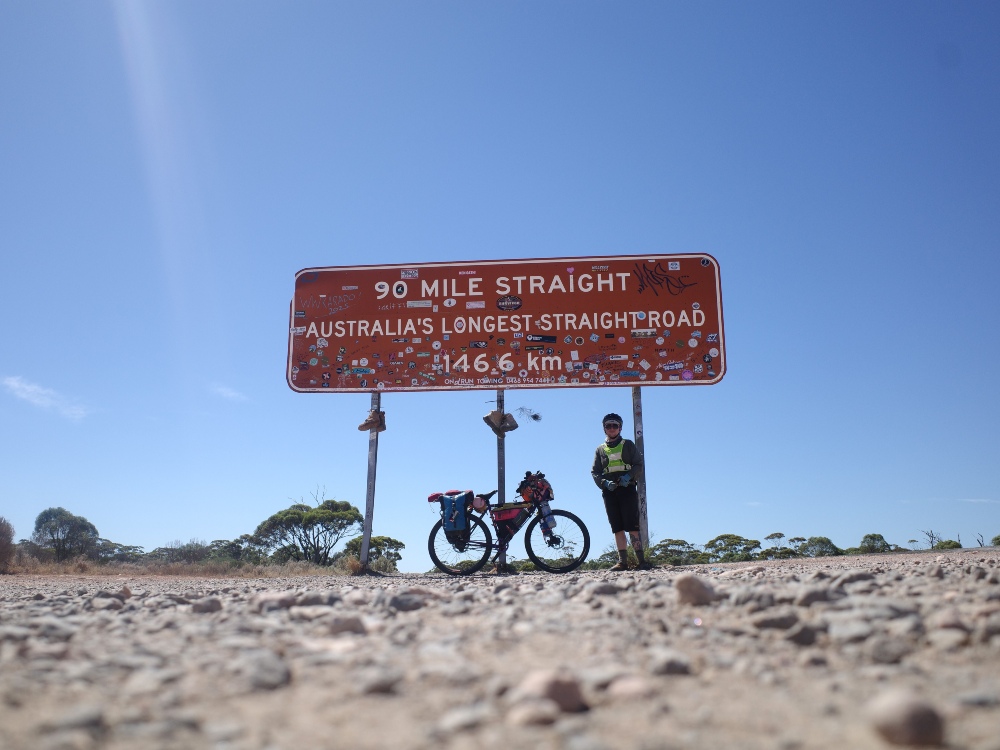
YOUR EX talks to Robbie Danger Webb, the first openly transgender person to circumnavigate the globe by bike.
When Robbie Danger Webb talks about the year they spent circumnavigating the globe by bike — the first openly transgender person to do so — they do not start with the record, or the kilometres, or the borders crossed. They begin with where they come from.
“I grew up in Waiuku, near where Tāmaki Makaurau meets the Waikato,” Robbie says. “I grew up semi-rural, and did not do much outdoors aside from occasional farm stuff. I was bad at sports and did not really know how to ride a bike. I lived for painting and drawing, and I found my people when I studied fine art at university… I’ve mostly been based in central Tāmaki Makaurau since then.”
Coming into queerness happened unexpectedly, and later than many imagine.
“I didn’t realise I was trans until I was 26. Before that, I was a punk feminist who had a mohawk and wore men’s clothes a lot. There’s a lot of things I’m sure could have been better or different but if they were, I wouldn’t be me.”
The bike came into their life through politics, not sport. “I got into cycling through climate activism. I hate car dependency and I hate how miserable and selfish our cars make us. Once I started commuting by bike, I heard there were these really big multi-day commutes you could do to go see beautiful places, and basically eat whatever junk food you like, and I thought that sounded amazing.”
Those early rides became training grounds for something bigger. “I started out in 2018 with little overnight trips with friends. Then in 2020 I did the Tour Aotearoa (a 3,000 km ride from Cape Reinga to Bluff). After that, I knew I wanted to cycle around the world, but it was a long process to get there and save for it! There aren’t sponsors for people like me.”
The world record idea came later and reshaped everything.
“It took six months to get my route approved with Guinness. In the end, it was roughly four and a half years of planning before I started. I did everything myself, from the budget, to social media, to the route design, visas, and testing and setting up all my own gear.”
But the decision to attempt the record wasn’t just about the athletic challenge. Robbie set out, by their own definition, to be the first openly transgender person to bike around the world. When asked what “open” meant to them, they’re clear: “That I am publicly trans in all of the media about me, on my own social media, and if anyone asked me what my record was, for example when signing my logbook as a witness, I would tell them.”
That visibility was not without risk. “There was just one time in the US when a man was signing my book. He told me ‘nobody likes trans people around here,’ but he signed it anyway. There could have been more times in other countries where people might have been transphobic but the word ‘trans’ got lost in translation. That probably worked to my advantage.”
Safety — physical, emotional, political — was a constant calculation. Robbie describes ultra-endurance riding as equal parts determination and emotional discipline. “To be good at ultra endurance you tend to have to be very hell bent on things. And you have to recognise that being afraid is a huge waste of valuable energy, so you just look ahead and get good at recognising what might be dangerous, then keep away from it. Prevention is key! Whether that’s staying away from big cities, making sure you don’t get a chronic injury, or finding a secret place to sleep in the bushes where no one will find you.”
Mechanical issues were expected. “I had some truly epic mechanical failures from my stuff wearing out and breaking, but I’m skilled at bike mechanics and was able to hustle help from local bike communities.” But the worst disruption came from an airline, not a broken chain. “My bike got left behind at Montreal airport. I changed my flight to be four days earlier, then my flight got cancelled. Despite Air Canada’s reassurances, they didn’t put my bike through on my new flight to Lisbon. The airport in Lisbon happened to be on strike when I arrived. By the time I got the bike, it came on that original flight!” Robbie’s coping mechanism? “The only way to get through that situation is to put on your best polite brave face. If someone won’t help you, try asking another person until you find someone that isn’t having a bad day.”
There were dangers on the road too.
“I was hit by a car in the USA. I have a cool scar around my eye now, which came from my sunglasses cutting into my face. It needed five stitches.” But they’re quick to contextualise it: “I was lucky it wasn’t worse, but for anyone worried, keep in mind that I’ve put in more hours than many cyclists will do in their lifetimes. The actual chances of being hit by a car and sent to the hospital are very low.”
Being back on the bike was largely driven by the community around them. “It took a while to get over being cautious around cars that approached from the same angle.”
But quitting was never an option. “The record was hard and lonely. But life in general can be that way. For me, having a hard and lonely day on the bike is still much better than having one of those at home.” By the time they left, “I’d been saving and planning for the world ride for five years, and basically packed up my life in Tāmaki Makaurau before I left, so there really wasn’t a lot to come back to anyway.” The ride wasn’t an escape. It was a choice. “I hoped that being a world record cyclist would give me access to new, cool opportunities, and it’s something I felt was uniquely me. I’d much rather die trying to live my dream than compromise who I am for safety, and I think that’s something a lot of trans people would relate to.”
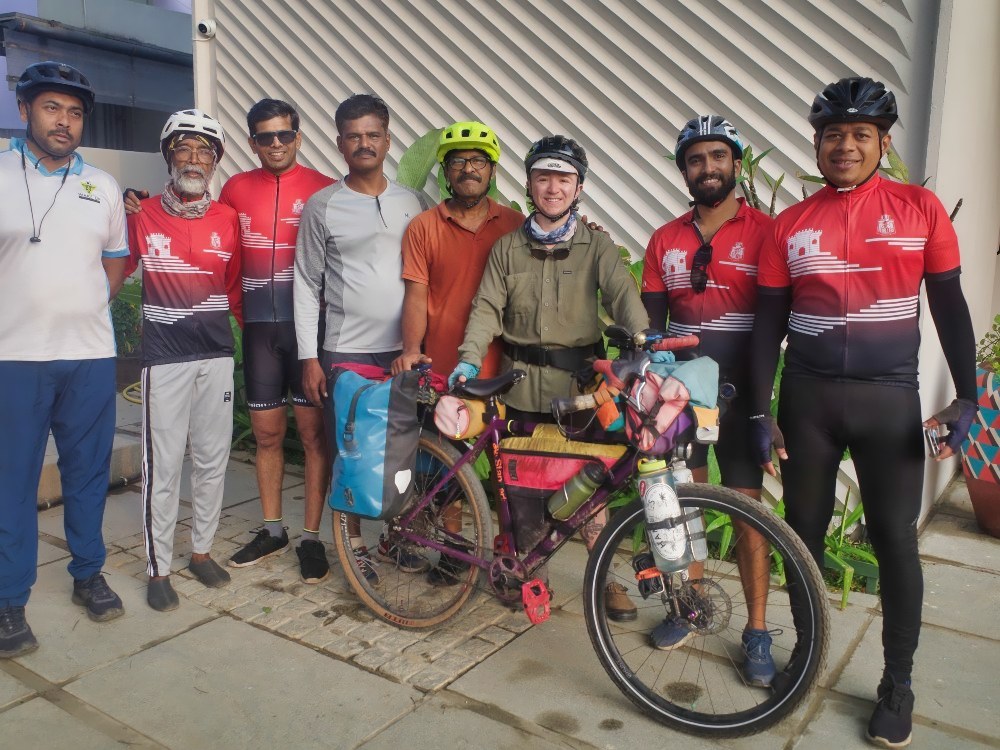
Across continents, reception varied. “Cycling is a great way to connect with people, because a lone foreign bicycle adventurer usually seems interesting, vulnerable and safe. So a lot of people either didn’t notice I was queer or didn’t seem to care, aside from other trans people, who would instantly clock me!” Acts of kindness were common. “People in India, Türkiye and the US would stop to give me food or a drink.” But there were places Robbie remained alert. “The only place I was worried was in the Midwest USA. It was in the midst of the US election and a lot of conservatives had a lot of aggressive signs put up outside their houses. Oh yeah, and everyone there has guns.”
What they want now is simple: community.
“Trans people are severely underrepresented in the outdoors and honestly, I’m bored of hanging out with the straights. Please come outside, everyone. It’s nice out here.”
Post-record life is quieter, but still in motion. “Right now I’m in Naarm, and in between attending some big cycling events here I’m trying to write a book about my record. It’s been a bit slow going as getting back into normal life has been quite a heavy readjustment period!”
As for their new visibility, Robbie doesn’t frame it as a mantle, but as a connection. “It can seem like the world for trans people is getting smaller and smaller. We have to keep reaching for each other. It’s awesome to try to become the trans representation my younger self would’ve liked to see.”
Follow Robbie on Instagram @dirtdroprobbie