









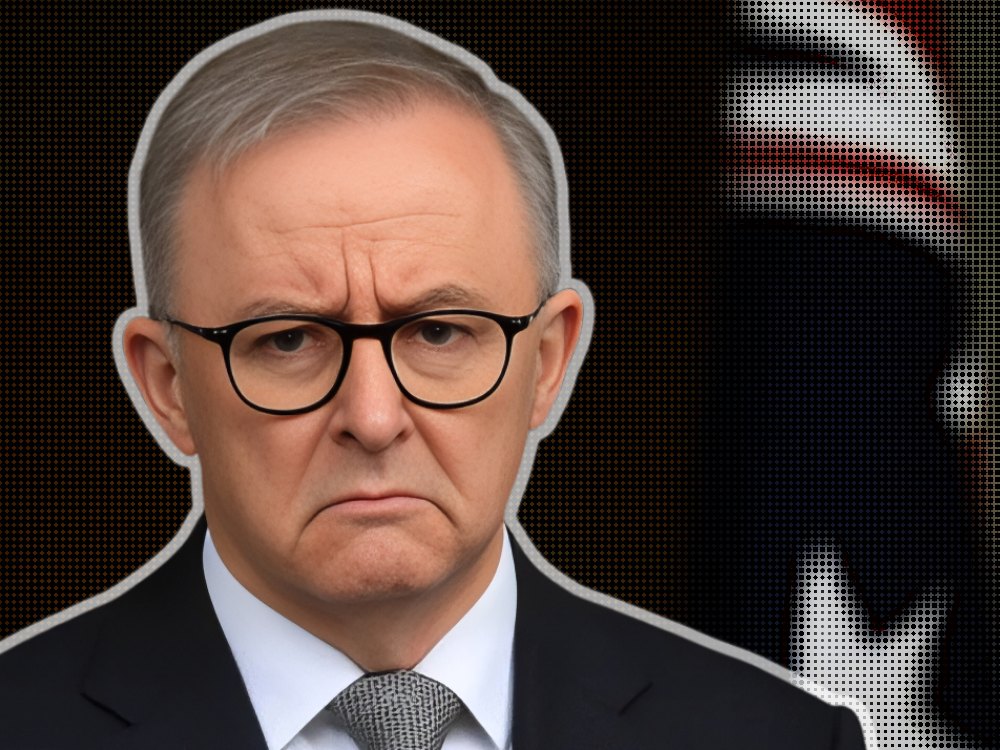

Australia’s Albanese Government is fast-tracking what it claims will be Australia’s toughest-ever hate speech laws, recalling Parliament two weeks early in the wake of the December 14 Bondi terror attack. But as the legislation zeroes in on racial hatred and antisemitism, LGBTQIA+ Australians and people with disabilities remain unprotected under the proposed reforms.
What’s in the proposed laws?
Parliament is set to sit on 19 and 20 January to debate a combined legislative package covering hate speech and gun law reforms. Under the draft hate speech laws, it would become a criminal offence to:
- Promote or incite hatred, or
- Disseminate ideas of superiority or hatred
against individuals or groups based on race, colour, national or ethnic origin.
Courts would also be able to impose harsher penalties if racial hatred is found to be the motivating factor, through an aggravated sentencing provision.
However, as reported by Guardian Australia, a draft of the bill includes a legal exemption for people directly quoting religious texts.
Prime Minister Anthony Albanese defended the reforms, stating:
“The terrorists at Bondi Beach had hatred in their minds, but guns in their hands. This bill will get rid of both of those issues.”
Who is left out?
Despite repeated advocacy, the legislation does not cover hate speech directed at LGBTQIA+ people or those with disabilities — and these communities were reportedly excluded from the consultation process.
“We have been left in the dark, even though the criminal law being amended recognises us as an at-risk group,” said Heather Corkhill, Legal Director at Equality Australia.
“Hatred in any form — whether racial, religious or targeting LGBTIQ+ people or people with a disability — has no place in our society. Serious vilification laws must apply equally.”
“Only half of us are protected”
Michael Barnett from Aleph Melbourne, a Jewish LGBTQIA+ advocacy group, said the law sends a dangerous message by protecting only part of their identity:
“It makes no sense to us that half our identity is protected from hate and the other half isn’t.
The same ideology is being used to drive attacks on both the LGBTIQA+ and Jewish communities.”
He pointed to the shared targeting by neo-Nazi and white supremacist groups, who frequently direct hate at both Jewish and LGBTQIA+ individuals.
A “hierarchy of harm”?
Advocates say the bill creates a false hierarchy of harm, suggesting some communities are more deserving of protection than others.
“Creating a hierarchy of protections actively undermines social cohesion as well as the effectiveness of the law,” Corkhill said.
Independent MP Allegra Spender called the exclusion a double standard:
“We need to send an unequivocal message that Australians are opposed to hate speech and extremism in all its forms.”
“Strengthening protections for one group does not come at the expense of any other.”
Spender previously introduced amendments to expand protections — with support from Jewish and LGBTQIA+ organisations — but those were defeated.
“We need to act directly and urgently”
Rodney Croome AM from Just.Equal Australia criticised the reactive nature of some LGBTQIA+ advocacy, saying:
“Just.Equal advocated for a wider hate speech package inclusive of LGBTIQA people soon after the Government announced it would focus on antisemitism and racist hate alone.”
“Passing laws against only one kind of hate means other forms are seen as less legitimate and less deserving of a response.”
“As a community we need to aim our advocacy directly, explicitly and urgently towards the Government and towards Labor members in inner-city seats.”
Why the exclusion?
When asked why LGBTQIA+ people weren’t included in the bill, Prime Minister Albanese cited the need for broad parliamentary support and the risk of unintended consequences.
He stressed that the current bill was focused on addressing antisemitism following the Bondi attack, and that broader reforms could come later — if the initial bill passes.
Real-life harm already happening
For queer Australians, the risk of exclusion isn’t theoretical.
Kristie, a queer artist and mother, recently became the target of coordinated online abuse, after a religious influencer encouraged followers to harass her. She received bomb and death threats, and her personal phone number was shared online.
Despite the serious nature of the threats, police told her there was little they could do. Under the government’s proposed laws, such hate would still not qualify as a criminal offence.