









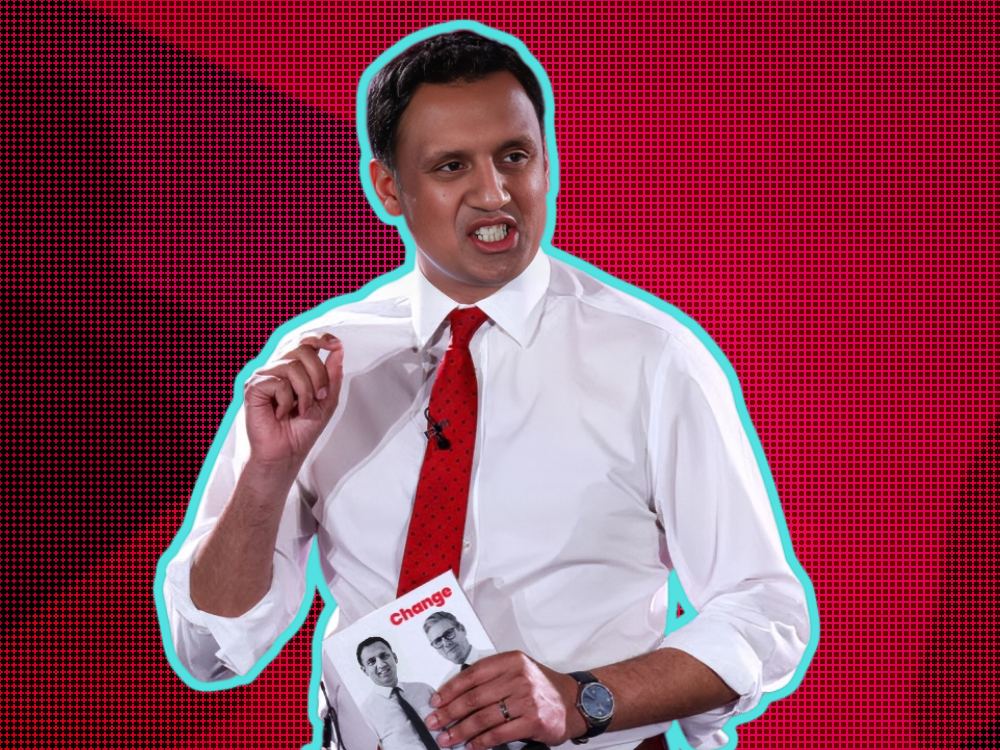

Scottish Labour leader Anas Sarwar has pledged to ban trans women from being housed in female prisons across Scotland if he becomes First Minister following the next Holyrood election.
In a column published by the Daily Record on 2 February, Sarwar promised that a future Labour-led government would “act swiftly” to make all prisons in Scotland single-sex based on biological sex.
The pledge was released in the lead-up to a Court of Session hearing — Scotland’s highest civil court — involving the women’s advocacy group For Women Scotland (FWS) and the Scottish Government.
Background to the Legal Challenge
FWS has brought legal action against the current Scottish Prison Service (SPS) guidance, which permits trans women to be placed in female prisons if they do not meet certain risk criteria — including the threshold for violence against women and girls — and are not deemed an “unacceptable risk” to other prisoners.
Sarwar: “Women’s Prisons Exist to Keep Women Safe”
Quoting the Supreme Court’s interpretation of the Equality Act, Sarwar argued that single-sex spaces should be preserved based on biological sex, particularly in prisons.
“The Supreme Court is clear; the Equality Act must be respected. That means defending single-sex spaces for biological women in services, in sport and in everyday life. That is what I will deliver in government,” Sarwar wrote.
“But nowhere does this matter more than in our prison system. Women’s prisons exist for a reason – to keep women safe.”
Sarwar added that many incarcerated women are survivors of trauma and abuse, particularly by men, and claimed that allowing trans women – particularly those convicted of sexual or violent crimes – into female prisons would undermine safety, dignity, and trust.
“It is simply not right that men who have committed sexual or violent crimes against women can be housed in women’s prisons,” he wrote.
The Broader Context
The debate over trans women in female prisons has become a flashpoint in Scotland’s wider discussions around gender identity, rights, and the interpretation of the Equality Act 2010.
Sarwar’s comments place him in alignment with groups pushing for biological sex-based policies, but have also drawn concern from LGBTQ+ advocates who warn such blanket policies risk erasing the legal status and protections of trans people.
As the Holyrood election approaches, the issue is likely to remain a defining and divisive topic in Scottish political discourse.