









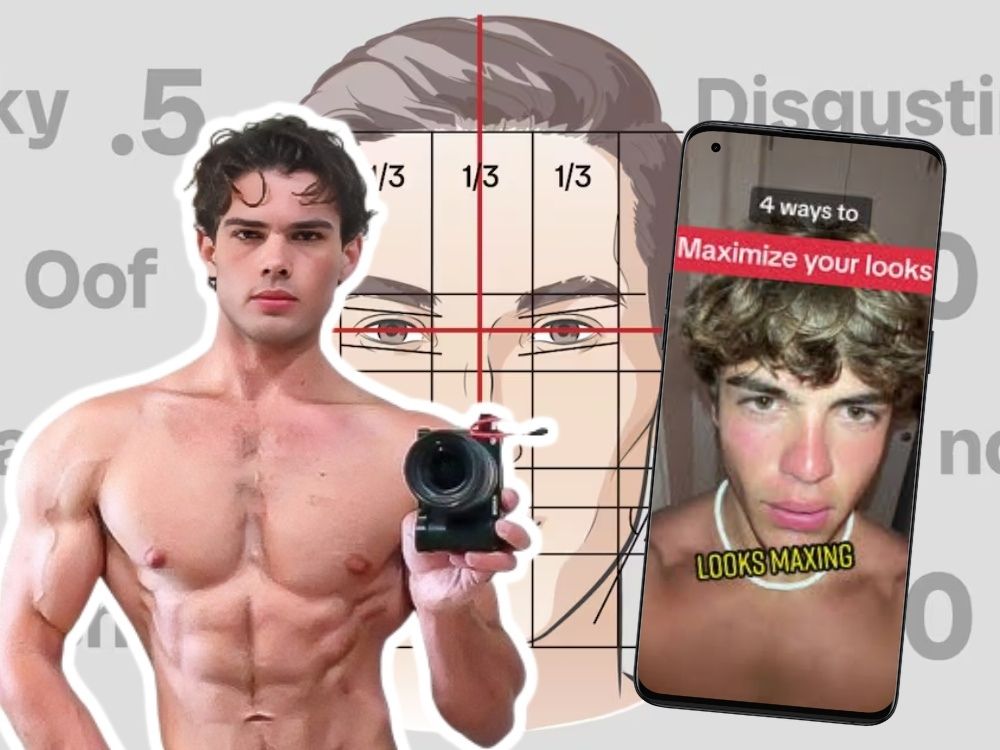

A controversial online trend known as “looksmaxxing” is gaining traction across social media, with young men sharing extreme — and often dangerous — methods aimed at improving their appearance.
From videos discussing leg-lengthening procedures to claims of “bone smashing” — a practice where individuals hit their facial bones in an attempt to reshape them — the movement has sparked growing concern among health experts and cultural commentators alike.
At the centre of the trend is influencer Braden Peters, better known online as Clavicular. The 20-year-old has become a prominent face of the movement, even appearing at New York Fashion Week and openly discussing controversial practices such as appetite suppression through drug use.
What Is “Looksmaxxing”?
The concept of looksmaxxing revolves around the belief that physical appearance determines success in life — particularly in dating and social status — and that it can be radically altered through intervention.
According to Becca Rothfeld, the trend has roots in incel (involuntary celibate) culture, an online subculture that emerged on platforms like 4Chan and Reddit.
“Incel is short for ‘involuntary celibate’… it’s a misogynistic and racist online subculture,” Rothfeld explained in an interview. “The guiding premise… was your looks and your biology are destiny.”
Looksmaxxers adopt this idea but take it a step further — believing that, while appearance dictates social outcomes, it can be aggressively modified to improve one’s life.
Extreme Measures and Rising Risks
The movement has drawn alarm due to the extreme and sometimes harmful practices being promoted.
These include:
- Cosmetic experimentation without medical supervision
- Use of unregulated injectable peptides for skin and muscle enhancement
- Extreme dieting or drug use
- Physical interventions like bone manipulation or limb-lengthening surgery
Health experts warn that some of these practices carry serious risks. An endocrinologist from the University of Melbourne cautioned that peptides — often used to promote skin or muscle growth — may have unknown long-term effects, including a potential link to cancer due to their impact on cellular growth.
A Growing Cultural Concern
Critics argue that looksmaxxing is not just a health issue, but also a reflection of deeper social problems.
Rothfeld described the trend as a “psychological and physical minefield,” rooted in harmful ideologies about gender, attractiveness and worth. The movement has also been criticised for reinforcing misogynistic and racist beliefs about desirability and hierarchy.
At the same time, its rapid spread on platforms like TikTok and Instagram — and the rise of influencers promoting these ideas — has helped push the trend further into the mainstream.
Notably, Australians are among some of the most visible figures within the space, highlighting its global reach.
Why It Matters
The rise of looksmaxxing underscores increasing pressures around appearance, particularly among young men navigating identity, masculinity and social validation in the digital age.
While some frame it as self-improvement, others warn it reflects a deeper “moral crisis” — where extreme measures are normalised in pursuit of perceived perfection.