










“There is much talk about people and not enough with people”: Prudence Walker on queer rights, disability, and being heard
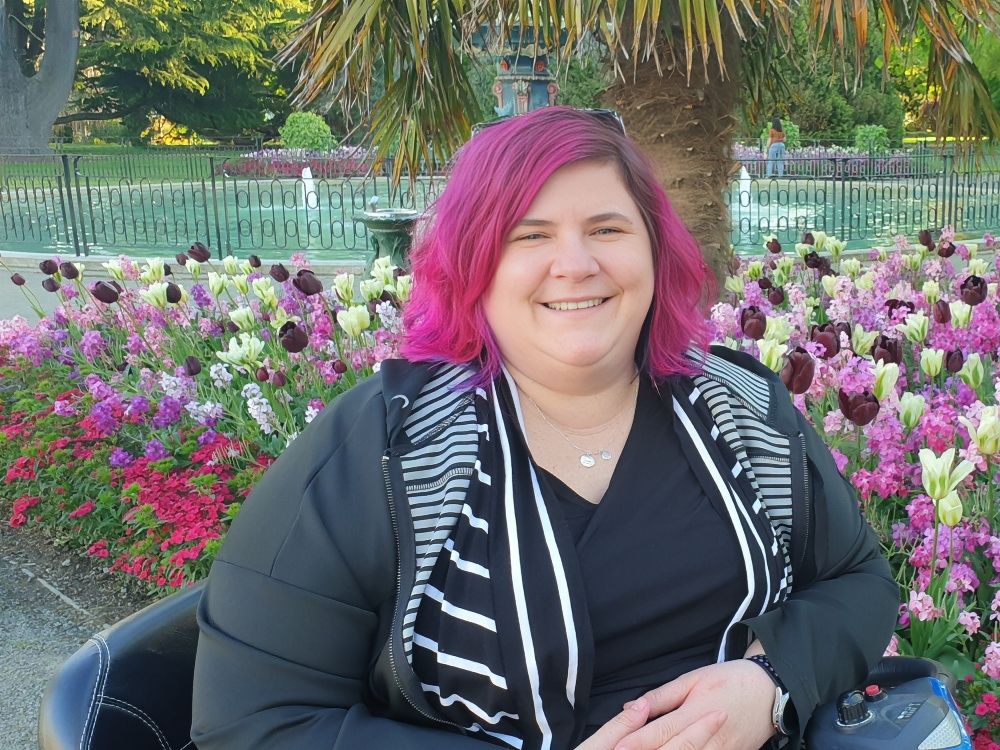
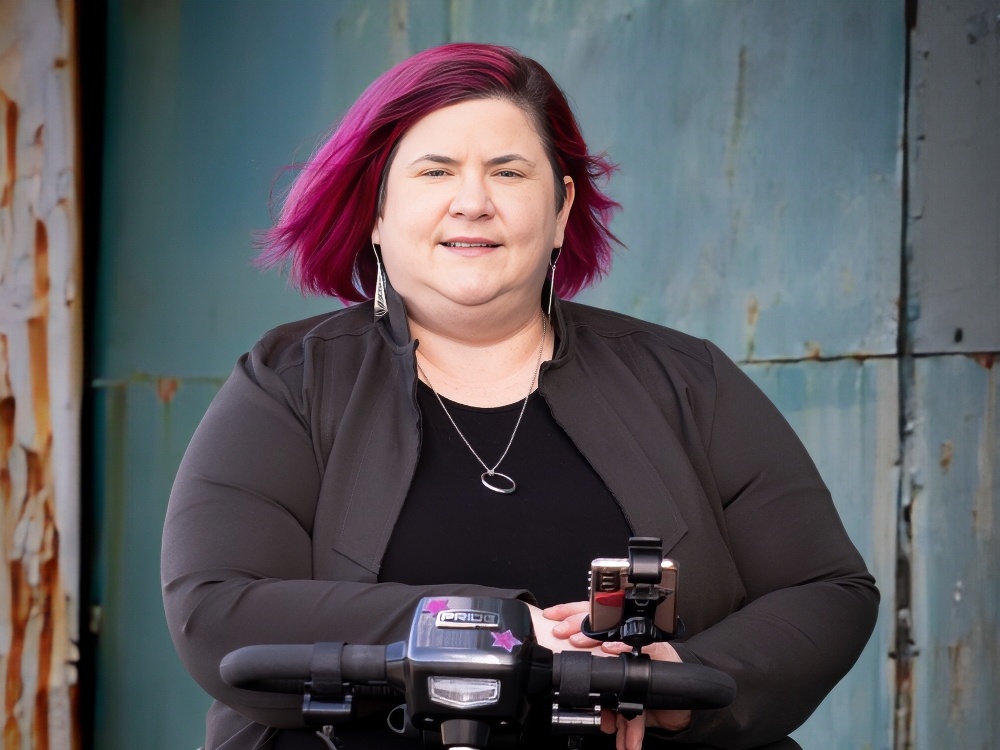
Prudence Walker, Disability Rights Commissioner and rainbow rights spokesperson at the Human Rights Commission, discusses queer rights, accessibility, and why meaningful inclusion in Aotearoa must be shaped by lived experience.
In Aotearoa, conversations about inclusion often arrive in separate boxes. Rainbow rights sit in one corner. Disability rights in another. Policy, advocacy, lived experience. Each carefully categorised, discussed, and debated.
But for Prudence Walker, those lines have never existed, because for many people, including Walker, identity does not divide itself so conveniently.
Finding language, finding self
Walker’s journey into queerness was not marked by a single defining moment, but rather a gradual unfolding, shaped as much by absence as by discovery.
“Perhaps partly because a solid three years of my life as a teenager were dominated by injury, illness, and survival, I didn’t have social opportunities to the same extent as many teenagers do,” Walker says.
Like many queer people who came of age without language or representation, assumptions filled the gaps.
“I assumed that because I was interested in some boys, and later, men, that I must be straight.”
Bisexuality existed as a concept, but only faintly. A flicker rather than a framework.
“There was very little representation or acknowledgement of people who identified outside the binaries of straight, gay, or lesbian.”
“One day I changed my settings on a dating app, went on a date with a woman, and realised that I was open to dating anyone that I felt a connection with and that that connection had very little to do with their gender identity or sex.”
When Walker stepped into the national spotlight as Disability Rights Commissioner in 2023, the word that felt most accurate was simple: Queer.
A life shaped by community and survival
Before the Human Rights Commission, before national advocacy, Walker’s leadership began in a space defined by both joy and grief: CanTeen.
Living with cancer as a young person, Walker became national president, an experience that forged lifelong bonds and a deep understanding of resilience.
“Through CanTeen I made many friends… we will forever be bonded in the experience of having been young people living with cancer.”
There was laughter, leadership, and connection, but also loss.
“We didn’t dwell on that much at the time, we had a lot of fun… But we had sad times as well; too many funerals.”
And, crucially, an understanding that survival is not a clean ending.
“For survivors, the cancer journey doesn’t end with treatment. For many of us, it results in chronic health conditions and/or permanent impairment.”
That lived experience of illness, disability, and community now sits at the heart of Walker’s advocacy.
The invisible gap in rainbow inclusion
In queer spaces, inclusion is often spoken about with pride. Diversity celebrated, difference embraced. But Walker points to a quieter, more uncomfortable truth:
Many disabled queer people still do not feel they belong.
“I have often heard from queer disabled people that they do not feel fully included in rainbow spaces, or in spaces for disabled people.”
The numbers back this up. In Aotearoa, nearly one in three LGBTIQ+ people are disabled, significantly higher than in the general population.
And yet, accessibility is still too often treated as an afterthought.
“If rainbow spaces are not intentionally designing for the inclusion of disabled people, then they are likely excluding disabled people.”
It is not just about physical access, though that remains essential. It is about recognising the full spectrum of disability: cognitive, sensory, psychosocial. Meaning that aspects like sound levels, lighting, the formats you put information out in, and transport should all be considered.
For Walker, it is about asking a simple but often overlooked question: Who is not here? And why?
Allyship beyond intention
For Walker, allyship between rainbow and disabled communities is rooted in a “shared understanding of the effects of exclusion.”
Accessibility, in this sense, becomes less about compliance and more about curiosity.
Maybe the event information is not available in accessible formats.
Maybe there is no transport. Maybe the space is too loud.
Maybe the venue simply is not accessible.
The solutions, Walker says, are already within reach:
“Talk with and seek feedback from disabled people and disabled persons organisations in your local community.”
It is a shift from assumption to collaboration. From designing for people to designing with them.
Human rights under pressure
This year marks 40 years since the Homosexual Law Reform Act. A milestone that invites both celebration and reflection.
For Walker, it is also a reminder that progress is never guaranteed.
“Human rights are indivisible; we can’t pick and choose,” Walker says.
Across Aotearoa and beyond, there is a growing sense that some rights are being quietly, steadily challenged.
“We are seeing challenges to our rights as rainbow people. Issues relating to the rights of trans people have particularly been under attack. Although not all of those challenges directly impact every one of us, they are all linked in the spirit of devaluing our existence and rights to freedom from discrimination.”
At the same time, Walker’s work extends into areas that do not always make headlines but carry significant consequences, including emergency management systems and their responsiveness to disabled communities.
Because inclusion is not just about celebration. It is about safety, survival, and infrastructure.
Being heard, not just spoken about
For Walker, representation must go beyond symbolism.
“Something that I have consistently urged government, agencies, and indeed all organisations to do is to include disabled people in making the decisions affecting us.”
The same applies across rainbow communities, including takatāpui and takatāpui whaikaha Māori.
“There is much talk about people and not enough with people.”
It is a deceptively simple statement, but one that cuts to the core of systemic exclusion.
Consultation is not enough if it happens too late. Inclusion is not real if it is not embedded.
For Walker, meaningful change starts with shifting who is in the room and who gets to speak.
Lessons from disabled communities
Ask Walker what disabled communities have taught her, and the answer resists easy summarisation.
“I’ve learnt that we are as diverse as any population, that we are not a homogeneous group of people.”
It is a reminder that disability, like queerness, contains multitudes of identities, experiences, and strengths.
And, importantly, innovation.
Quoting late disability activist Stella Young, Walker reflects on the everyday ingenuity that emerges from navigating a world not built with you in mind:
“It’s a genius idea to use a pair of barbecue tongs to pick up things that you dropped. I’m learning that nifty trick where you can charge your mobile phone battery from your chair battery. We are learning from each other’s strength and endurance, not against our bodies and our diagnoses, but against a world that exceptionalises and objectifies us.”
Resourcefulness. Community knowledge passed between people, and a refusal to be reduced to inspiration or limitation.
Moving towards a more inclusive Aotearoa
What emerges from speaking with Prudence Walker is not just a critique of systems, but a blueprint grounded in listening, collaboration, and intersectionality.
Aotearoa does not lack the language of inclusion. It lacks, at times, the practice.
And yet, there is possibility.
In queer spaces that actively design for accessibility. In policies shaped by lived experience.
In communities willing to ask who is missing, and why.
Walker’s work sits at that intersection, where identities meet and systems are challenged to do better.
Because, ultimately, human rights are not separate struggles. They are shared.
And as Walker reminds us, they are indivisible.