












Like low-rise jeans, emotional avoidance and new Taylor versions on vinyl, some things simply refuse to die. The rumpus room, that once ruled suburban homes across Aotearoa, is officially having a comeback.
For years, we’ve been sold the idea that every room in the house should look like it’s waiting for a real estate photographer to arrive. Neutral tones. Clean lines. A single sculptural chair nobody is allowed to sit on and a bowl of decorative objects that serve no purpose except to suggest the owner once visited a concept store in Grey Lynn. But the tide is turning. People are hungry for homes with actual personality again, and that means making room for joy, play and a little bit of visual drama.
Once a staple of 90s and early-2000s family homes, the rumpus room was where all the best things happened. Board games got heated. Teenagers flopped around watching DVDs. It was not a room concerned with elegance. It was all about the vibes.
One of the reasons the trend feels so right is that it taps into a wider craving for tactile, offline fun. We are all, to some extent, exhausted by endless scrolling and the flattening sameness of digital life. The return of records, film cameras, vintage furniture and actual printed photographs all point to a desire for things that feel more hands-on and real. The rumpus room sits beautifully within that shift. It invites us back into shared experiences.
While the original rumpus rooms of our youth may have leaned ‘practical’, there’s no reason the modern version can’t be deeply stylish. This is where colour does the heavy lifting, and Resene has the palette to make the whole idea sing.
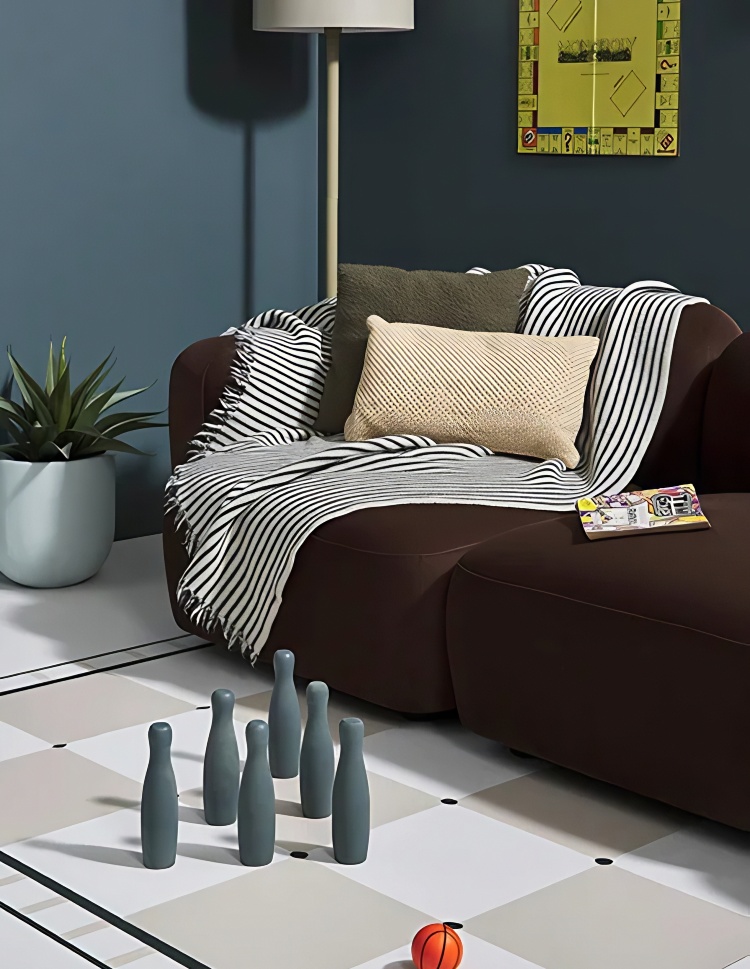
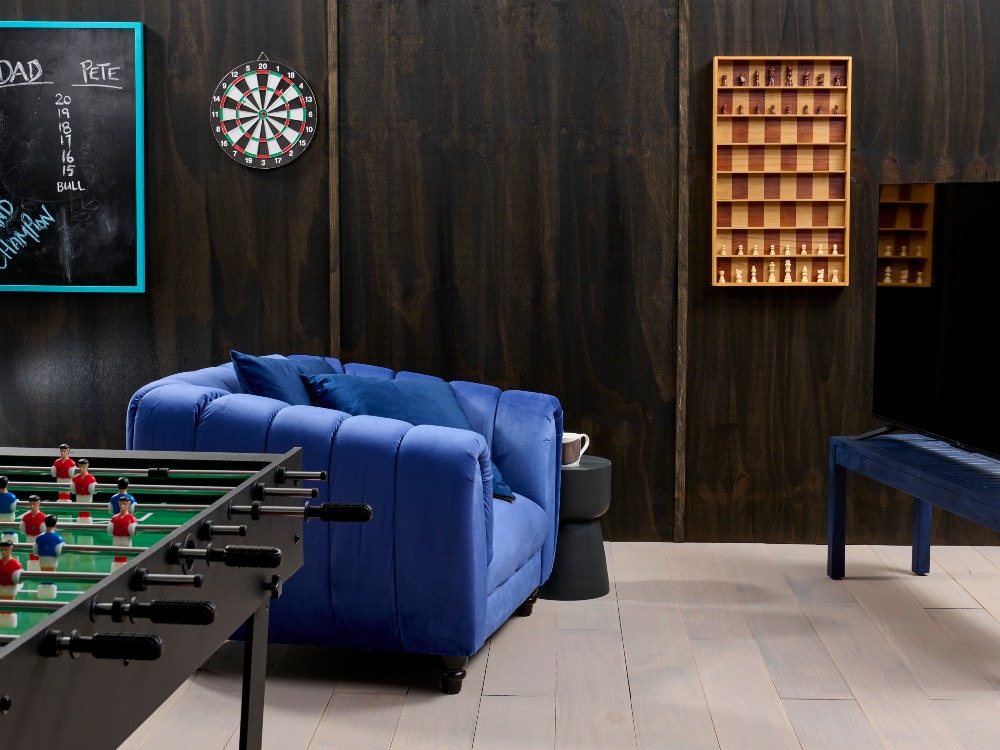
The foundation of any good rumpus room is atmosphere. You want it to feel cocooning, a little moody, somewhere that naturally encourages people to settle in and stay a while. Painting the walls in Resene Dark Slate is a brilliant place to start. It has those rich, charcoal undertones that instantly ground a space, making it feel intimate and cinematic without becoming gloomy. It’s dramatic, without being immature.
Darker walls also create the ideal backdrop for everything else you want to bring into the room: colour, texture, lighting and all those slightly eclectic details that make a space feel lived-in. Against Dark Slate, brighter accents really come alive. That’s part of the charm of this particular look: it balances moodiness with mischief.
A perfect example is the use of playful wall décor, like oversized wooden letters, each painted in a different colour bringing a riot of personality to the room (like a small Pride Parade). It’s bold, a bit cheeky and exactly the kind of detail that stops the space from feeling too serious.
Because that’s the danger with any moody interior, isn’t it? It can all tip into “luxury waiting room” if you’re not careful. The secret is contrast. If the walls are serving brooding sophistication, the accents need to flirt a little.
The floor is another chance to push the idea further. Too often, flooring is treated as purely functional. But a rumpus room is precisely the place to have a bit of fun with it. A painted checkerboard floor in Resene Blanc, Triple Blanc and Woodsmoke turns the entire room into a design statement. It’s playful, graphic and just camp enough to double as a giant game board. In multi-use spaces, especially, those sorts of playful touches can transform the atmosphere from “spare room with a television” into something with an actual point of view.
Furniture is where you can begin softening and balancing the palette. A coffee table painted in Resene Duck Egg Blue lifts the scheme beautifully, adding freshness and lightness against the darker backdrop. A side table in Awaroa Bay keeps the mood cheerful and ties back to the brighter details elsewhere in the room. The interplay between these shades matters. Too much dark and the room becomes oppressive; too much brightness and you lose that cosy, cocooned effect.
Lighting, naturally, is crucial. A rumpus room should never feel overlit. Softer lighting creates intimacy and makes the darker colours feel enveloping rather than flat. A lamp with a base painted in Resene Pavlova and a shade in Epitome adds warmth and a little softness, helping to diffuse the mood. Lamps are also kinder for movie nights, evening hangs and those long conversations that begin with one drink and somehow end in a full forensic analysis of Heated Rivalry.
Accessories are where the room gets to wink at you. A vase painted in Resene Big Stone adds a muted grey-blue note that works quietly in the background, while another in Fandango brings a sharper, livelier hit of colour. Bowls in Aoraki, and coasters in Grenadier build a layered, personal look that feels collected rather than staged. This is not about matching everything within an inch of its life. It’s about letting a room reveal your personality in pieces.
And then, of course, there’s greenery. Planter painted in Resene Awaroa Bay and Aoraki pops beautifully against Dark Slate, helping the space feel vibrant and alive. Plants soften all that moodiness and keep the room from veering into cave territory. Every dramatic interior needs something organic nearby, if only to reassure visitors that a human being lives there and not a beautifully dressed vampire.
The modern rumpus room is built for community. It’s a place where teenagers can bring their mates, flatmates can collapse together after work, and adults can host with a little less pressure and a lot more fun. Not every corner needs to prove its worth. Sometimes a room can just exist to make people feel good.
The return of the rumpus room isn’t just a design trend. It’s a small rebellion against boring spaces and overly curated living. And with the right palette, it’s easy to create a space that feels stylish, affirming and unmistakably yours.
For paint, colour inspiration and all the DIY guidance to bring your own rumpus room to life, visit Resene.co.nz.
PHOTOS | BRYCE CARLETON
PROJECTS | ANNICK LARKIN & MEGAN HARRISON-TURNER
CHECKERBOARD FLOOR DESIGN | HANNAH TAPNER