









Premiering on Sky’s Rialto Channel on Sunday 19 April, the BAFTA award-winning Mr Loverman centres a mature Black gay love story filled with humour, pain, longing and emotional depth
Queer television still has a habit of narrowing its gaze. So often, the stories that make it to screen are about youth, beauty, discovery and desire in forms that are palatable to the mainstream: young, white, urban, newly out. That is part of queer life, of course, but it is nowhere near the whole picture. What makes Mr Loverman feel so vital is that it pushes far beyond those limits, placing an older Black gay love story at the very centre of the frame.
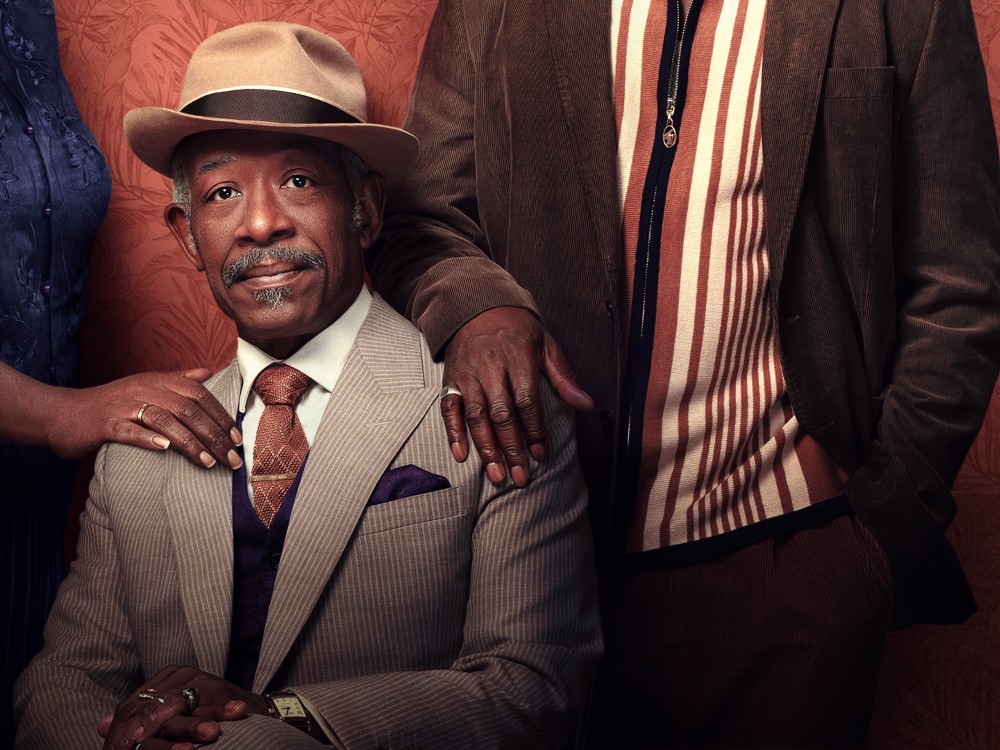
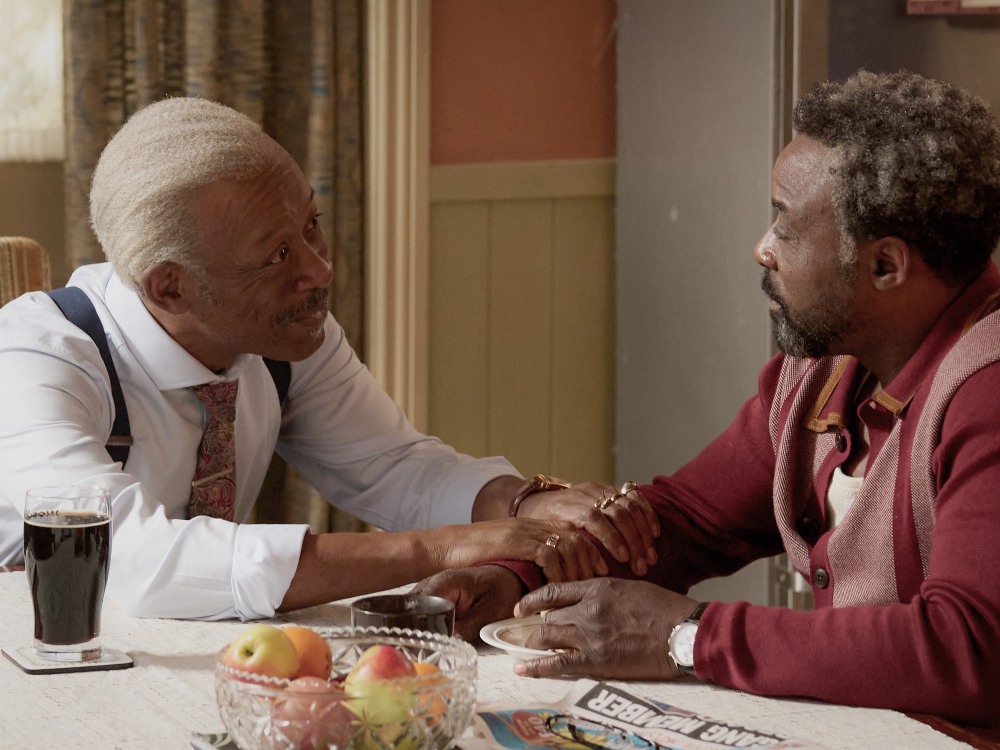
Based on Bernardine Evaristo’s novel, the series follows Barry, a 74-year-old Antiguan-born Londoner whose sharp suits, swagger and wit mask a devastating truth. Married to Carmel for 50 years, Barry has also been carrying on a secret relationship with his best friend, Morris, for just as long. As the lies sustaining his life begin to crack, Mr Loverman becomes a story not just about revelation, but about what it costs to spend decades unable to live openly.
Evaristo has spoken plainly about what first drew her to the story. “The idea of an elderly, Caribbean gay protagonist seemed the perfect way to address this,” she says, after noticing how the generation who emigrated from the Caribbean to the UK in the seventies had so often been presented as entirely heterosexual. For too long, older Black queer men have barely existed in popular culture. Mr Loverman refuses that erasure, insisting that these men, their histories, their desires and their contradictions, are worthy of serious attention.
It also insists that queer life does not end with youth. Lennie James, who plays Barry, calls it a “grown-up love story”, and that phrase gets to the heart of what makes the series land so powerfully. Barry and Morris are not reduced to symbols of repression or nostalgia. They are lovers, companions, survivors and, in Barry’s case, a mass of contradictions: charismatic, selfish, funny, vain, tender and cruel. The relationship at the heart of Mr Loverman is not polished into respectability. It is messy, bruised, loving and painfully human.
That complexity is what lifts the series above series like Heated Rivalry. Nathaniel Price, who adapted the novel for screen, points to anti-gay bias, violence and masculinity as key themes, noting that “historically it’s been harder for gay black men to come out”. Mr Loverman understands that Barry’s life has been shaped by far more than private fear. Family expectation, Caribbean masculinity, homophobia, respectability and survival all press in on his choices. The show does not excuse the damage Barry causes, especially to Carmel and his family, but nor does it flatten him into a villain. Instead, it asks viewers to sit with the emotional wreckage created when a person feels they must divide themselves in two.
At its core, Mr Loverman asks the question: is it ever too late to start over? For queer viewers — especially those used to seeing only one kind of story reflected back — that question lands with real force. This is a series about ageing, yes, but also about possibility. In giving us an older Black gay love story full of humour, hurt, longing and dignity, Mr Loverman expands what queer television can look like. More than that, it reminds us that love, and the courage to face it, does not belong only to the young.